

Solar Installer Workers Compensation In Sacramento provides protection for eligible employees who are injured or become ill because of their work. Coastal Work Comp has 15+ years of experience helping businesses with workers compensation needs. For help with your coverage, call 1-800-411-0733. Solar installers may work on rooftops, handle electrical equipment, lift solar panels, use ladders and tools, and travel between job sites. These work conditions can create different injury risks, so having the right workers compensation coverage matters. Coastal Work Comp is committed to clear communication, honest service, and understanding your business before discussing coverage options. We take time to understand your employees, job duties, and business needs so you can move forward with confidence. If you have questions about solar installer workers compensation in Sacramento, feel free to contact us at 1-800-411-0733 or fill out our inquiry form. We are ready to discuss your requirements and help you with the next steps. Workers Compensation Insurance For Solar Installers In Sacramento Workers Compensation Insurance For Solar Installers In Sacramento protects eligible employees who suffer a work-related injury or illness. Solar installation involves roofing work, electrical equipment, ladders, tools, heavy panels, and changing job sites, so coverage should match the work employees actually perform. Solar Installer Workers Comp Insurance In Sacramento can depend on employee duties, payroll, classifications, and business operations. Accurate information helps an insurance provider understand the company and determine appropriate coverage needs. A solar business may have installers, electricians, supervisors, warehouse workers, and office employees with different job responsibilities. Workers Compensation For Solar Contractors In Sacramento should consider these differences. If you are looking for workers compensation for your solar company, feel free to call 1-800-411-0733 or fill out our inquiry form to discuss your requirements and coverage options. Do Solar Installers Need Workers Comp Insurance In Sacramento? Yes. In California, employers generally must carry workers compensation insurance when they have employees, including businesses with one or more employees. For solar installers, the requirement can depend on how workers are classified and how the business operates. This makes accurate employee and payroll information important when arranging coverage. Solar contractors should also review job duties, work locations, and any subcontractor relationships before choosing a policy. Incorrect worker classification or missing information can create insurance and compliance issues. If you are unsure about your workers compensation requirements, discussing your business structure with an experienced insurance provider can help you understand what information is needed and what coverage may apply to your solar installation business. What Does Solar Installer Workers Compensation Cover In Sacramento? Workers compensation can help cover eligible employees who suffer a work-related injury or illness. For solar installers, this may include injuries from rooftop falls, lifting solar panels, electrical work, ladders, tools, or other job-site accidents. Depending on the circumstances, benefits may include medical treatment, temporary disability payments, permanent disability benefits, and other benefits available under California workers compensation rules. The benefits depend on the injury and the details of the claim. Not every workplace incident is automatically covered, so accurate records and prompt injury reporting are important. Coastal Work Comp can help solar businesses understand their workers compensation needs and coverage options. If you need workers compensation for your solar company in Sacramento, call 1-800-411-0733 or fill out our inquiry form. How Is Workers Comp Insurance Classified For Solar Installers? Workers compensation is generally classified based on the work employees actually perform, not simply the name of the business. For solar companies, this means the duties of installers, electricians, supervisors, warehouse workers, and office staff may need to be reviewed separately. An employee working on rooftops may have different work exposures from someone handling office tasks. Payroll and job duties can also affect how coverage is reviewed and how premiums are calculated. Providing clear and accurate information about your operations helps avoid classification mistakes. If employees perform more than one type of work, the insurance provider may need additional details before determining the appropriate classification. Coastal Work Comp can help review your business information and workers compensation needs. Call 1-800-411-0733 or fill out our inquiry form. Does Workers Comp Cover Solar Installation Employees And Subcontractors? Workers compensation generally covers eligible employees, but subcontractors need a closer review. Simply calling someone an independent contractor does not automatically decide how they should be treated for workers compensation purposes. Solar companies may work with installers, electricians, roofing crews, and other outside workers. Their actual working relationship, job duties, agreements, and insurance status can affect whether coverage is required or already provided. Before starting a project, it is important to know who is responsible for workers compensation coverage. Solar businesses may also need to collect current insurance documents from subcontractors and keep them with their records. If you are unsure about employee or subcontractor coverage, Coastal Work Comp can help you review your situation. Call 1-800-411-0733 or fill out our inquiry form to discuss your needs. What Are Common Workers Compensation Risks For Solar Installers? Solar installers face several workplace risks because their work can involve rooftops, electrical systems, heavy panels, ladders, tools, and active construction sites. Common workers compensation risks include: Falls from rooftops and elevated work areas Strains or injuries from lifting and moving solar panels Electrical shocks, burns, or other electrical injuries Cuts and puncture injuries from tools and materials Slips, trips, and falls around active job sites Vehicle-related injuries while traveling between projects Back and muscle strains from repetitive physical work Injuries involving ladders, scaffolds, lifts, or other access equipment Heat-related illness when working outdoors for extended periods OSHA identifies falls and electrical hazards as important safety concerns in solar work, along with other job-specific hazards. The actual risk can vary based on the type of solar projects, employee duties, equipment, worksite conditions, and safety procedures. Understanding these risks helps solar businesses take practical safety measures and maintain accurate workers compensation information for their employees. How Can Solar Installers Reduce Workers Compensation Claims? Solar installers can reduce workers compensation claims by identifying job-site hazards early,
Solar Installer Workers Compensation In San Bernardino provides protection for eligible employees who are injured or become ill because of their work. Coastal Work Comp has 15+ years of experience helping businesses with workers compensation needs. For help with your coverage, call 1-800-411-0733. Solar installers may work on rooftops, handle electrical equipment, lift solar panels, use ladders and tools, and travel between job sites. These work conditions can create different injury risks, so having the right workers compensation coverage matters. Coastal Work Comp is committed to clear communication, honest service, and understanding your business before discussing coverage options. We take time to understand your employees, job duties, and business needs so you can move forward with confidence. If you have questions about solar installer workers compensation in San Bernardino, feel free to contact us at 1-800-411-0733 or fill out our inquiry form. We are ready to discuss your requirements and help you with the next steps. Workers Compensation Insurance For Solar Installers In San Bernardino Workers Compensation Insurance For Solar Installers In San Bernardino protects eligible employees who suffer a work-related injury or illness. Solar installation involves roofing work, electrical equipment, ladders, tools, heavy panels, and changing job sites, so coverage should match the work employees actually perform. Solar Installer Workers Comp Insurance In San Bernardino can depend on employee duties, payroll, classifications, and business operations. Accurate information helps an insurance provider understand the company and determine appropriate coverage needs. A solar business may have installers, electricians, supervisors, warehouse workers, and office employees with different job responsibilities. Workers Compensation For Solar Contractors In San Bernardino should consider these differences. If you are looking for workers compensation for your solar company, feel free to call 1-800-411-0733 or fill out our inquiry form to discuss your requirements and coverage options. Do Solar Installers Need Workers Comp Insurance In San Bernardino? Yes. In California, employers generally must carry workers compensation insurance when they have employees, including businesses with one or more employees. For solar installers, the requirement can depend on how workers are classified and how the business operates. This makes accurate employee and payroll information important when arranging coverage. Solar contractors should also review job duties, work locations, and any subcontractor relationships before choosing a policy. Incorrect worker classification or missing information can create insurance and compliance issues. If you are unsure about your workers compensation requirements, discussing your business structure with an experienced insurance provider can help you understand what information is needed and what coverage may apply to your solar installation business. What Does Solar Installer Workers Compensation Cover In San Bernardino? Workers compensation can help cover eligible employees who suffer a work-related injury or illness. For solar installers, this may include injuries from rooftop falls, lifting solar panels, electrical work, ladders, tools, or other job-site accidents. Depending on the circumstances, benefits may include medical treatment, temporary disability payments, permanent disability benefits, and other benefits available under California workers compensation rules. The benefits depend on the injury and the details of the claim. Not every workplace incident is automatically covered, so accurate records and prompt injury reporting are important. Coastal Work Comp can help solar businesses understand their workers compensation needs and coverage options. If you need workers compensation for your solar company in San Bernardino, call 1-800-411-0733 or fill out our inquiry form. How Is Workers Comp Insurance Classified For Solar Installers? Workers compensation is generally classified based on the work employees actually perform, not simply the name of the business. For solar companies, this means the duties of installers, electricians, supervisors, warehouse workers, and office staff may need to be reviewed separately. An employee working on rooftops may have different work exposures from someone handling office tasks. Payroll and job duties can also affect how coverage is reviewed and how premiums are calculated. Providing clear and accurate information about your operations helps avoid classification mistakes. If employees perform more than one type of work, the insurance provider may need additional details before determining the appropriate classification. Coastal Work Comp can help review your business information and workers compensation needs. Call 1-800-411-0733 or fill out our inquiry form. Does Workers Comp Cover Solar Installation Employees And Subcontractors? Workers compensation generally covers eligible employees, but subcontractors need a closer review. Simply calling someone an independent contractor does not automatically decide how they should be treated for workers compensation purposes. Solar companies may work with installers, electricians, roofing crews, and other outside workers. Their actual working relationship, job duties, agreements, and insurance status can affect whether coverage is required or already provided. Before starting a project, it is important to know who is responsible for workers compensation coverage. Solar businesses may also need to collect current insurance documents from subcontractors and keep them with their records. If you are unsure about employee or subcontractor coverage, Coastal Work Comp can help you review your situation. Call 1-800-411-0733 or fill out our inquiry form to discuss your needs. What Are Common Workers Compensation Risks For Solar Installers? Solar installers face several workplace risks because their work can involve rooftops, electrical systems, heavy panels, ladders, tools, and active construction sites. Common workers compensation risks include: Falls from rooftops and elevated work areas Strains or injuries from lifting and moving solar panels Electrical shocks, burns, or other electrical injuries Cuts and puncture injuries from tools and materials Slips, trips, and falls around active job sites Vehicle-related injuries while traveling between projects Back and muscle strains from repetitive physical work Injuries involving ladders, scaffolds, lifts, or other access equipment Heat-related illness when working outdoors for extended periods OSHA identifies falls and electrical hazards as important safety concerns in solar work, along with other job-specific hazards. The actual risk can vary based on the type of solar projects, employee duties, equipment, worksite conditions, and safety procedures. Understanding these risks helps solar businesses take practical safety measures and maintain accurate workers compensation information for their employees. How Can Solar Installers Reduce Workers Compensation Claims? Solar installers can
Solar Installer Workers Compensation In Riverside provides protection for eligible employees who are injured or become ill because of their work. Coastal Work Comp has 15+ years of experience helping businesses with workers compensation needs. For help with your coverage, call 1-800-411-0733. Solar installers may work on rooftops, handle electrical equipment, lift solar panels, use ladders and tools, and travel between job sites. These work conditions can create different injury risks, so having the right workers compensation coverage matters. Coastal Work Comp is committed to clear communication, honest service, and understanding your business before discussing coverage options. We take time to understand your employees, job duties, and business needs so you can move forward with confidence. If you have questions about solar installer workers compensation in Riverside, feel free to contact us at 1-800-411-0733 or fill out our inquiry form. We are ready to discuss your requirements and help you with the next steps. Workers Compensation Insurance For Solar Installers In Riverside Workers Compensation Insurance For Solar Installers In Riverside protects eligible employees who suffer a work-related injury or illness. Solar installation involves roofing work, electrical equipment, ladders, tools, heavy panels, and changing job sites, so coverage should match the work employees actually perform. Solar Installer Workers Comp Insurance In Riverside can depend on employee duties, payroll, classifications, and business operations. Accurate information helps an insurance provider understand the company and determine appropriate coverage needs. A solar business may have installers, electricians, supervisors, warehouse workers, and office employees with different job responsibilities. Workers Compensation For Solar Contractors In Riverside should consider these differences. If you are looking for workers compensation for your solar company, feel free to call 1-800-411-0733 or fill out our inquiry form to discuss your requirements and coverage options. Do Solar Installers Need Workers Comp Insurance In Riverside? Yes. In California, employers generally must carry workers compensation insurance when they have employees, including businesses with one or more employees. For solar installers, the requirement can depend on how workers are classified and how the business operates. This makes accurate employee and payroll information important when arranging coverage. Solar contractors should also review job duties, work locations, and any subcontractor relationships before choosing a policy. Incorrect worker classification or missing information can create insurance and compliance issues. If you are unsure about your workers compensation requirements, discussing your business structure with an experienced insurance provider can help you understand what information is needed and what coverage may apply to your solar installation business. What Does Solar Installer Workers Compensation Cover In Riverside? Workers compensation can help cover eligible employees who suffer a work-related injury or illness. For solar installers, this may include injuries from rooftop falls, lifting solar panels, electrical work, ladders, tools, or other job-site accidents. Depending on the circumstances, benefits may include medical treatment, temporary disability payments, permanent disability benefits, and other benefits available under California workers compensation rules. The benefits depend on the injury and the details of the claim. Not every workplace incident is automatically covered, so accurate records and prompt injury reporting are important. Coastal Work Comp can help solar businesses understand their workers compensation needs and coverage options. If you need workers compensation for your solar company in Riverside, call 1-800-411-0733 or fill out our inquiry form. How Is Workers Comp Insurance Classified For Solar Installers? Workers compensation is generally classified based on the work employees actually perform, not simply the name of the business. For solar companies, this means the duties of installers, electricians, supervisors, warehouse workers, and office staff may need to be reviewed separately. An employee working on rooftops may have different work exposures from someone handling office tasks. Payroll and job duties can also affect how coverage is reviewed and how premiums are calculated. Providing clear and accurate information about your operations helps avoid classification mistakes. If employees perform more than one type of work, the insurance provider may need additional details before determining the appropriate classification. Coastal Work Comp can help review your business information and workers compensation needs. Call 1-800-411-0733 or fill out our inquiry form. Does Workers Comp Cover Solar Installation Employees And Subcontractors? Workers compensation generally covers eligible employees, but subcontractors need a closer review. Simply calling someone an independent contractor does not automatically decide how they should be treated for workers compensation purposes. Solar companies may work with installers, electricians, roofing crews, and other outside workers. Their actual working relationship, job duties, agreements, and insurance status can affect whether coverage is required or already provided. Before starting a project, it is important to know who is responsible for workers compensation coverage. Solar businesses may also need to collect current insurance documents from subcontractors and keep them with their records. If you are unsure about employee or subcontractor coverage, Coastal Work Comp can help you review your situation. Call 1-800-411-0733 or fill out our inquiry form to discuss your needs. What Are Common Workers Compensation Risks For Solar Installers? Solar installers face several workplace risks because their work can involve rooftops, electrical systems, heavy panels, ladders, tools, and active construction sites. Common workers compensation risks include: Falls from rooftops and elevated work areas Strains or injuries from lifting and moving solar panels Electrical shocks, burns, or other electrical injuries Cuts and puncture injuries from tools and materials Slips, trips, and falls around active job sites Vehicle-related injuries while traveling between projects Back and muscle strains from repetitive physical work Injuries involving ladders, scaffolds, lifts, or other access equipment Heat-related illness when working outdoors for extended periods OSHA identifies falls and electrical hazards as important safety concerns in solar work, along with other job-specific hazards. The actual risk can vary based on the type of solar projects, employee duties, equipment, worksite conditions, and safety procedures. Understanding these risks helps solar businesses take practical safety measures and maintain accurate workers compensation information for their employees. How Can Solar Installers Reduce Workers Compensation Claims? Solar installers can reduce workers compensation claims by identifying job-site hazards early,
Solar Installer Workers Compensation In San Diego provides protection for eligible employees who are injured or become ill because of their work. Coastal Work Comp has 15+ years of experience helping businesses with workers compensation needs. For help with your coverage, call 1-800-411-0733. Solar installers may work on rooftops, handle electrical equipment, lift solar panels, use ladders and tools, and travel between job sites. These work conditions can create different injury risks, so having the right workers compensation coverage matters. Coastal Work Comp is committed to clear communication, honest service, and understanding your business before discussing coverage options. We take time to understand your employees, job duties, and business needs so you can move forward with confidence. If you have questions about solar installer workers compensation in San Diego, feel free to contact us at 1-800-411-0733 or fill out our inquiry form. We are ready to discuss your requirements and help you with the next steps. Workers Compensation Insurance For Solar Installers In San Diego Workers Compensation Insurance For Solar Installers In San Diego protects eligible employees who suffer a work-related injury or illness. Solar installation involves roofing work, electrical equipment, ladders, tools, heavy panels, and changing job sites, so coverage should match the work employees actually perform. Solar Installer Workers Comp Insurance In San Diego can depend on employee duties, payroll, classifications, and business operations. Accurate information helps an insurance provider understand the company and determine appropriate coverage needs. A solar business may have installers, electricians, supervisors, warehouse workers, and office employees with different job responsibilities. Workers Compensation For Solar Contractors In San Diego should consider these differences. If you are looking for workers compensation for your solar company, feel free to call 1-800-411-0733 or fill out our inquiry form to discuss your requirements and coverage options. Do Solar Installers Need Workers Comp Insurance In San Diego? Yes. In California, employers generally must carry workers compensation insurance when they have employees, including businesses with one or more employees. For solar installers, the requirement can depend on how workers are classified and how the business operates. This makes accurate employee and payroll information important when arranging coverage. Solar contractors should also review job duties, work locations, and any subcontractor relationships before choosing a policy. Incorrect worker classification or missing information can create insurance and compliance issues. If you are unsure about your workers compensation requirements, discussing your business structure with an experienced insurance provider can help you understand what information is needed and what coverage may apply to your solar installation business. What Does Solar Installer Workers Compensation Cover In San Diego? Workers compensation can help cover eligible employees who suffer a work-related injury or illness. For solar installers, this may include injuries from rooftop falls, lifting solar panels, electrical work, ladders, tools, or other job-site accidents. Depending on the circumstances, benefits may include medical treatment, temporary disability payments, permanent disability benefits, and other benefits available under California workers compensation rules. The benefits depend on the injury and the details of the claim. Not every workplace incident is automatically covered, so accurate records and prompt injury reporting are important. Coastal Work Comp can help solar businesses understand their workers compensation needs and coverage options. If you need workers compensation for your solar company in San Diego, call 1-800-411-0733 or fill out our inquiry form. How Is Workers Comp Insurance Classified For Solar Installers? Workers compensation is generally classified based on the work employees actually perform, not simply the name of the business. For solar companies, this means the duties of installers, electricians, supervisors, warehouse workers, and office staff may need to be reviewed separately. An employee working on rooftops may have different work exposures from someone handling office tasks. Payroll and job duties can also affect how coverage is reviewed and how premiums are calculated. Providing clear and accurate information about your operations helps avoid classification mistakes. If employees perform more than one type of work, the insurance provider may need additional details before determining the appropriate classification. Coastal Work Comp can help review your business information and workers compensation needs. Call 1-800-411-0733 or fill out our inquiry form. Does Workers Comp Cover Solar Installation Employees And Subcontractors? Workers compensation generally covers eligible employees, but subcontractors need a closer review. Simply calling someone an independent contractor does not automatically decide how they should be treated for workers compensation purposes. Solar companies may work with installers, electricians, roofing crews, and other outside workers. Their actual working relationship, job duties, agreements, and insurance status can affect whether coverage is required or already provided. Before starting a project, it is important to know who is responsible for workers compensation coverage. Solar businesses may also need to collect current insurance documents from subcontractors and keep them with their records. If you are unsure about employee or subcontractor coverage, Coastal Work Comp can help you review your situation. Call 1-800-411-0733 or fill out our inquiry form to discuss your needs. What Are Common Workers Compensation Risks For Solar Installers? Solar installers face several workplace risks because their work can involve rooftops, electrical systems, heavy panels, ladders, tools, and active construction sites. Common workers compensation risks include: Falls from rooftops and elevated work areas Strains or injuries from lifting and moving solar panels Electrical shocks, burns, or other electrical injuries Cuts and puncture injuries from tools and materials Slips, trips, and falls around active job sites Vehicle-related injuries while traveling between projects Back and muscle strains from repetitive physical work Injuries involving ladders, scaffolds, lifts, or other access equipment Heat-related illness when working outdoors for extended periods OSHA identifies falls and electrical hazards as important safety concerns in solar work, along with other job-specific hazards. The actual risk can vary based on the type of solar projects, employee duties, equipment, worksite conditions, and safety procedures. Understanding these risks helps solar businesses take practical safety measures and maintain accurate workers compensation information for their employees. How Can Solar Installers Reduce Workers Compensation Claims? Solar installers can
Solar Installer Workers Compensation In Orange provides protection for eligible employees who are injured or become ill because of their work. Coastal Work Comp has 15+ years of experience helping businesses with workers compensation needs. For help with your coverage, call 1-800-411-0733. Solar installers may work on rooftops, handle electrical equipment, lift solar panels, use ladders and tools, and travel between job sites. These work conditions can create different injury risks, so having the right workers compensation coverage matters. Coastal Work Comp is committed to clear communication, honest service, and understanding your business before discussing coverage options. We take time to understand your employees, job duties, and business needs so you can move forward with confidence. If you have questions about solar installer workers compensation in Orange, feel free to contact us at 1-800-411-0733 or fill out our inquiry form. We are ready to discuss your requirements and help you with the next steps. Workers Compensation Insurance For Solar Installers In Orange Workers Compensation Insurance For Solar Installers In Orange protects eligible employees who suffer a work-related injury or illness. Solar installation involves roofing work, electrical equipment, ladders, tools, heavy panels, and changing job sites, so coverage should match the work employees actually perform. Solar Installer Workers Comp Insurance In Orange can depend on employee duties, payroll, classifications, and business operations. Accurate information helps an insurance provider understand the company and determine appropriate coverage needs. A solar business may have installers, electricians, supervisors, warehouse workers, and office employees with different job responsibilities. Workers Compensation For Solar Contractors In Orange should consider these differences. If you are looking for workers compensation for your solar company, feel free to call 1-800-411-0733 or fill out our inquiry form to discuss your requirements and coverage options. Do Solar Installers Need Workers Comp Insurance In Orange? Yes. In California, employers generally must carry workers compensation insurance when they have employees, including businesses with one or more employees. For solar installers, the requirement can depend on how workers are classified and how the business operates. This makes accurate employee and payroll information important when arranging coverage. Solar contractors should also review job duties, work locations, and any subcontractor relationships before choosing a policy. Incorrect worker classification or missing information can create insurance and compliance issues. If you are unsure about your workers compensation requirements, discussing your business structure with an experienced insurance provider can help you understand what information is needed and what coverage may apply to your solar installation business. What Does Solar Installer Workers Compensation Cover In Orange? Workers compensation can help cover eligible employees who suffer a work-related injury or illness. For solar installers, this may include injuries from rooftop falls, lifting solar panels, electrical work, ladders, tools, or other job-site accidents. Depending on the circumstances, benefits may include medical treatment, temporary disability payments, permanent disability benefits, and other benefits available under California workers compensation rules. The benefits depend on the injury and the details of the claim. Not every workplace incident is automatically covered, so accurate records and prompt injury reporting are important. Coastal Work Comp can help solar businesses understand their workers compensation needs and coverage options. If you need workers compensation for your solar company in Orange, call 1-800-411-0733 or fill out our inquiry form. How Is Workers Comp Insurance Classified For Solar Installers? Workers compensation is generally classified based on the work employees actually perform, not simply the name of the business. For solar companies, this means the duties of installers, electricians, supervisors, warehouse workers, and office staff may need to be reviewed separately. An employee working on rooftops may have different work exposures from someone handling office tasks. Payroll and job duties can also affect how coverage is reviewed and how premiums are calculated. Providing clear and accurate information about your operations helps avoid classification mistakes. If employees perform more than one type of work, the insurance provider may need additional details before determining the appropriate classification. Coastal Work Comp can help review your business information and workers compensation needs. Call 1-800-411-0733 or fill out our inquiry form. Does Workers Comp Cover Solar Installation Employees And Subcontractors? Workers compensation generally covers eligible employees, but subcontractors need a closer review. Simply calling someone an independent contractor does not automatically decide how they should be treated for workers compensation purposes. Solar companies may work with installers, electricians, roofing crews, and other outside workers. Their actual working relationship, job duties, agreements, and insurance status can affect whether coverage is required or already provided. Before starting a project, it is important to know who is responsible for workers compensation coverage. Solar businesses may also need to collect current insurance documents from subcontractors and keep them with their records. If you are unsure about employee or subcontractor coverage, Coastal Work Comp can help you review your situation. Call 1-800-411-0733 or fill out our inquiry form to discuss your needs. What Are Common Workers Compensation Risks For Solar Installers? Solar installers face several workplace risks because their work can involve rooftops, electrical systems, heavy panels, ladders, tools, and active construction sites. Common workers compensation risks include: Falls from rooftops and elevated work areas Strains or injuries from lifting and moving solar panels Electrical shocks, burns, or other electrical injuries Cuts and puncture injuries from tools and materials Slips, trips, and falls around active job sites Vehicle-related injuries while traveling between projects Back and muscle strains from repetitive physical work Injuries involving ladders, scaffolds, lifts, or other access equipment Heat-related illness when working outdoors for extended periods OSHA identifies falls and electrical hazards as important safety concerns in solar work, along with other job-specific hazards. The actual risk can vary based on the type of solar projects, employee duties, equipment, worksite conditions, and safety procedures. Understanding these risks helps solar businesses take practical safety measures and maintain accurate workers compensation information for their employees. How Can Solar Installers Reduce Workers Compensation Claims? Solar installers can reduce workers compensation claims by identifying job-site hazards early,
Solar Installer Workers Compensation In Los Angeles provides protection for eligible employees who are injured or become ill because of their work. Coastal Work Comp has 15+ years of experience helping businesses with workers compensation needs. For help with your coverage, call 1-800-411-0733. Solar installers may work on rooftops, handle electrical equipment, lift solar panels, use ladders and tools, and travel between job sites. These work conditions can create different injury risks, so having the right workers compensation coverage matters. Coastal Work Comp is committed to clear communication, honest service, and understanding your business before discussing coverage options. We take time to understand your employees, job duties, and business needs so you can move forward with confidence. If you have questions about solar installer workers compensation in Los Angeles, feel free to contact us at 1-800-411-0733 or fill out our inquiry form. We are ready to discuss your requirements and help you with the next steps. Workers Compensation Insurance For Solar Installers In Los Angeles Workers Compensation Insurance For Solar Installers In Los Angeles protects eligible employees who suffer a work-related injury or illness. Solar installation involves roofing work, electrical equipment, ladders, tools, heavy panels, and changing job sites, so coverage should match the work employees actually perform. Solar Installer Workers Comp Insurance In Los Angeles can depend on employee duties, payroll, classifications, and business operations. Accurate information helps an insurance provider understand the company and determine appropriate coverage needs. A solar business may have installers, electricians, supervisors, warehouse workers, and office employees with different job responsibilities. Workers Compensation For Solar Contractors In Los Angeles should consider these differences. If you are looking for workers compensation for your solar company, feel free to call 1-800-411-0733 or fill out our inquiry form to discuss your requirements and coverage options. Do Solar Installers Need Workers Comp Insurance In Los Angeles? Yes. In California, employers generally must carry workers compensation insurance when they have employees, including businesses with one or more employees. For solar installers, the requirement can depend on how workers are classified and how the business operates. This makes accurate employee and payroll information important when arranging coverage. Solar contractors should also review job duties, work locations, and any subcontractor relationships before choosing a policy. Incorrect worker classification or missing information can create insurance and compliance issues. If you are unsure about your workers compensation requirements, discussing your business structure with an experienced insurance provider can help you understand what information is needed and what coverage may apply to your solar installation business. What Does Solar Installer Workers Compensation Cover In Los Angeles? Workers compensation can help cover eligible employees who suffer a work-related injury or illness. For solar installers, this may include injuries from rooftop falls, lifting solar panels, electrical work, ladders, tools, or other job-site accidents. Depending on the circumstances, benefits may include medical treatment, temporary disability payments, permanent disability benefits, and other benefits available under California workers compensation rules. The benefits depend on the injury and the details of the claim. Not every workplace incident is automatically covered, so accurate records and prompt injury reporting are important. Coastal Work Comp can help solar businesses understand their workers compensation needs and coverage options. If you need workers compensation for your solar company in Los Angeles, call 1-800-411-0733 or fill out our inquiry form. How Is Workers Comp Insurance Classified For Solar Installers? Workers compensation is generally classified based on the work employees actually perform, not simply the name of the business. For solar companies, this means the duties of installers, electricians, supervisors, warehouse workers, and office staff may need to be reviewed separately. An employee working on rooftops may have different work exposures from someone handling office tasks. Payroll and job duties can also affect how coverage is reviewed and how premiums are calculated. Providing clear and accurate information about your operations helps avoid classification mistakes. If employees perform more than one type of work, the insurance provider may need additional details before determining the appropriate classification. Coastal Work Comp can help review your business information and workers compensation needs. Call 1-800-411-0733 or fill out our inquiry form. Does Workers Comp Cover Solar Installation Employees And Subcontractors? Workers compensation generally covers eligible employees, but subcontractors need a closer review. Simply calling someone an independent contractor does not automatically decide how they should be treated for workers compensation purposes. Solar companies may work with installers, electricians, roofing crews, and other outside workers. Their actual working relationship, job duties, agreements, and insurance status can affect whether coverage is required or already provided. Before starting a project, it is important to know who is responsible for workers compensation coverage. Solar businesses may also need to collect current insurance documents from subcontractors and keep them with their records. If you are unsure about employee or subcontractor coverage, Coastal Work Comp can help you review your situation. Call 1-800-411-0733 or fill out our inquiry form to discuss your needs. What Are Common Workers Compensation Risks For Solar Installers? Solar installers face several workplace risks because their work can involve rooftops, electrical systems, heavy panels, ladders, tools, and active construction sites. Common workers compensation risks include: Falls from rooftops and elevated work areas Strains or injuries from lifting and moving solar panels Electrical shocks, burns, or other electrical injuries Cuts and puncture injuries from tools and materials Slips, trips, and falls around active job sites Vehicle-related injuries while traveling between projects Back and muscle strains from repetitive physical work Injuries involving ladders, scaffolds, lifts, or other access equipment Heat-related illness when working outdoors for extended periods OSHA identifies falls and electrical hazards as important safety concerns in solar work, along with other job-specific hazards. The actual risk can vary based on the type of solar projects, employee duties, equipment, worksite conditions, and safety procedures. Understanding these risks helps solar businesses take practical safety measures and maintain accurate workers compensation information for their employees. How Can Solar Installers Reduce Workers Compensation Claims? Solar installers can

The solar industry is booming. As more homeowners invest in renewable energy, the demand for residential solar installation is skyrocketing. But with this growth comes significant risk. Installing solar panels on residential rooftops involves heights, heavy equipment, electrical wiring, and unpredictable weather. For business owners in this sector, Residential Solar Installer Workers’ Compensation Coverage isn’t just a legal requirement—it’s a financial safety net that can make or break your company. At Coastal Work Comp, we understand the unique hazards that solar installers face daily. This guide will break down why workers’ comp is critical for your business, what it covers, and how to secure the best policy for your crew. Why Solar Installers Need Specialized Coverage Residential solar installation is physically demanding and inherently dangerous. Unlike general construction work, solar installers are often perched on sloped roofs with heavy glass panels and live wiring. A single slip, electrical shock, or dropped tool can lead to severe injury. Standard workers’ compensation policies might not fully address the specific nuances of this trade. If you are a solar contractor, you need a policy that acknowledges the frequency of falls, the risk of musculoskeletal injuries from carrying panels up ladders, and the potential for long-term disability due to back or joint strain. Without adequate coverage, one accident could result in: Out-of-pocket medical expenses for injured employees. Lawsuits from workers claiming negligence. Penalties from state regulatory agencies for non-compliance. What Does Solar Installer Workers’ Comp Cover? A comprehensive workers’ compensation policy for residential solar installers typically covers five key areas: Medical Expenses: Covers emergency room visits, surgeries, hospital stays, physical therapy, and prescription medications resulting from a work-related injury. Disability Benefits: If an installer is unable to work due to an injury, workers’ comp provides a portion of their lost wages. This can be temporary (partial or total) or permanent. Rehabilitation Costs: Physical and vocational rehabilitation helps injured workers recover and, if necessary, retrain for a different role within the company if they cannot return to their previous duties. Death Benefits: In the tragic event of a fatality on the job, workers’ comp provides financial support to the employee’s dependents and covers funeral expenses. Legal Defense: If an employee sues the employer for an injury, the policy often covers legal fees and court costs. The Hidden Costs of Underinsurance Many small residential solar companies try to cut corners by underreporting payroll or classifying installers as “independent contractors” to save money on premiums. This is a dangerous gamble. If a worker is injured and it is discovered that they were misclassified, the employer becomes liable for all injury costs plus heavy fines. Furthermore, if you are underinsured, the state workers’ compensation board can issue a stop-work order, halting all of your active projects until you secure proper coverage. The loss of business revenue during that downtime often far exceeds the cost of the insurance premium itself. Common Risks in the Residential Sector While commercial solar projects have their own dangers, residential work offers unique challenges: Roof Instability: Residential roofs are not designed to hold heavy loads of equipment and multiple workers. Collapses are rare but catastrophic. Ladder Accidents: Falls from ladders remain one of the leading causes of injury in the construction industry. Electrical Burns: Working with live DC circuits can cause serious burns and cardiac issues. Heat Exhaustion: Installation often occurs in hot, direct sunlight. Heat stroke is a legitimate occupational hazard. Repetitive Motion: Constant bending, lifting, and twisting lead to chronic back and shoulder issues over time. How to Lower Your Premiums (Without Sacrificing Coverage) While workers’ compensation costs can be high for the construction industry, there are ways to manage expenses: Implement a Safety Program: Insurance carriers reward companies that prioritize safety. Regular training on ladder safety, proper lifting techniques, and electrical safety can reduce claims. Hire Experienced Workers: Skilled workers are less likely to have accidents. While you may pay them more, you save on comp claims. Audit Payroll Accurately: Ensure you are classifying workers correctly. Contractors should have their own policies to avoid being counted on your payroll. Work with a Specialist: Partner with experts like Coastal Work Comp who understand the solar industry. We can help you navigate complex class codes and find the best rates. Conclusion Residential solar installation is a rewarding industry that helps build a sustainable future. However, the physical demands of the job mean that employers must prioritize the safety and well-being of their workforce. Residential Solar Installer Workers’ Compensation Coverage is the foundation of that protection. It ensures that if an accident happens—and statistically, it will—your employees are cared for and your business survives. Don’t risk your assets on a generic policy. Work with a provider who understands the specific needs of the solar sector. Protect your crew, your reputation, and your bottom line. For more information on tailored coverage, visit Coastal Work Comp today.
The solar energy industry is booming. As commercial solar contractors rush to install panels on warehouses, office buildings, and industrial complexes, the risks associated with the job are often overlooked. While you focus on renewable energy and grid independence, one critical aspect of your business infrastructure requires immediate attention: Commercial Solar Contractor Workers Comp Insurance | Coastal Work Comp. For commercial solar contractors, Workers Comp isn’t just a legal formality; it is the financial shield that protects your company from catastrophic loss. At Coastal Work Comp, we understand the unique hazards of rooftop solar installation. Here is why securing the right policy is essential for your long-term success. The Unique Risks of Commercial Solar Installation Commercial solar projects differ significantly from residential jobs. They involve larger teams, heavier equipment, and complex logistics. This environment creates specific risks that standard workers’ comp policies might not fully cover. 1. Height and Fall Hazards The most significant danger in commercial solar is working at height. Whether it is a single-story warehouse or a high-rise office building, falls are the leading cause of severe injury in this sector. Ladder accidents, scaffolding collapses, and edge falls represent high-cost claims that require robust coverage. 2. Electrical Shock and Arc Flash Working with high-voltage DC systems puts electricians and installers at risk of electrocution. An arc flash can cause severe burns and blindness. Workers’ compensation must cover the extensive medical rehabilitation and long-term disability associated with these injuries. 3. Material Handling and Overexertion Commercial solar panels are heavy and large. Transporting these panels to rooftops and maneuvering them into place leads to back injuries, muscle strains, and repetitive motion injuries. These “soft tissue” claims are often the most expensive in the long run due to physical therapy needs. 4. Heat Stress and Weather Exposure Long hours under direct sunlight on reflective roofs expose workers to heat exhaustion and heatstroke. A comprehensive policy ensures that if a worker collapses on the job, their medical bills are covered without delay. Why Your Policy Must Be Tailored to Solar Using a generic workers’ comp policy is a dangerous gamble. General contractors often have low-risk classifications, but commercial solar contractors are classified under specific codes that account for high-risk roofing and electrical work. Coastal Work Comp specializes in pairing solar contractors with policies that reflect their actual risk exposure. If you are misclassified, you risk audits, premium penalties, and denied claims. Tailored coverage ensures: Accurate Premiums: You pay for the risk you actually pose, not a generic rate. Comprehensive Liability: Coverage that extends to subcontractors and temporary workers. Compliance Assurance: Meeting state and federal requirements for public projects. The Cost of Not Having Proper Coverage The financial implications of an uninsured injury are devastating. Without proper Workers’ Comp, you are liable for medical expenses, lost wages, and legal fees. Furthermore, losing a key employee to injury can halt a project, leading to contract penalties and damaged client relationships. In the commercial sector, many general contractors (GCs) will not allow a subcontractor on site without a valid Certificate of Insurance. Failure to provide this documentation can cost you the bid. By partnering with Coastal Work Comp, you ensure that your insurance is always in good standing, allowing you to secure more contracts. How to Lower Your Workers Comp Premiums While it is crucial to have coverage, it is equally important to manage your costs. Commercial solar contractors can lower their premiums through proactive safety management. Implement Safety Training: Regular OSHA 10 or 30-hour training reduces incident rates. Invest in Fall Protection: Guardrails, harnesses, and scaffolding reduce injury severity. Subcontractor Verification: Ensure your subs have their own coverage to avoid paying premiums for their exposure. Experience Modifier (E-Mod): Focus on keeping your claims low to improve your E-Mod score, which directly affects your future premiums. Conclusion The commercial solar industry represents the future of energy, but it comes with inherent dangers that cannot be ignored. Protecting your workforce is not only a legal obligation but a business imperative. A specialized Workers Comp Insurance policy from Coastal Work Comp provides the peace of mind you need to focus on installation, growth, and innovation. Don’t wait for an accident to expose the gaps in your coverage. Secure a policy that understands the specific needs of a commercial solar contractor. When you protect your team, you protect your business.
The residential solar industry is booming. As homeowners rush to embrace renewable energy, the demand for skilled installers has skyrocketed. However, beneath the glow of those shiny new panels lies a harsh reality: roofing and electrical work are dangerous. For business owners in this sector, Residential Solar Installer Workers’ Compensation Coverage isn’t just a legal requirement; it is the backbone of your business survival. Many solar company owners make the mistake of treating workers’ comp as a generic expense. They bundle it with standard policies, unaware that the specific risks of solar installation require specialized attention. Let’s break down why standard policies fail and how a tailored approach protects your crew and your profits. Why Standard Workers Comp Isn’t Enough General contractors and electricians face different hazards than residential solar installers. Your team isn’t just running wires; they are carrying heavy equipment up ladders, drilling into complex roofing materials, and working under the intense heat of the sun. A standard workers’ comp policy often classifies solar installers under a generic “construction” code. However, the Roofing Code (often code 5551) is significantly more expensive than the general Electrical Wiring Code (code 5190). If you misclassify your employees to save money, you are committing “premium fraud.” When an injury occurs (and it will), the insurance company will investigate. If they discover your electrician was actually installing roof-mounted racks, they will deny the claim and back-charge you for the difference in premium. This can bankrupt a small business. The Unique Risks of Solar Installation To understand the necessity of specific coverage, you must understand the risks your employees face daily: Fall Hazards: This is the number one killer in construction. Residential roofs are steep, slippery, and often fragile. Working with cumbersome solar panels throws off an installer’s center of gravity, increasing the risk of slips and falls. Electrical Shock: Even with the power turned off, stored energy and faulty wiring can cause fatal electrocution. Heat Stress: Solar installers work during peak sunlight hours. Heat exhaustion and heat stroke are common, leading to accidents and long-term health issues. Musculoskeletal Injuries: Lifting 60-pound panels over your head repeatedly leads to shoulder, back, and knee damage that requires expensive surgery. A standard policy might cover a broken leg, but a robust Residential Solar Installer Workers Compensation policy covers lost wages, physical therapy, and even the legal fees associated with claims. It acts as a shield against lawsuits, which are common when an installer falls off a roof. The High Cost of Going Uninsured In the rush to win bids, some small solar startups gamble by not carrying proper coverage. This is a ticking time bomb. Here is what happens when you skip or underinsure your workers’ comp: State Penalties: Most states mandate workers’ comp. Fines can range from thousands to tens of thousands of dollars per violation. Stop-Work Orders: If you are caught without coverage, the state can shut your job site down. This means angry homeowners, lost deposits, and a ruined reputation. Personal Liability: Without insurance, you are personally on the hook for medical bills. A single trip to the ER for a spinal injury can easily exceed $100,000. Loss of Contracts: General contractors and commercial clients require a certificate of insurance before they allow you on their property. Without it, you are excluded from the best-paying jobs. How Coastal Work Comp Can Help Navigating the complexities of workers’ comp for residential solar can feel overwhelming. That is where specialization comes in. Providers like Coastal Work Comp understand the nuances of the renewable energy sector. They don’t just look at your payroll numbers; they analyze your safety protocols, your training methods, and the specific type of installations you handle—whether it’s shingle, tile, or flat roofs. A specialized agent can help you: Accurately Classify Workers: Ensuring you pay the correct rate for electricians versus roofers. Implement Safety Programs: Reducing the frequency of claims, which lowers your Experience Modification Rate (EMR) and saves you money in the long run. Crisis Management: Providing immediate support if a claim occurs, ensuring your injured worker gets the best care while you focus on running your business. Conclusion Residential solar installation is a fantastic industry to be in, but it is not without its risks. Protecting your most valuable asset—your employees—is not just an ethical obligation; it is a financial necessity. Standard policies often leave gaps that can cost you thousands of dollars in uncovered claims or penalties. Don’t gamble with your business’s future. Invest in Coastal Work Comp that is built for the specific dangers of your trade. A specialized policy ensures that when accidents happen, you are covered, compliant, and ready to keep growing.
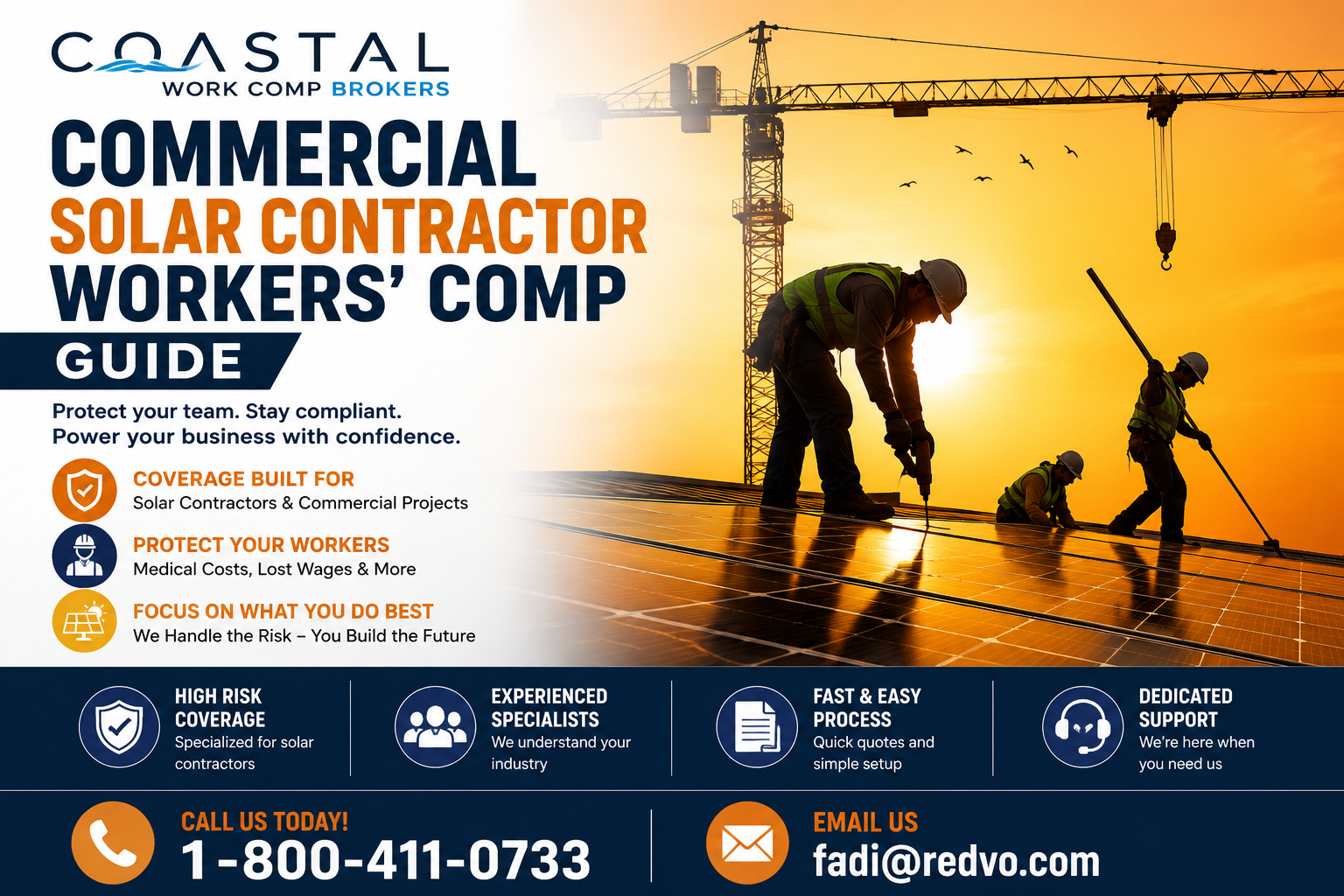
The commercial solar industry is experiencing a massive boom. As businesses and utilities rush to adopt renewable energy, the demand for skilled commercial solar contractors has never been higher. However, with great opportunity comes great risk. Installing solar panels on commercial rooftops and ground-mounted arrays involves significant physical hazards. This is why Commercial Solar Contractor Workers Comp Insurance is not just a legal requirement—it is the backbone of a sustainable and responsible business. At Coastal Work Comp, we understand the unique challenges faced by solar contractors. From sun exposure and heavy lifting to working at dangerous heights, your crew faces risks that demand specialized coverage. Let’s explore why this insurance is critical and how you can secure the best policy for your company. The Unique Risks of Commercial Solar Installation Commercial projects are significantly different from residential installations. They are larger, more complex, and often involve higher voltage systems and intricate structural engineering. As a result, the injury rate in the solar installation sector is notably higher than in general construction. Your employees work with live electrical components, heavy glass panels, and sharp metal framing. They operate boom lifts and cranes and spend hours on sloped or fragile roofs. Without commercial solar workers’ compensation, a single accident could lead to devastating medical bills, lawsuits, and regulatory fines that could bankrupt your operation. Why Standard Policies Are Not Enough Many contractors make the mistake of assuming a generic construction workers’ comp policy will suffice. However, standard policies often fail to account for the specific occupational hazards of solar work, such as: Electrical Shock: High-voltage DC systems pose a unique electrocution risk. Heat Illness: Working on reflective rooftops during summer can lead to severe heatstroke. Falling Objects: Panels or tools dropped from heights can cause traumatic head injuries. Working with a provider like Coastal Work Comp ensures that your policy is tailored to these specific exposure codes, providing comprehensive coverage without gaps. Key Benefits of Workers Comp for Solar Contractors Carrying a robust workers’ compensation policy does more than keep you compliant with state laws. It serves as a strategic asset for your business. 1. Medical Expense Coverage If a worker falls from a scissor lift or suffers an electrical burn, the policy covers their immediate and ongoing medical care. This includes hospitalization, surgery, rehabilitation, and physical therapy. 2. Lost Wage Reimbursement An injured employee may be out of work for weeks or months. Workers’ comp provides a percentage of their lost wages, ensuring they can pay their bills while they recover. This fosters loyalty and reduces employee turnover. 3. Liability Protection Perhaps the most critical aspect is the protection it offers your business from lawsuits. If an employee gets hurt, the policy typically prevents them from suing you for negligence, provided the coverage is in place. 4. Compliance and Contractual Requirements Most commercial clients and general contractors will not allow you on their job sites without proof of valid workers’ compensation insurance. Having coverage is the key that unlocks high-value commercial contracts. How to Reduce Your Workers’ Comp Premiums While coverage is essential, the costs associated with commercial solar contractor workers’ comp can be significant. However, you can take steps to manage these expenses proactively: Implement a Safety Program: Documented safety protocols, daily toolbox talks, and mandatory harness training can lower your “experience modification rate” (EMR). Hire Experienced Staff: Workers with a history of safe work practices are less likely to file claims. Return-to-Work Programs: Offering light-duty tasks to injured employees helps reduce claim severity and gets them back on the payroll faster. Partner with Experts: Working with agencies like Coastal Work Comp allows you to compare rates and find the best coverage for your specific risk profile. The Role of Classification Codes Insurance premiums are based on classification codes. For solar contractors, the correct code is critical. If you are misclassified, you could be paying too much—or worse, you could be underinsured. The classification for solar panel installation usually falls under electrical or construction codes, but it can be nuanced based on whether you are installing on ground mounts or rooftops. A knowledgeable agent will ensure your policy uses the correct code, which affects your premium rate. At Coastal Work Comp, we specialize in ensuring these details are accurate to protect you from audit surprises. Conclusion As the solar industry continues to illuminate the future of energy, the safety of your workforce must remain a priority. Coastal Work Comp is the foundation of that safety net. It protects your employees from financial ruin after an injury and safeguards your company’s reputation and assets.