

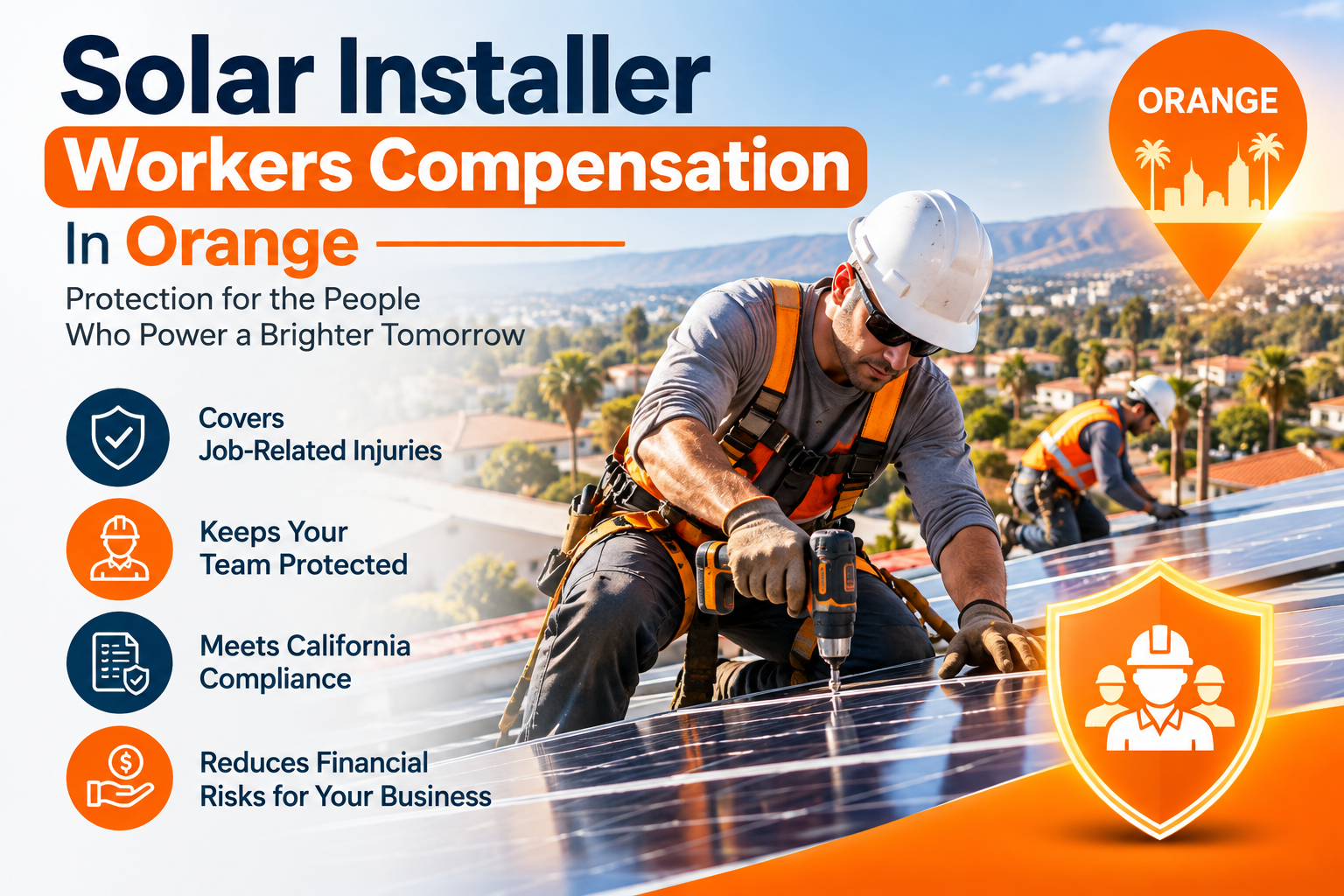
Solar crews in Orange County, California work in conditions that are different from other parts of California. Most work is in established suburbs such as Anaheim, Irvine, Santa Ana and Huntington Beach, where many homes have concrete or clay tile roofs and HOA design rules. Coastal Work Comp helps solar installers and contractors in Orange County set up workers’ compensation coverage that matches the work their crews actually do. Call 1-800-411-0733 to talk with our team.
Solar installation work in Orange County, California
A large share of Orange County jobs are residential retrofits on tile roofs and battery add-ons for existing systems, along with commercial rooftops in business parks around Irvine and Costa Mesa.
Because job types vary so much, the same company can have very different risks from one week to the next. A residential rooftop crew, a commercial install team and a service technician each face different hazards, and your workers’ comp policy should be built around all of them.
California workers’ compensation rules for solar contractors
California requires every employer with even one employee to carry workers’ compensation insurance or hold a certificate of self-insurance. Operating without coverage is a crime in California and can lead to stop orders and penalties from the Labor Commissioner.
Solar contractors in California usually work under a C-46 Solar or C-10 Electrical license from the Contractors State License Board (CSLB). The CSLB will not keep a license active without a current workers’ comp certificate on file, unless the contractor has filed an exemption because it has no employees.
Claims and disputes in the state are handled by the California Division of Workers’ Compensation (DWC). If an employee in Orange County is hurt on the job, report the injury to your carrier quickly and keep notes on what happened, who saw it and what treatment was given.
Common injury risks for solar crews in Orange County
Tile roofs crack and shift underfoot, which makes walking and staging panels harder than on composition shingle. The most common risks we see for solar businesses in this area include:
- Heat exhaustion and heat stroke on dark or metal roofs
- Burns from roof surfaces and panel frames left in the sun
- Dehydration and fatigue that lead to slips and dropped tools
- Salt air that corrodes ladders, racking and fasteners
- Strong coastal winds while handling panels
- Falls from roofs, ladders and lifts
- Electrical shock and arc flash while wiring inverters and panels
- Back and shoulder strains from lifting panels
Cal/OSHA’s outdoor heat illness standard applies to rooftop crews. It requires water, shade, rest breaks and a written heat illness prevention plan, with extra steps once temperatures pass 80°F and again at 95°F.
Employees, subcontractors and 1099 installers
California uses the ABC test from AB 5 to decide whether a worker is an employee. An installer who works under your direction, does the same kind of work your company sells, and does not run a separate business is likely to be treated as your employee, even if you pay them on a 1099.
Many solar companies in Orange County use a mix of their own crews and outside electricians or roofers. Write down who does what on each job, keep current certificates on file, and tell your carrier about any subcontracted work so it is handled correctly at audit time. If you want to avoid a large year-end audit bill, ask us about pay-as-you-go workers’ comp, which bills premium from actual payroll each pay period.
How solar workers’ comp premiums are set
Premium is based on three main things: the class codes that describe each employee’s job, the payroll in each class, and your company’s experience modification factor (EMR), which reflects past claims. Installers who work on roofs are usually rated very differently from warehouse staff, sales reps or office employees, so splitting payroll correctly between classes can make a large difference in cost.
Good safety habits lower costs over time. A written fall protection plan, documented training, regular ladder and harness checks, and a return-to-work program all help keep claims small and your EMR down.
Getting coverage in Orange County
Coastal Work Comp works with A-rated carriers that write solar and other high-risk contractors, including companies with past claims, a high EMR or a gap in coverage. To get started, have your payroll by job type, a short description of your work and your past three years of loss history ready. You can read more on our solar installer workers’ comp insurance page and our guide to solar workers’ comp in California, or contact us for a quote.
Frequently asked questions
Do solar installers in Orange County need workers’ comp?
Yes. California requires workers’ comp for every employer with at least one employee, and the CSLB requires proof of coverage to keep a solar or electrical license active.
Does workers’ comp cover rooftop falls?
Yes. Work-related injuries to covered employees, including falls from roofs and ladders, are generally covered. Benefits can include medical care and partial wage replacement while the worker recovers, as set by California law.
How fast can I get a certificate of insurance?
Once a policy is bound, a certificate can often be issued the same day, so you can send it to a homeowner, utility or general contractor before the job starts. Call 1-800-411-0733 to start.


