

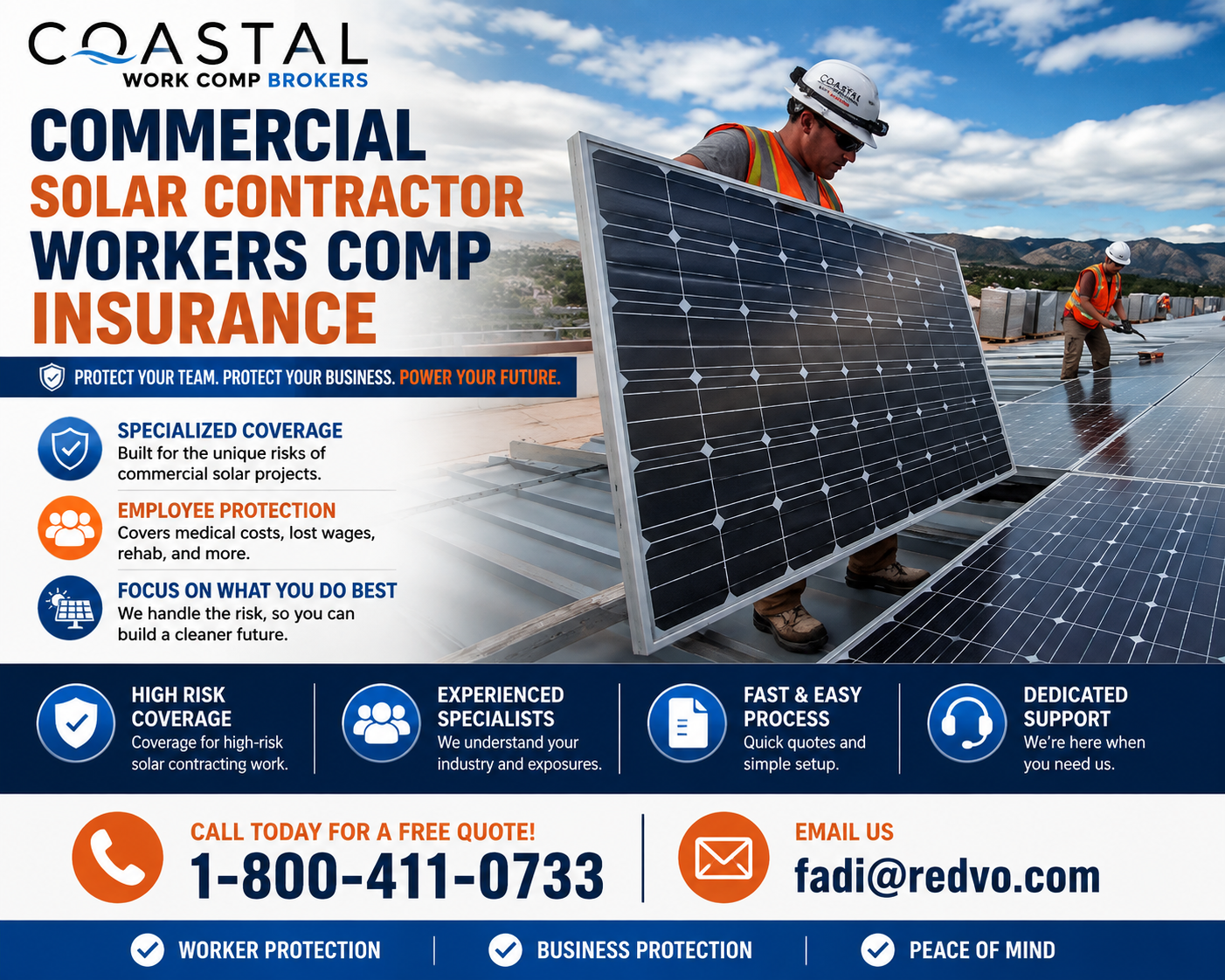
The residential solar industry is booming. As homeowners rush to embrace renewable energy, the demand for skilled installers has skyrocketed. However, beneath the glow of those shiny new panels lies a harsh reality: roofing and electrical work are dangerous. For business owners in this sector, Residential Solar Installer Workers’ Compensation Coverage isn’t just a legal requirement; it is the backbone of your business survival.
Many solar company owners make the mistake of treating workers’ comp as a generic expense. They bundle it with standard policies, unaware that the specific risks of solar installation require specialized attention. Let’s break down why standard policies fail and how a tailored approach protects your crew and your profits.
Why Standard Workers Comp Isn’t Enough
General contractors and electricians face different hazards than residential solar installers. Your team isn’t just running wires; they are carrying heavy equipment up ladders, drilling into complex roofing materials, and working under the intense heat of the sun.
A standard workers’ comp policy often classifies solar installers under a generic “construction” code. However, the Roofing Code (often code 5551) is significantly more expensive than the general Electrical Wiring Code (code 5190). If you misclassify your employees to save money, you are committing “premium fraud.” When an injury occurs (and it will), the insurance company will investigate. If they discover your electrician was actually installing roof-mounted racks, they will deny the claim and back-charge you for the difference in premium. This can bankrupt a small business.
The Unique Risks of Solar Installation
To understand the necessity of specific coverage, you must understand the risks your employees face daily:
-
Fall Hazards: This is the number one killer in construction. Residential roofs are steep, slippery, and often fragile. Working with cumbersome solar panels throws off an installer’s center of gravity, increasing the risk of slips and falls.
-
Electrical Shock: Even with the power turned off, stored energy and faulty wiring can cause fatal electrocution.
-
Heat Stress: Solar installers work during peak sunlight hours. Heat exhaustion and heat stroke are common, leading to accidents and long-term health issues.
-
Musculoskeletal Injuries: Lifting 60-pound panels over your head repeatedly leads to shoulder, back, and knee damage that requires expensive surgery.
A standard policy might cover a broken leg, but a robust Residential Solar Installer Workers Compensation policy covers lost wages, physical therapy, and even the legal fees associated with claims. It acts as a shield against lawsuits, which are common when an installer falls off a roof.
The High Cost of Going Uninsured
In the rush to win bids, some small solar startups gamble by not carrying proper coverage. This is a ticking time bomb. Here is what happens when you skip or underinsure your workers’ comp:
-
State Penalties: Most states mandate workers’ comp. Fines can range from thousands to tens of thousands of dollars per violation.
-
Stop-Work Orders: If you are caught without coverage, the state can shut your job site down. This means angry homeowners, lost deposits, and a ruined reputation.
-
Personal Liability: Without insurance, you are personally on the hook for medical bills. A single trip to the ER for a spinal injury can easily exceed $100,000.
-
Loss of Contracts: General contractors and commercial clients require a certificate of insurance before they allow you on their property. Without it, you are excluded from the best-paying jobs.
How Coastal Work Comp Can Help
Navigating the complexities of workers’ comp for residential solar can feel overwhelming. That is where specialization comes in. Providers like Coastal Work Comp understand the nuances of the renewable energy sector. They don’t just look at your payroll numbers; they analyze your safety protocols, your training methods, and the specific type of installations you handle—whether it’s shingle, tile, or flat roofs.
A specialized agent can help you:
-
Accurately Classify Workers: Ensuring you pay the correct rate for electricians versus roofers.
-
Implement Safety Programs: Reducing the frequency of claims, which lowers your Experience Modification Rate (EMR) and saves you money in the long run.
-
Crisis Management: Providing immediate support if a claim occurs, ensuring your injured worker gets the best care while you focus on running your business.
Conclusion
Residential solar installation is a fantastic industry to be in, but it is not without its risks. Protecting your most valuable asset—your employees—is not just an ethical obligation; it is a financial necessity. Standard policies often leave gaps that can cost you thousands of dollars in uncovered claims or penalties.
Don’t gamble with your business’s future. Invest in Coastal Work Comp that is built for the specific dangers of your trade. A specialized policy ensures that when accidents happen, you are covered, compliant, and ready to keep growing.


