

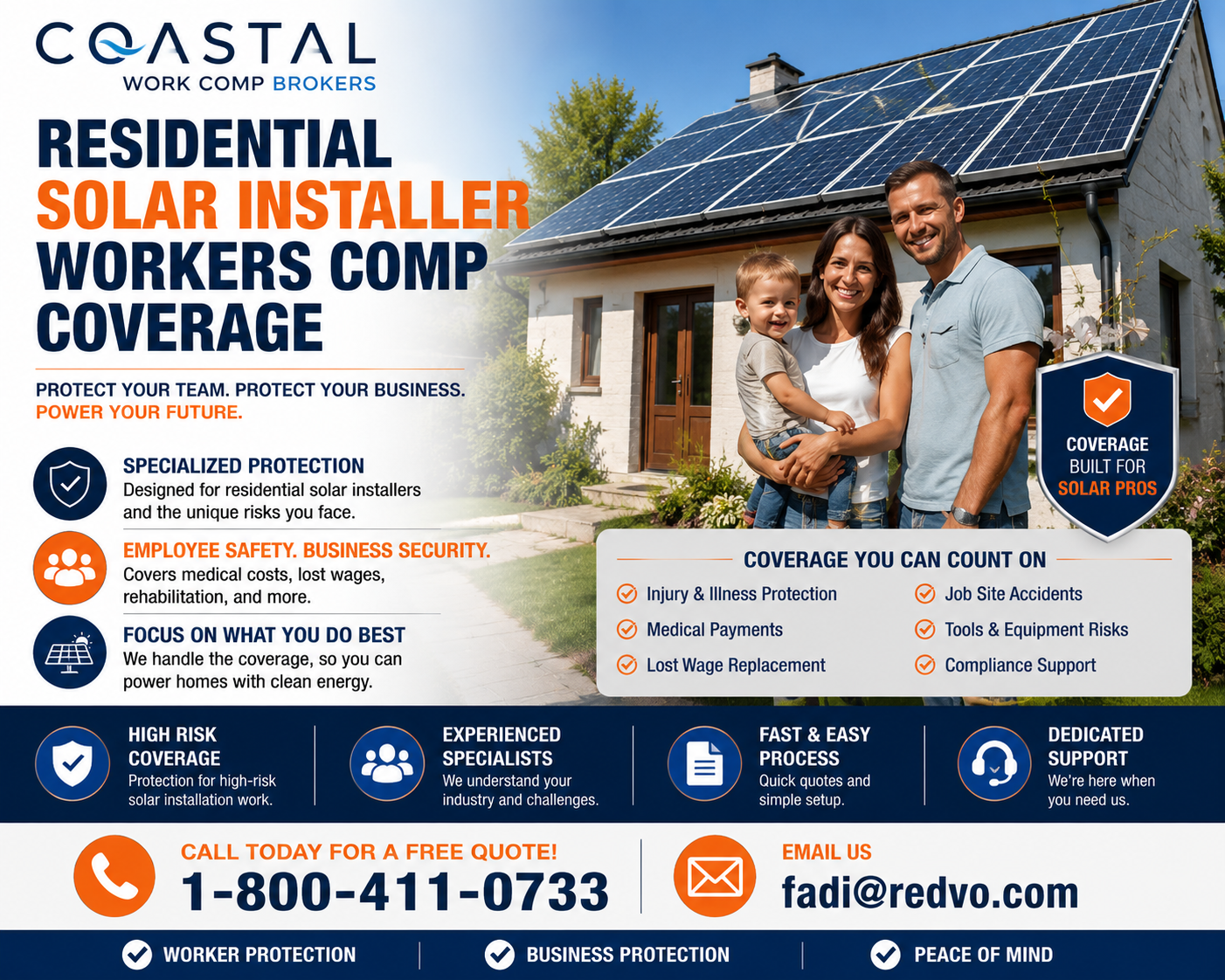
The solar industry is booming. As more homeowners invest in renewable energy, the demand for residential solar installation is skyrocketing. But with this growth comes significant risk. Installing solar panels on residential rooftops involves heights, heavy equipment, electrical wiring, and unpredictable weather. For business owners in this sector, Residential Solar Installer Workers’ Compensation Coverage isn’t just a legal requirement—it’s a financial safety net that can make or break your company.
At Coastal Work Comp, we understand the unique hazards that solar installers face daily. This guide will break down why workers’ comp is critical for your business, what it covers, and how to secure the best policy for your crew.
Why Solar Installers Need Specialized Coverage
Residential solar installation is physically demanding and inherently dangerous. Unlike general construction work, solar installers are often perched on sloped roofs with heavy glass panels and live wiring. A single slip, electrical shock, or dropped tool can lead to severe injury.
Standard workers’ compensation policies might not fully address the specific nuances of this trade. If you are a solar contractor, you need a policy that acknowledges the frequency of falls, the risk of musculoskeletal injuries from carrying panels up ladders, and the potential for long-term disability due to back or joint strain.
Without adequate coverage, one accident could result in:
-
Out-of-pocket medical expenses for injured employees.
-
Lawsuits from workers claiming negligence.
-
Penalties from state regulatory agencies for non-compliance.
What Does Solar Installer Workers’ Comp Cover?
A comprehensive workers’ compensation policy for residential solar installers typically covers five key areas:
-
Medical Expenses: Covers emergency room visits, surgeries, hospital stays, physical therapy, and prescription medications resulting from a work-related injury.
-
Disability Benefits: If an installer is unable to work due to an injury, workers’ comp provides a portion of their lost wages. This can be temporary (partial or total) or permanent.
-
Rehabilitation Costs: Physical and vocational rehabilitation helps injured workers recover and, if necessary, retrain for a different role within the company if they cannot return to their previous duties.
-
Death Benefits: In the tragic event of a fatality on the job, workers’ comp provides financial support to the employee’s dependents and covers funeral expenses.
-
Legal Defense: If an employee sues the employer for an injury, the policy often covers legal fees and court costs.
The Hidden Costs of Underinsurance
Many small residential solar companies try to cut corners by underreporting payroll or classifying installers as “independent contractors” to save money on premiums. This is a dangerous gamble.
If a worker is injured and it is discovered that they were misclassified, the employer becomes liable for all injury costs plus heavy fines. Furthermore, if you are underinsured, the state workers’ compensation board can issue a stop-work order, halting all of your active projects until you secure proper coverage. The loss of business revenue during that downtime often far exceeds the cost of the insurance premium itself.
Common Risks in the Residential Sector
While commercial solar projects have their own dangers, residential work offers unique challenges:
-
Roof Instability: Residential roofs are not designed to hold heavy loads of equipment and multiple workers. Collapses are rare but catastrophic.
-
Ladder Accidents: Falls from ladders remain one of the leading causes of injury in the construction industry.
-
Electrical Burns: Working with live DC circuits can cause serious burns and cardiac issues.
-
Heat Exhaustion: Installation often occurs in hot, direct sunlight. Heat stroke is a legitimate occupational hazard.
-
Repetitive Motion: Constant bending, lifting, and twisting lead to chronic back and shoulder issues over time.
How to Lower Your Premiums (Without Sacrificing Coverage)
While workers’ compensation costs can be high for the construction industry, there are ways to manage expenses:
-
Implement a Safety Program: Insurance carriers reward companies that prioritize safety. Regular training on ladder safety, proper lifting techniques, and electrical safety can reduce claims.
-
Hire Experienced Workers: Skilled workers are less likely to have accidents. While you may pay them more, you save on comp claims.
-
Audit Payroll Accurately: Ensure you are classifying workers correctly. Contractors should have their own policies to avoid being counted on your payroll.
-
Work with a Specialist: Partner with experts like Coastal Work Comp who understand the solar industry. We can help you navigate complex class codes and find the best rates.
Conclusion
Residential solar installation is a rewarding industry that helps build a sustainable future. However, the physical demands of the job mean that employers must prioritize the safety and well-being of their workforce. Residential Solar Installer Workers’ Compensation Coverage is the foundation of that protection.
It ensures that if an accident happens—and statistically, it will—your employees are cared for and your business survives. Don’t risk your assets on a generic policy. Work with a provider who understands the specific needs of the solar sector.
Protect your crew, your reputation, and your bottom line. For more information on tailored coverage, visit Coastal Work Comp today.


