

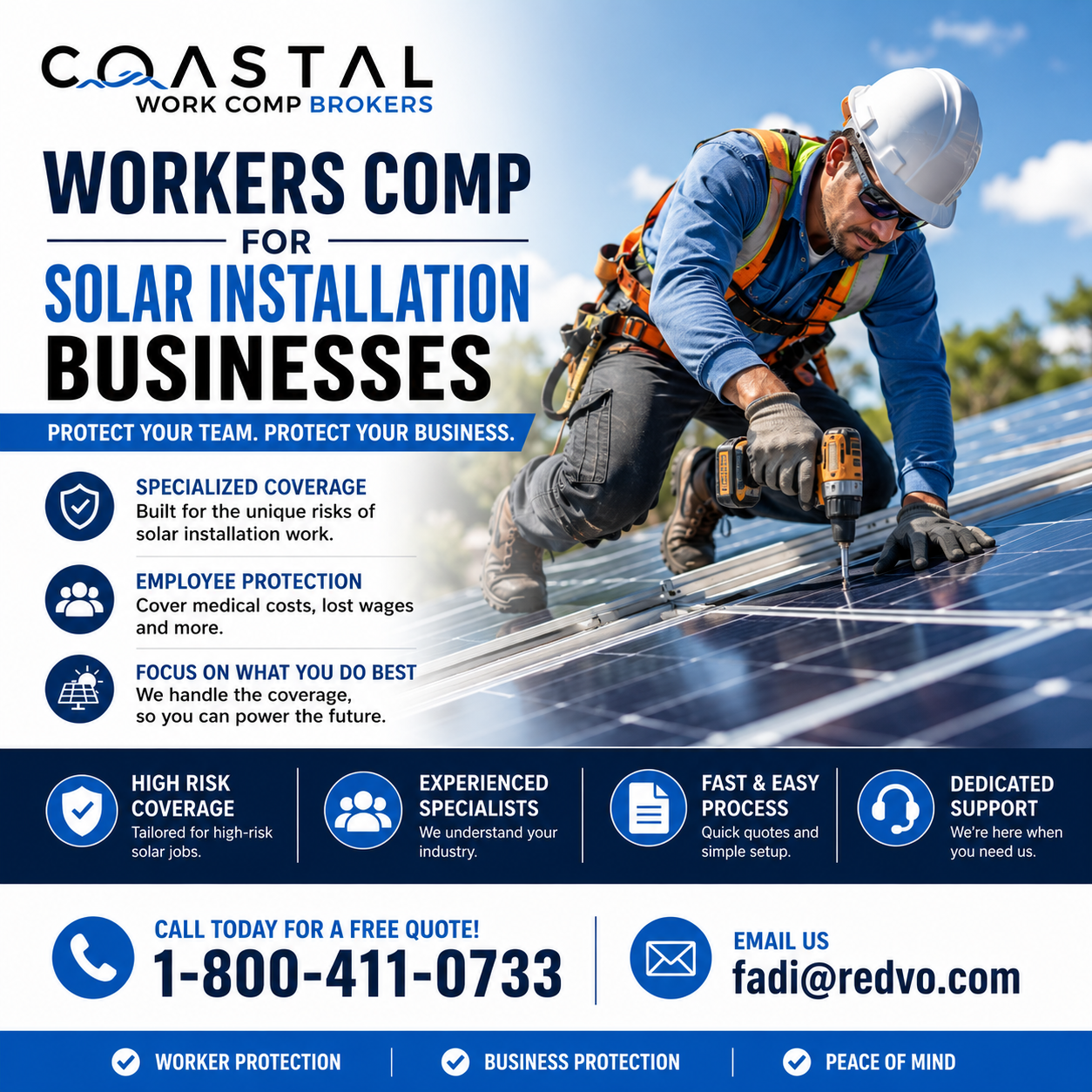
The solar energy industry is booming. As more homeowners and businesses switch to renewable energy, solar installation companies are rapidly scaling up their operations. However, with this growth comes significant risk. Unlike a typical office environment, solar installation involves heavy lifting, electrical hazards, and—most dangerously—working at significant heights.
For business owners, protecting your team isn’t just a legal obligation; it is a financial necessity. Workers’ Compensation insurance for solar installation businesses requires a specialized approach to ensure you are fully covered when accidents happen.
Why Solar Installation Is a High-Risk Occupation
Understanding the specific hazards of the job is the first step in securing the right coverage. Solar installers face a unique combination of risks that push them into a “high-risk” category for insurers.
1. Roof Fall Hazards: The most common and severe risk is falls from roofs. Whether it is a residential two-story home or a commercial flat roof, the potential for serious injury is high.
2. Electrical Shocks: Installers work directly with live electrical currents and high-voltage systems. An arc flash or shock can be fatal.
3. Heavy Lifting: Solar panels are heavy and awkward to carry. Musculoskeletal injuries from lifting, carrying, and maneuvering panels are frequent claims.
4. Weather Exposure: Working outdoors exposes employees to extreme heat, leading to heatstroke, dehydration, and sun damage.
The Cost of Being Uninsured or Underinsured
Many new business owners look at the workers’ comp premium and see it as a burden. However, the cost of an accident without proper insurance is significantly higher.
If an employee falls from a roof and breaks their leg, the medical bills and lost wages could easily reach six figures. Without workers’ comp, the business owner is personally liable for those costs. Furthermore, in most states, operating without this coverage is illegal and can result in hefty fines, license suspension, or even criminal charges.
Underinsurance is another pitfall. If your policy limits are too low, you might still be on the hook for medical expenses that exceed the coverage cap.
Key Considerations for Solar Business Owners
When shopping for “Workers Comp for Solar Installation Businesses,” there are a few specific factors you should keep in mind.
1. Accurate Classification Codes
The cost of your insurance is largely determined by classification codes. It is critical to ensure your employees are categorized correctly. For example, a roofer and an electrical contractor have different risk levels. A solar installer might be classified as “Solar Panel Installer” or “Roofer—Not Otherwise Classified.” An error here could lead to an audit penalty or a denied claim.
2. Experience Modification Rate (EMR)
Your EMR is a number used by insurers to gauge your past cost of injuries. An EMR of 1.0 is the industry average. If you have a history of accidents, your EMR goes up, and so do your premiums. Implementing a robust safety program is the best way to keep your EMR low.
3. Hiring Subcontractors
Many solar companies hire subcontractors for additional labor. Be cautious. If your subcontractors do not carry their own workers’ comp, you may be held liable for their injuries under your policy. Always request a certificate of insurance from every subcontractor.
Tips to Reduce Your Workers’ Comp Premiums
High-risk industries often face high premiums, but there are legitimate ways to reduce costs without sacrificing coverage.
-
Invest in Safety Training: A well-trained crew is a safe crew. Regular safety meetings focused on ladder safety, electrical safety, and proper lifting techniques reduce the frequency of claims.
-
Return-to-Work Programs: Injured employees who are offered light-duty work return to the job faster. This reduces the total payout for disability claims and lowers your long-term premium adjustments.
-
Vehicle Safety: Many installers spend a lot of time on the road. While driving accidents are separate from workers’ comp, they often lead to injuries that are claimed. Ensure your commercial auto policy is comprehensive to prevent claim overlap.
Finding the Right Partner
Not every insurance agency understands the nuances of the construction and energy sector. You need a partner who knows the specific code classifications for solar and can advocate for you when rates increase.
AtCoastal Work Comp,we specialize in helping high-risk businesses secure affordable and comprehensive coverage. We understand the dangers of rooftop work and the importance of keeping your crew protected so you can focus on growing your business.


