

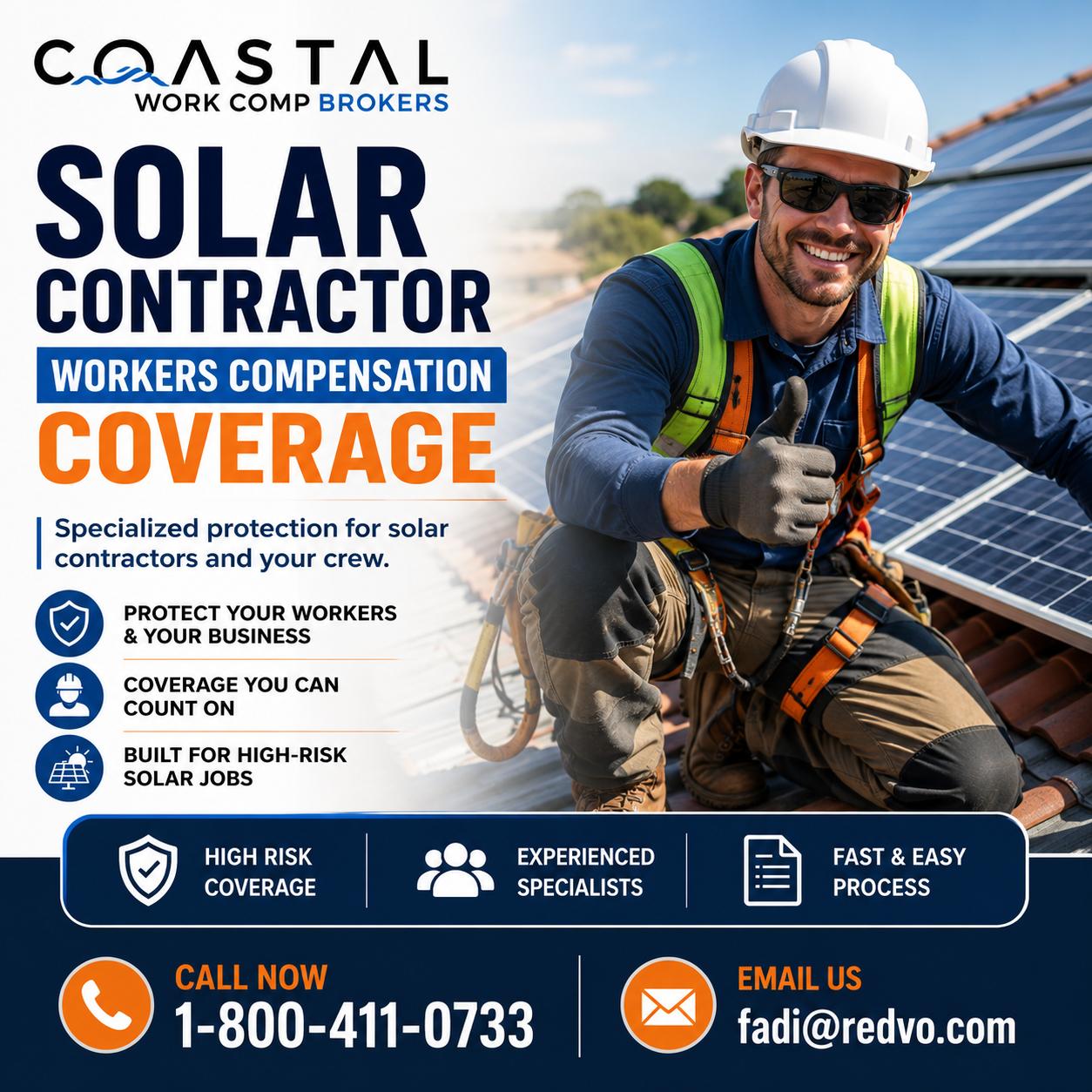
Solar Contractor Workers Compensation Coverage

Solar Workers Comp Insurance | Coastal Work Comp

The solar energy industry is booming. As more homeowners and businesses switch to sustainable power, the demand for solar panel installation and maintenance has skyrocketed. However, with this rapid growth comes significant risk. If you own a solar contracting business, you are likely familiar with the unique dangers your employees face daily. From working at dizzying heights to handling high-voltage electrical systems, the job is fraught with potential hazards.

In this high-stakes environment, having a robust insurance policy is not just a legal formality; it is the backbone of your business’s survival. This is where Solar Contractor Workers’ Compensation Coverage becomes non-negotiable. Let’s dive into why this specific coverage is vital and how it protects your crew and your company.

The Unique Risks of Solar Installation

Unlike traditional construction work, solar installers often work on roofs that are steep, slippery, or structurally unsound. They are exposed to the elements, carrying heavy glass panels that are susceptible to breakage. Furthermore, the electrical component introduces a risk of arc flashes and electrocution. A fall from a roof or a serious electrical burn can lead to devastating injuries that result in significant medical expenses and long-term disability.

Without comprehensive workers’ compensation, a single accident could bankrupt a small solar business. This coverage ensures that your employees receive immediate medical care and wage replacement, while simultaneously protecting your company from expensive lawsuits.

Understanding the Coverage Essentials

Solar Contractor Workers’ Compensation Coverage is designed specifically to handle the occupational hazards of the solar industry. It typically covers:

  1. Medical Expenses: Immediate and long-term medical treatment for injuries sustained on the job.

  2. Disability Benefits: Partial wage replacement for employees who are temporarily or permanently unable to work.

  3. Rehabilitation Costs: Physical therapy and vocational training to help injured workers return to the workforce.

  4. Death Benefits: Financial support for the families of employees who are fatally injured on the job.

The Financial Reality of “Going Bare”

Many small solar contractors try to cut costs by operating without workers’ comp or by misclassifying employees as independent contractors. This is a dangerous gamble. In most states, if an uninsured employee is injured on your job site, you are personally liable for the full cost of their medical bills, lost wages, and disability.

Moreover, many commercial clients require proof of workers’ compensation before signing a contract. If you lack the right coverage, you could lose lucrative bids to competitors who prioritize employee safety. At Coastal Work Comp, we understand that securing the right policy is an investment in your business’s credibility and long-term financial health.

How to Lower Your Premiums

While coverage is essential, the cost is often a concern for business owners. Here are three ways to manage your premiums:

  • Implement a Strong Safety Program: Fewer claims equal lower premiums. Regular safety meetings and strict adherence to OSHA guidelines can reduce your risk profile.

  • Accurate Payroll Reporting: Ensure you accurately report your payroll for field workers versus office staff. Clerical workers are typically rated at a much lower rate than roofers.

  • Hire Experienced Workers: Employees with more experience tend to have fewer accidents. Providing comprehensive training for new hires is a direct investment in reducing your insurance costs.

Workers Compensation For Staffing Agencies in Delaware

Tailored Coverage Options

We work with multiple carriers to provide flexible and affordable workers’ compensation insurance plans designed to meet your business needs.


How Much Does Insurance Cost for a Staffing Agency

Compliance & Risk Management

Workers’ compensation laws can be complex and vary by state. We make sure your business remains fully compliant while reducing risks that could lead to costly fines or legal challenges.


Professional Employer Organisation Little Rock, Arkansas

Employee Retention

Your employees are the backbone of your business. With comprehensive workers’ compensation coverage, we ensure they are financially and medically supported in the event of workplace injuries or illnesses.


Can a Staffing Agency Self-Insure for Unemployment Insurance

Client Confidence

Managing insurance on top of running a business can be overwhelming. We simplify the process by handling all the detailspolicy comparisons, carrier negotiations, claims support, and renewals

Workers Compensation For Staffing Agencies in Delaware

Conclusion

The transition to renewable energy is exciting, but it requires a commitment to safety that starts with protecting your most valuable asset—your employees. Solar Contractor Workers’ Compensation Coverage is the shield that allows your business to handle the highs (literally) and lows of the solar industry.

Don’t wait for an accident to happen to realize your coverage is insufficient. Secure your business with a policy that understands the unique risks of the trade. For tailored solutions that prioritize your team’s safety and your business’s future, trust Coastal Work Comp. Our expertise ensures you are covered from the ground up—or rather, from the roof down.

Frequently Asked Questions

Is workers' compensation legally required for solar contractors?

Yes, in almost all states, once you have employees (other than yourself), you are legally required to carry workers’ compensation insurance. Penalties for non-compliance can be severe.

Does the policy cover subcontractors I hire?

Not necessarily. In most cases, independent subcontractors are responsible for their own insurance. It is crucial to request proof of their coverage before they step onto your job site to avoid being held liable.

What happens if an employee is injured on a residential roof?

The coverage applies regardless of the location of the injury. Whether it’s a residential rooftop or a commercial ground installation, as long as the employee is performing work-related duties, the claim is valid.

How are premiums calculated for solar workers?

Premiums are calculated based on your total payroll and a specific “class code” assigned to your type of work. The industry is generally rated as high-risk due to the combination of heights and electrical hazards.

Are office staff included in the coverage?

Yes, but the rating is different. Clerical staff are charged a significantly lower rate per $100 of payroll compared to field installers, provided they do not visit the job site.

What should I do if an employee gets injured?

You must provide immediate medical attention, document the incident, complete the appropriate state-mandated forms (usually a First Report of Injury), and file a claim with your insurer promptly.

Does coverage include damage to the solar panels themselves?

No, workers’ compensation strictly covers bodily injury and occupational disease. Damage to tools, equipment, or panels is covered under a separate General Liability or Inland Marine policy.

Can I exclude owners from the policy to save money?

In many states, sole proprietors, partners, and LLC members can opt out of including themselves in the coverage, which can lower costs. However, this excludes them from benefits if they are injured.