
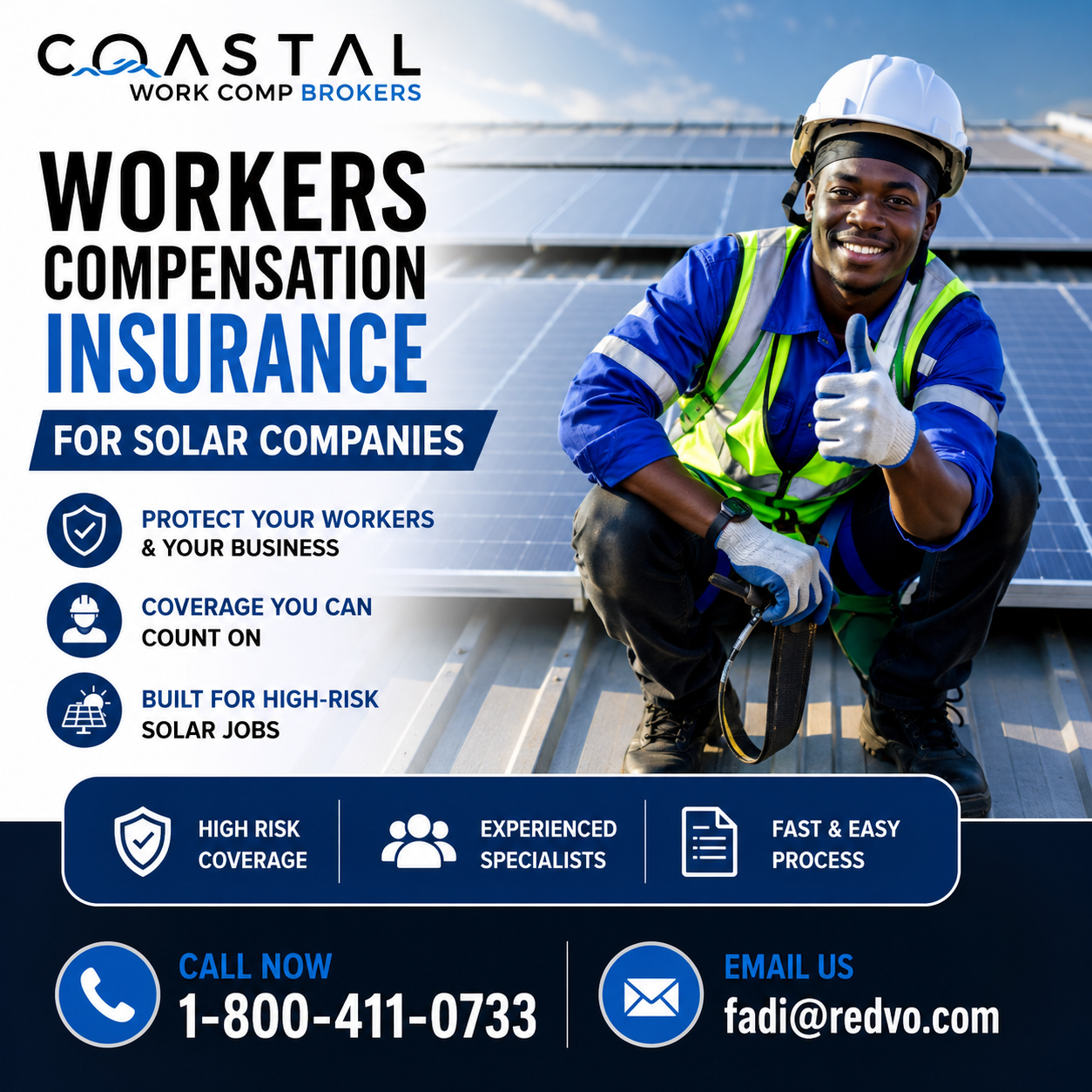
The solar industry is shining brighter than ever. As homeowners and businesses rush to adopt renewable energy, solar installation companies are scaling up rapidly. But with growth comes risk. Every day, your crew climbs ladders, hauls heavy panels onto rooftops, and handles live electrical wiring. In this high-stakes environment, one accident can threaten everything you’ve built. That’s where workers’ compensation insurance for solar companies becomes your most critical business asset.
At Coastal Work Comp, we understand the unique challenges solar contractors face. This guide breaks down why standard coverage falls short, the hidden dangers your workers face, and how to secure the right policy without breaking the bank.
Why Solar Companies Face Higher Risks
Solar installation is not roofing, and it’s not traditional electrical work—it’s a dangerous hybrid of both. This unique combination creates exposure that generalist insurers often misunderstand.
Falls from Heights
Working on residential sloped roofs or commercial flat roofs is a daily reality for solar installers. A single misstep, a loose shingle, or an unexpected gust of wind can send a worker falling. Falls are the leading cause of fatalities in construction, and the medical costs associated with spinal injuries or traumatic brain injuries can easily exceed $500,000.
Electrical Hazards
Solar panels generate direct current (DC) electricity, even when the grid is down. Installers work with combiner boxes, inverters, and live wiring. Arc flashes and electrocution are real threats. Unlike a standard electrician who works on de-energized systems, solar workers often deal with live DC voltage that cannot be fully “shut off” during daylight hours.
Heat Stress and Dehydration
Solar installations happen in the sun—that’s the point. But spending 8 hours on a reflective roof in Florida or Texas summer heat puts workers at high risk for heat stroke, which can cause permanent organ damage or death. Heat-related claims are often overlooked but are fully compensable under workers’ comp.
Musculoskeletal Injuries
Solar panels weigh 40 to 60 pounds each and are awkward to carry. Hauling them up ladders, across roofs, and into tight attics leads to chronic back injuries, shoulder damage, and knee problems. These soft-tissue injuries account for nearly 40% of all workers’ comp claims in the construction sector.
Why General Liability Insurance Is Not Enough
Many solar business owners mistakenly believe their General Liability policy covers workplace injuries. It does not. General Liability covers third-party injuries (like a panel falling on a client’s car) and property damage. It provides zero coverage for your own employees.
If your lead installer falls off a ladder and breaks their leg, your General Liability policy will not pay a single dollar toward their medical bills or lost wages. That claim must go through a Workers’ Compensation policy. Attempting to pay these costs out-of-pocket is financially devastating for most small businesses.
Strategies to Lower Your Workers’ Comp Premiums
Workers’ comp premiums are calculated based on your payroll and your Experience Modification Rate (MOD). A high MOD means higher premiums. Here is how to keep costs manageable.
Prioritize Safety Training
Investing in OSHA 10-hour or 30-hour training for your crew pays dividends. Insurance carriers offer premium discounts for documented safety programs. A trained worker is less likely to make dangerous mistakes.
Conduct Daily Toolbox Talks
Before your crew starts work each morning, hold a 5-minute safety briefing. Review the specific hazards of that day’s job site—roof pitch, weather conditions, skylight locations. This keeps safety top-of-mind and reduces careless errors.
Use Proper Lifting Equipment
Manual handling of panels is a major injury source. Invest in panel carts, suction cup handles, or conveyor systems to get panels onto the roof. The upfront cost is minimal compared to the cost of one serious back injury claim.
Implement a Return-to-Work Program
If a worker is injured but can perform light duties—like inventory management, permit pulling, or warehouse organization—bring them back to work. This reduces the total claim cost and minimizes the impact on your MOD.
Work with a Specialized Broker
Generalist insurance agents often lump solar companies into “roofing” or “electrical” classifications, which carry the highest rates. A specialized broker like Coastal Work Comp uses specific codes for “Solar Panel Installation,” which can significantly lower your premiums.
What to Do When an Injury Occurs
When an accident happens, speed and accuracy matter.
-
Seek Immediate Medical Care: The worker’s health is the priority. Call 911 for emergencies.
-
Report the Incident: Notify your supervisor and file an internal incident report.
-
Follow Your Policy’s Drug Testing Protocol: If required, administer a post-accident drug test within the designated timeframe.
-
File the Claim Immediately: Contact your insurance carrier or agent within 24 hours. Delays can result in penalties or denial.


