

The staffing industry is the backbone of the American economy, connecting millions of workers with opportunities across manufacturing, logistics, healthcare, and construction. However, for staffing agency owners, this dynamic environment creates a complex web of risk. Unlike traditional employers, staffing agencies must protect workers placed at various client locations, often across state lines, each with unique safety hazards. One of the most daunting challenges is managing Staffing Agencies Workers Compensation by State. With compliance laws, treatment guidelines, and insurance requirements varying wildly from state to state, a one-size-fits-all approach to insurance doesn’t work. A misstep can lead to severe penalties, uncovered claims, and damaged client relationships. At Coastalworkcomp, we specialize in untangling these complexities. This guide serves as your roadmap to understanding the nuances of workers compensation across the USA, ensuring your agency remains compliant, competitive, and confident. Why “By State” Matters More for Staffing Agencies For a standard local business, workers comp is straightforward: follow the local rules. But staffing agencies operate as “employers of record,” meaning the legal responsibility for coverage follows the employee, not the client. When you staff a warehouse in Phoenix, an office in Portland, and a construction site in Dallas, you are beholden to the regulations of Arizona, Oregon, and Texas simultaneously. Coastalworkcomp understands that your agency needs a partner who can navigate this multi-jurisdictional maze, ensuring that whether a worker is on a temporary assignment for one day or a long-term contract for a year, they—and your agency—are fully protected. Deciphering the State-by-State Landscape: Treatment Guidelines & Formularies Workers compensation isn’t just about paying for injuries; it’s about how injuries are treated. Many states have adopted specific medical treatment guidelines and drug formularies that dictate the course of care for an injured worker. Failing to adhere to these can result in denied claims and increased costs. According to industry data on state adoptions, the landscape is highly fragmented. Here is a look at how different states approach these critical components of workers’ compensation: States with Strict Guidelines: Some states mandate specific treatment guidelines to ensure consistency and cost control. California utilizes the Medical Treatment Utilization Schedule (MTUS). This means that for any temporary employee injured in CA, their medical care must strictly adhere to this state-specific schedule. Texas and Oklahoma have adopted ODG (Official Disability Guidelines) by MCG, which are used to manage treatment pathways and durations. States with Independent Approaches: Other states, like New York and North Carolina, rely on their own state-specific treatment guidelines rather than a third-party standard like ODG. States with Formulary Adoptions: Drug formularies control which medications (like opioids) are automatically approved. Arizona, Kentucky, Montana, and Tennessee have adopted ODG Formularies to manage pharmaceutical costs and promote safer prescribing. Arkansas, California, New York, and Ohio utilize state-specific formularies. States with Minimal Oversight: Interestingly, some states like Alabama, Florida, Georgia, and Pennsylvania currently have no mandated treatment guidelines or formularies in place. However, “none” does mean “no risk.” It simply places a greater emphasis on the payer (the staffing agency’s insurance) to manage medical necessity. What this means for your agency: If you place a worker in a state with strict ODG guidelines (like Arizona or Texas) but your insurance carrier is used to operating in a guideline-free state (like Florida), you may face claim delays and disputes. Coastalworkcomp ensures your policy aligns with the specific medical and legal requirements of the state where the work is performed. The Legal Definition of “Employer” in Key Staffing Hubs Understanding who the law considers the “employer” is fundamental. Generally, the staffing agency is the employer and must secure coverage. However, state laws provide specific nuances. California: Strict Experience Modification Pass-Through California’s Labor Code Section 3302 contains a critical provision for staffing agencies working with licensed contractors (e.g., construction). If your agency supplies a worker to a licensed contractor, and that contractor supervises the work, the workers compensation premiums must be calculated using the contractor‘s experience modification rating, not the agency’s. Compliance Requirement: The agency must report the contractor‘s name, address, and experience modification factor to the insurer monthly. Why this matters: This law prevents agencies from being unfairly penalized by the high-risk ratings of the contractors they serve. Coastalworkcomp helps agencies manage this complex reporting to ensure accurate and fair premium calculation. Wisconsin: Registration Requirements Wisconsin statutes differentiate between employment agents. For staffing agencies whose fees are paid directly by employers, there is a requirement to register annually with the department. This highlights that compliance goes beyond just buying an insurance policy; it involves formal state registration and small fees (like the $5 fee in Wisconsin) to legally operate. Florida: Mandatory Coverage in a High-Risk State Florida is a major hub for staffing in construction, healthcare, and logistics. While the state may not have strict medical formularies, it strictly enforces coverage mandates. Non-compliance can result in stop-work orders and severe fines. Given Jacksonville‘s role as a logistics and industrial center, staffing agencies there must have robust coverage that accounts for the high physical demands of warehouse and manufacturing roles. The Financial Risks: Why General Insurance Isn’t Enough Staffing agencies face unique financial pressures that make specialized coverage essential. The Experience Modification Rate (EMR): This is a number used by insurers to assess your past cost of injuries and future risk. A high EMR means higher premiums. If you have claims scattered across different client sites and states, managing your EMR can be difficult without a centralized risk management strategy. Rapid Turnover and Classification: Temporary workers often face higher risks due to unfamiliarity with client sites. Accurately classifying these workers (e.g., clerical vs. warehouse vs. construction) is vital. Misclassification is a leading cause of audit penalties. Client Confidence: In competitive markets like Jacksonville or Los Angeles, your ability to provide a Certificate of Insurance often determines whether you win a contract. Clients need to know they aren’t assuming liability. How Coastalworkcomp Simplifies Multi-State Compliance At Coastalworkcomp, we don’t just sell policies; we engineer compliance and savings. Here’s how our approach addresses
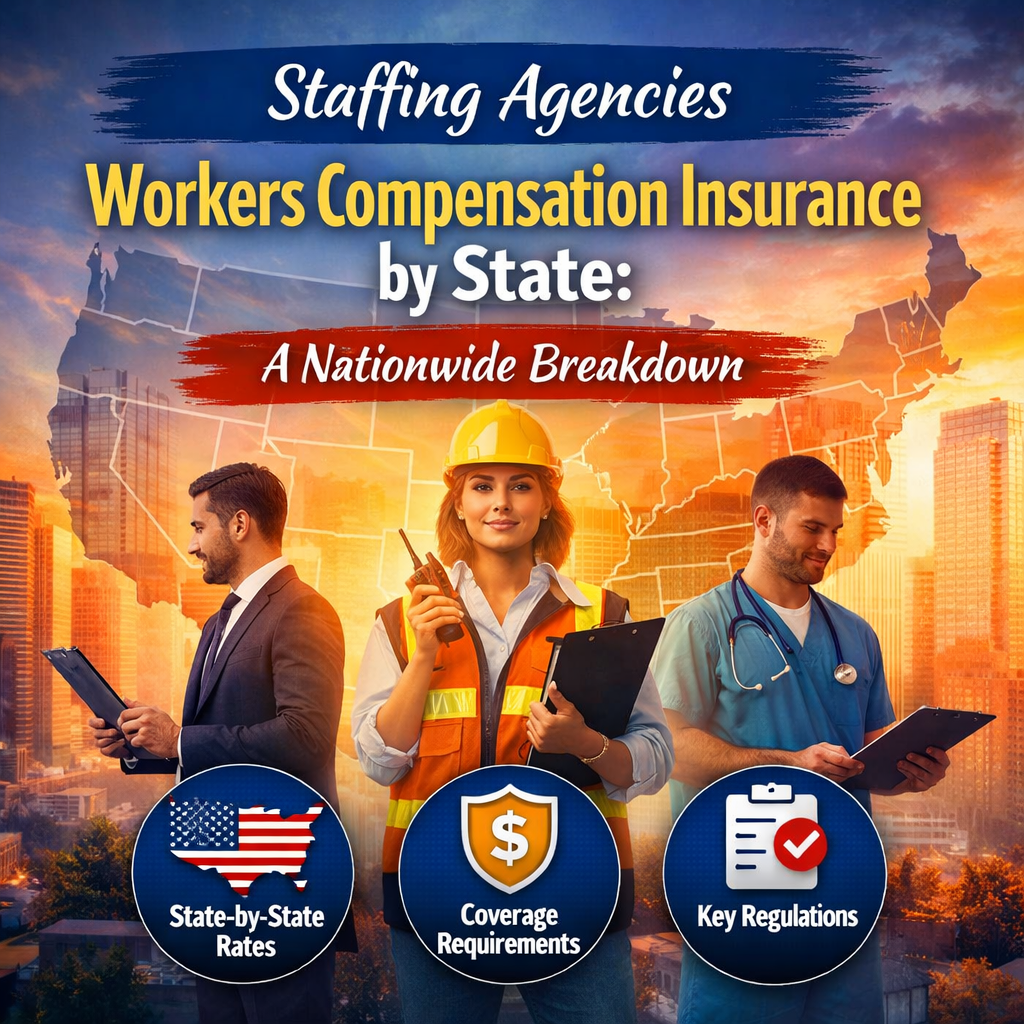
For Staffing Agencies, placing a worker in a job is only half the battle. The other half is making sure that the worker—and your business—is protected the moment they step onto a client’s site. Unlike standard businesses with a fixed location, staffing agencies operate in a state of flux. Your employees might be in Idaho one week and handling logistics in Jacksonville, Florida, the next. This geographic flexibility is your selling point, but it makes Staffing Agencies Workers Compensation Insurance by State one of the most complex puzzles in the business world. Because workers’ compensation is regulated at the state level, there is no “one-size-fits-all” policy. Requirements vary wildly—from how many employees trigger coverage to whether you can even buy insurance from a private carrier. At Coastal Work Comp, we specialize in hard-to-place workers’ compensation risks across all 50 states. This nationwide breakdown will help you navigate the patchwork of regulations, avoid costly penalties, and ensure your agency is covered no matter where your talent travels. Why Multi-State Compliance is a Staffing Agency Challenge Before we dive into the specific states, it’s important to understand why staffing agencies face a higher degree of difficulty when securing coverage. The “Temp” Factor: Your employees rotate between different employers (clients) and different job classifications. A worker might be doing administrative work this week and light warehouse duty the next. Class codes vary by state, and misclassifying that worker can lead to massive audit discrepancies. Statutory Variations: One state requires coverage from the moment you hire a single employee; another gives you a threshold of four or five employees before the law kicks in. The Monopoly Problem: In four specific states, you cannot buy workers’ comp from a private carrier like you normally would. You must go through a state fund. Let’s break down how to manage these variables. The “Big Four”: Navigating Monopolistic States The most critical factor in multi-state planning is identifying the Monopolistic States. In these jurisdictions, private insurance is prohibited for statutory workers’ compensation coverage. If you send a temporary worker to Ohio, you cannot simply add them to your existing nationwide policy. The four monopolistic states are: North Dakota Ohio Washington Wyomin The Coverage Gap Warning: Standard state fund policies in these states cover medical expenses and lost wages, but they do not include Employers Liability coverage. This leaves your agency vulnerable to lawsuits alleging negligence. If you operate in these states, you absolutely need Stop Gap Liability Insurance. This endorsement fills the void left by the monopolistic fund, protecting your agency from legal fees and settlements if an injured employee sues your firm.g Employee Thresholds: When Does Coverage Kick In? Many state laws are triggered only after you hire a certain number of employees. For staffing agencies, every employee counts—whether part-time, seasonal, or full-time. Here are the thresholds you need to know: States That Require Coverage Immediately (1 Employee) The majority of states require coverage the moment you hire your first employee. This includes high-activity staffing states like California, Colorado, Idaho, Louisiana, and New York. States With Higher Thresholds 3+ Employees: Arkansas, Georgia, Michigan*, New Mexico, North Carolina, Virginia . 4+ Employees: Alabama, Florida, South Carolina. 5+ Employees: Mississippi, Missouri, Tennessee. The Texas Exception Texas is the only state where private employers are not generally required to carry workers’ compensation. However, opting out does not mean opting out of risk. Without coverage, you forfeit the protections of the “grand bargain”—meaning an injured employee can sue your agency for full damages, including pain and suffering, which are not covered by standard comp. Deep Dive: Coastal Work Comp in Action At Coastal Work Comp, we don’t just sell policies; we provide survival tools for staffing agencies. Here is a closer look at how we handle specific state environments. Staffing Agencies in Idaho: Adaptability is Key Idaho requires coverage for any business with one or more employees. For staffing agencies in Idaho, the challenge is the diversity of industry placements. Whether you’re placing workers in agricultural settings or tech firms, your policy must be flexible enough to cover varying degrees of risk. Coastal Work Comp Approach: We provide customized approaches for Idaho staffing agencies that adapt to part-time and full-time workers, ensuring you aren’t paying for “phantom coverage” while remaining compliant with Idaho Department of Insurance standards. Staffing Agencies in Jacksonville, Florida: High-Risk Industries Florida mandates coverage once you have four or more employees (with strict construction industry rules applying to the first hire). Jacksonville is a hub for logistics, healthcare, and construction—all high-risk categories. Coastal Work Comp Approach: We focus on fast claims handling and risk management support. In a busy port city like Jacksonville, downtime is lost revenue. Our efficient claims process gets injured workers care quickly and gets them back to the job site, minimizing disruption for your client. The Risk of Non-Compliance For staffing agencies, the consequences of non-compliance are severe. If your agency is based in Georgia (3-employee threshold) but you place a single worker with a client in Florida (4-employee threshold), you must follow Florida law for that worker. Failure to secure coverage in the correct state can result in: Stop-Work Orders: Shutting down your ability to do business. Personal Liability: Owners and officers can be held personally liable for medical costs. Fines: Severe civil penalties that could bankrupt smaller agencies. Conclusion Navigating the intricate landscape of Staffing Agencies Workers Compensation Insurance by State requires a partner who understands the nuances of the staffing industry. You don’t have to manage the administrative burden of dealing with multiple state insurance plans alone. Don’t let state lines dictate your agency’s risk. Contact Coastal Work Comp today to secure a cohesive, compliant workers’ compensation strategy for your entire footprint. Frequently Asked Questions Can I have one national policy that covers all my staffing agency employees? Yes, most standard workers’ compensation policies are designed to cover injuries anywhere in the United States, as long as you have notified your carrier of your operations. This is known as the
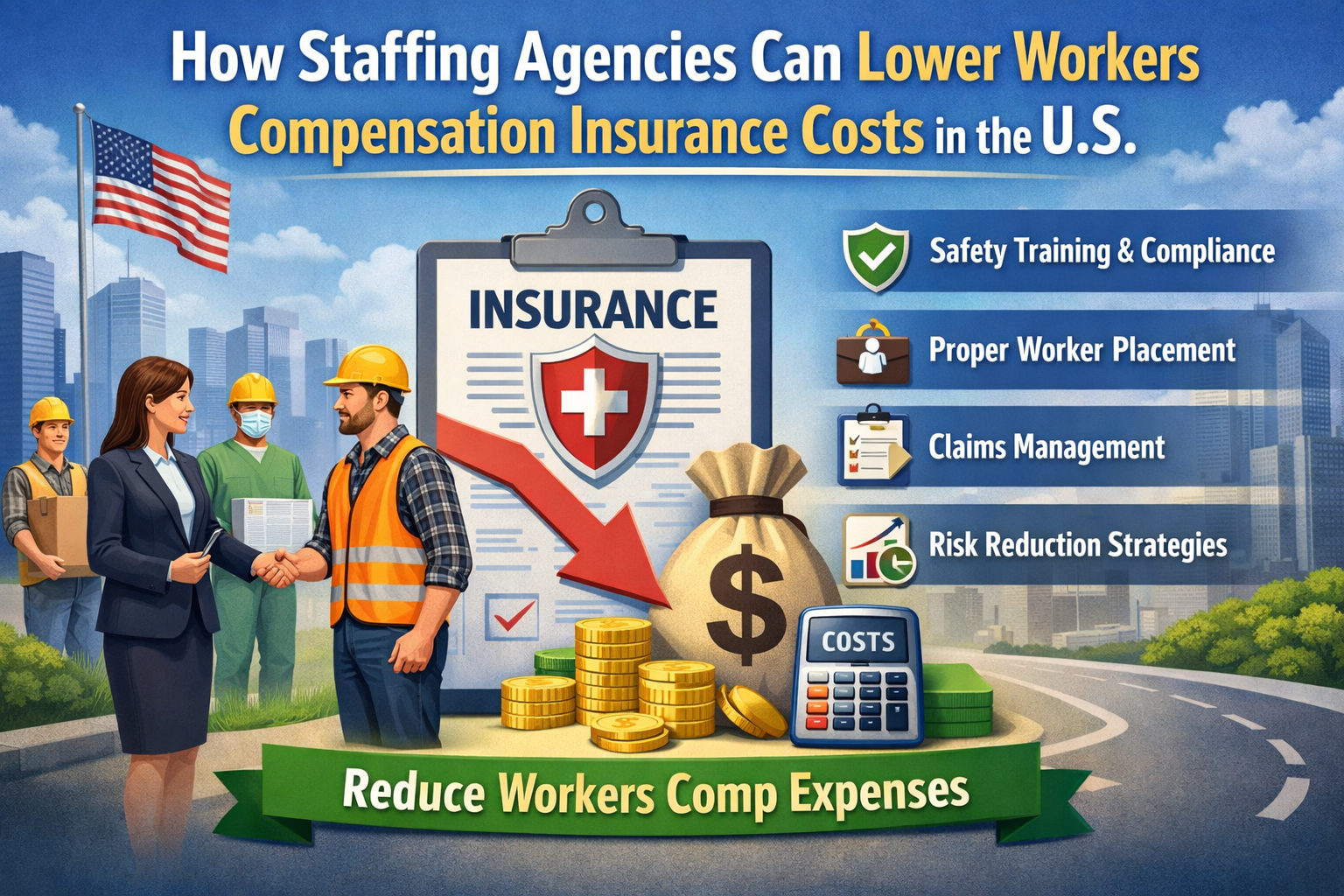
The staffing industry is the backbone of the American workforce, connecting millions of people with opportunities across manufacturing, logistics, healthcare, and administration. However, this unique position—employing workers who perform tasks at third-party locations—comes with a distinct set of risks. For many staffing agency owners, the cost of workers’ compensation insurance is one of the largest operational expenses, and it often feels like it’s rising despite their best efforts. The good news? Workers’ compensation costs are not a fixed burden. They are a variable expense that savvy agencies can control. By understanding how premiums are calculated and implementing targeted risk management strategies, you can significantly lower your total cost of risk. At Coastalworkcomp, we specialise in helping staffing agencies navigate these complex waters. Here is your guide to lowering workers’ compensation insurance costs while building a safer, more profitable business. Why Staffing Agencies Face Unique Workers’ Comp Challenges Before diving into solutions, it’s important to understand why staffing agencies often pay higher rates than other businesses. You are essentially insuring a workforce that moves between different employers, each with its own safety culture and hazards. High-Risk Classifications: Many staffing agencies place workers in “high-hazard” industries like construction, warehousing, and manufacturing. These class codes inherently carry higher premium rates. Lack of Control: You may not have direct, daily control over the worksite environment where your employees are placed. A client’s lax safety standards can become your agency’s costly claim. The “New Hire” Factor: Statistics show that temporary workers are often more vulnerable to accidents during their first days on a job due to unfamiliarity with the site and procedures. The Experience Modification Rate (EMR): Your agency’s EMR is a crucial factor in pricing. It is a number comparing your claims history to others in your industry. An EMR above 1.0 means you are paying a premium penalty; an EMR below 1.0 earns you significant discounts. 5 Proven Strategies to Lower Your Workers’ Compensation Costs Controlling costs requires a proactive, multi-faceted approach. Here are the most effective tactics to implement today. 1. Master the Art of Accurate Classification and Payroll Reporting One of the quickest ways to overpay for workers’ comp is through inaccurate classification. If a clerical worker is accidentally coded under a warehouse class, you are paying a much higher rate than necessary. Audit Your Class Codes: Work with an expert like Coastalworkcomp to perform a thorough audit of your job classifications. Ensure every employee is assigned to the correct National Council on Compensation Insurance (NCCI) code that matches their actual job duties, not just their job title. Separate Payroll Accurately: Maintain meticulous payroll records. If you have owners or officers who can be excluded or paid differently, ensure this is documented. Clean records prevent audit surprises at the end of the policy year, where misreporting can lead to massive additional premium bills. 2. Implement a Robust Safety and Training Culture Prevention is always cheaper than any claim. Because your employees work at client sites, your safety program must extend beyond your own office walls. Pre-Assignment Training: Before a worker sets foot on a client site, provide a general safety orientation. This should cover your agency’s expectations and its rights regarding workplace safety. Client Site Evaluations: Partner with your clients to evaluate their worksites. A proactive walk-through can identify hazards before they cause injuries. This collaboration also shows clients that you are a value-add partner committed to safety, not just a labour supplier. Reinforce the Message: Use toolbox talks and regular check-ins to keep safety top-of-mind. A well-trained worker is a safer worker. 3. Leverage Technology and Data Analytics In the modern era, guessing isn’t good enough. Data-driven decisions lead to better outcomes. Track Leading Indicators: Don’t just wait for claims to happen (a lagging indicator). Track near-misses, safety training completion rates, and client site inspection results. This data helps you predict and prevent future injuries. Pay-as-You-Go Auditing: Cash flow is king in staffing. Traditional workers’ comp audits happen once a year and can result in a surprise bill. By using a pay-as-you-go system, your premium is based on real-time payroll, which smooths out cash flow and eliminates the year-end audit shock. 4. Optimise Claims Management When an injury does occur, how you respond in the first 48 hours determines the ultimate cost of the claim. Encourage Immediate Reporting: Delayed reporting is the enemy of cost control. Establish a clear, simple protocol for employees to report injuries immediately, no matter how minor they seem. Early reporting allows for early intervention. Return-to-Work (RTW) Programs: A modified duty or light-duty program can get an injured employee back to work sooner, even in a different capacity. This reduces the “lost wages” portion of the claim, which significantly lowers its total cost and helps improve your EMR. 5. Screen and Select Talent Strategically Your best defence against claims is a reliable, capable workforce. Integrating risk management into your hiring process is essential. Pre-Employment Screenings: Conduct thorough background checks and, where appropriate for the job, physical capabilities testing. This ensures the worker can safely perform the tasks required. Verify Experience: A simple check of a candidate’s work history and safety record can reveal red flags from previous jobs, helping you avoid hiring a claim waiting to happen. The Coastalworkcomp Difference: A Partner in Cost Containment Implementing these strategies is possible, but doing it alone is difficult. That’s where Coastalworkcomp comes in. As specialists in workers’ compensation for high-risk and staffing industries, we don’t just sell policies; we provide the tools and expertise to lower your overall cost of risk. Tailored Coverage, Not Off-the-Shelf: We know that a staffing agency placing nurses has different needs than one placing roofers. We build customised policies that match your specific risk profile, ensuring you aren’t paying for coverage you don’t need. Access to Competitive Markets: With relationships across “A” rated national carriers, we shop the market to find you the most competitive rates. Our buying power and expertise often result in savings of 30-40% for our clients. Claims Advocacy:
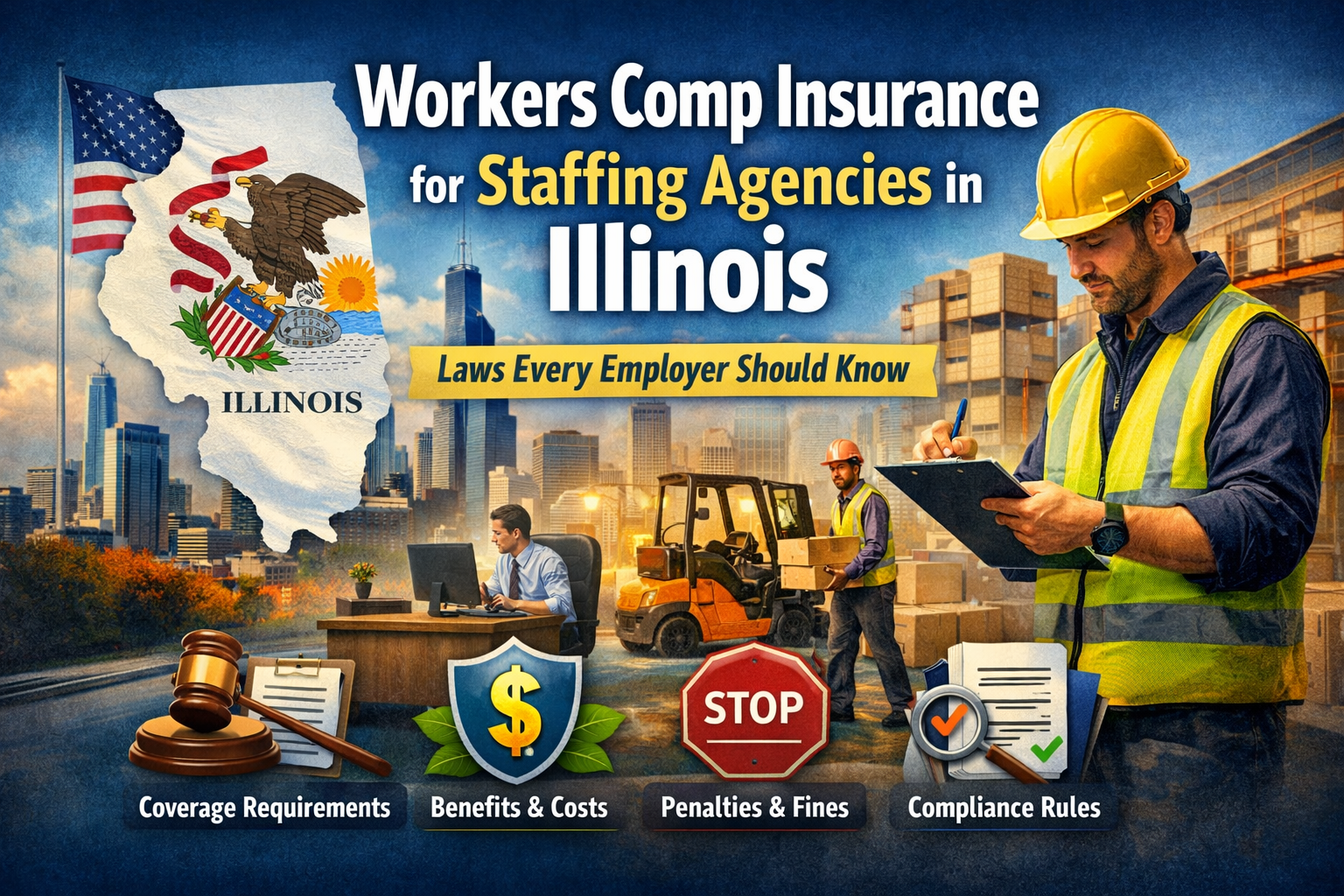
Workers Comp Insurance for Staffing Agencies in Illinois protects employers and temporary workers from financial loss. Illinois law requires most staffing agencies to carry valid workers compensation coverage. Employers must understand these rules to avoid fines and lawsuits. This guide explains the key laws every staffing agency should know. We also highlight compliance strategies supported by Coastalworkcomp. Staffing agencies operate in high-risk industries. They place workers in warehouses, construction sites, offices, and factories. Each placement creates potential liability exposure. Proper insurance coverage protects both the agency and its clients. Understanding Illinois Workers Compensation Requirements Illinois enforces strict workers compensation laws. The Illinois Workers’ Compensation Commission regulates and oversees compliance statewide. Most Illinois employers must carry workers compensation insurance. This rule applies even if a staffing agency employs one worker. Illinois follows a no-fault workers compensation system. Employees receive benefits regardless of fault. Employers avoid costly civil lawsuits in exchange. Staffing agencies must provide coverage for all temporary employees. This requirement includes full-time, part-time, and seasonal staff. Misclassification of an independent contractor can trigger serious penalties. Any staffing agency operating in Illinois must maintain valid coverage. Out-of-state agencies must also comply if they place workers in Illinois. Failing to secure coverage can result in criminal charges. Corporate officers may face personal liability for noncompliance. Penalties include daily fines and possible business closure. Key Benefits Under the Illinois Workers Compensation Law Illinois workers compensation laws provide several benefit categories. These benefits protect injured employees and stabilize income. Medical Benefits Employers must pay all reasonable medical expenses. This coverage includes hospital care, surgery, medication, and rehabilitation. There is no deductible for injured employees. Temporary Total Disability Benefits Temporary Total Disability benefits replace lost wages during recovery. Payments equal two-thirds of the employee’s average weekly wage. Permanent Disability Benefits Permanent Partial Disability applies when injuries cause lasting impairment. Permanent Total Disability benefits cover workers who are unable to return to employment. Death Benefits Death benefits support surviving dependents of deceased employees. Employers must also cover burial expenses within statutory limits. Special Rules for Staffing Agencies in Illinois Staffing agencies face unique legal obligations. Illinois law treats temporary workers as employees of the staffing agency. However, client companies also share certain responsibilities. Dual Employment Doctrine Illinois recognizes the dual employment doctrine. Both the staffing agency and client company may hold liability. Agreements should clearly define workers compensation responsibilities. Agencies must confirm their policy covers assigned job classifications. Incorrect classification can increase premiums or deny claims. Client Contract Agreements Staffing agencies should use detailed client contracts. Contracts must clarify insurance coverage and indemnification terms. This step reduces disputes after workplace injuries occur. Agencies should require clients to maintain safe working conditions. Safety audits lower injury risks and insurance costs. How Premiums Are Calculated Workers compensation premiums depend on several factors. Insurance carriers evaluate payroll, job classifications, and claims history. Payroll Size Higher payroll increases overall premium costs. Staffing agencies often manage large payroll volumes. Job Risk Classification Each job classification carries a risk code. Construction placements cost more than clerical assignments. Accurate classification prevents audit disputes. Experience Modification Rate The experience modification rate reflects claim history. Frequent claims increase future premiums. Strong safety programs help reduce this rating. Best Practices for Compliance Staffing agencies must take proactive compliance measures. Strong management practices reduce legal exposure. Conduct Regular Safety Training Offer safety training before worker placement. Educate employees about job-specific hazards. Document all training sessions for compliance records. Verify Client Workplace Safety Inspect client worksites before assignments begin. Ensure OSHA standards are followed consistently. Encourage prompt hazard reporting. Maintain Accurate Employee Records Keep detailed payroll and classification records. Accurate documentation ensures smooth insurance audits. Retain injury reports and medical documentation securely. Claims Management Strategies Effective claims handling reduces costs and legal risks. Immediate reporting improves claim outcomes. Prompt Injury Reporting Require employees to report injuries immediately. Illinois law sets strict notice requirements. Timely filing avoids disputes and delays. Work With Experienced Providers Partner with knowledgeable workers compensation advisors. Coastalworkcomp helps staffing agencies navigate Illinois laws. Professional guidance strengthens compliance and cost control. Return-to-Work Programs Return-to-work programs lower claim costs. They also help employees recover faster. Offer modified duties during recovery periods. Light-duty assignments reduce disability payments. Maintain communication with injured workers. A structured return-to-work plan reduces experience modification rates. It also improves employee morale and retention. Illinois enforces strict coverage and reporting requirements. Agencies must act proactively to maintain protection. Strong safety programs reduce injury frequency and premium costs. Partnering with experts like Coastalworkcomp improves compliance confidence. Professional guidance simplifies complex regulatory obligations. Why Coastalworkcomp Supports Illinois Staffing Agencies Coastalworkcomp understands staffing industry risks. They provide customized workers compensation solutions. Their team monitors Illinois legal updates regularly. They help agencies reduce premiums through risk management. They also assist with audit preparation and claims coordination. Professional support strengthens long-term business stability. Compliance protects agency’s reputation and profitability. Temporary workers placed through staffing agencies rarely qualify as independent contractors. Agencies usually control hiring, payroll, and assignment placement. This control establishes an employment relationship legally. Common Mistakes Staffing Agencies Should Avoid Many agencies underestimate compliance complexity. Avoid these common errors to reduce risk. Misclassifying Workers Improper classification increases audit penalties. Always review classification codes carefully. Ignoring Safety Responsibilities Do not assume clients manage all safety obligations. Agencies share responsibility under Illinois law. Delaying Claim Reporting Late reporting increases investigation complications. Encourage immediate injury documentation. Future Trends in Illinois Workers Compensation Illinois continues to refine regulatory standards. Technology improves claims management efficiency. Digital reporting systems streamline compliance processes. Staffing agencies must monitor legislative updates. Proactive planning prevents unexpected compliance gaps. Rising medical costs may impact future premiums. Agencies should budget strategically for insurance expenses. Staffing agencies must classify workers correctly. Illinois law uses strict criteria for independent contractor status. Misclassification often results in heavy fines and audits. Illinois agencies must review classification decisions regularly. Consult legal advisors before labeling workers as contractors. Prevention costs less than litigation defense. Conclusion Workers Comp Insurance for Staffing Agencies in Illinois remains legally mandatory.
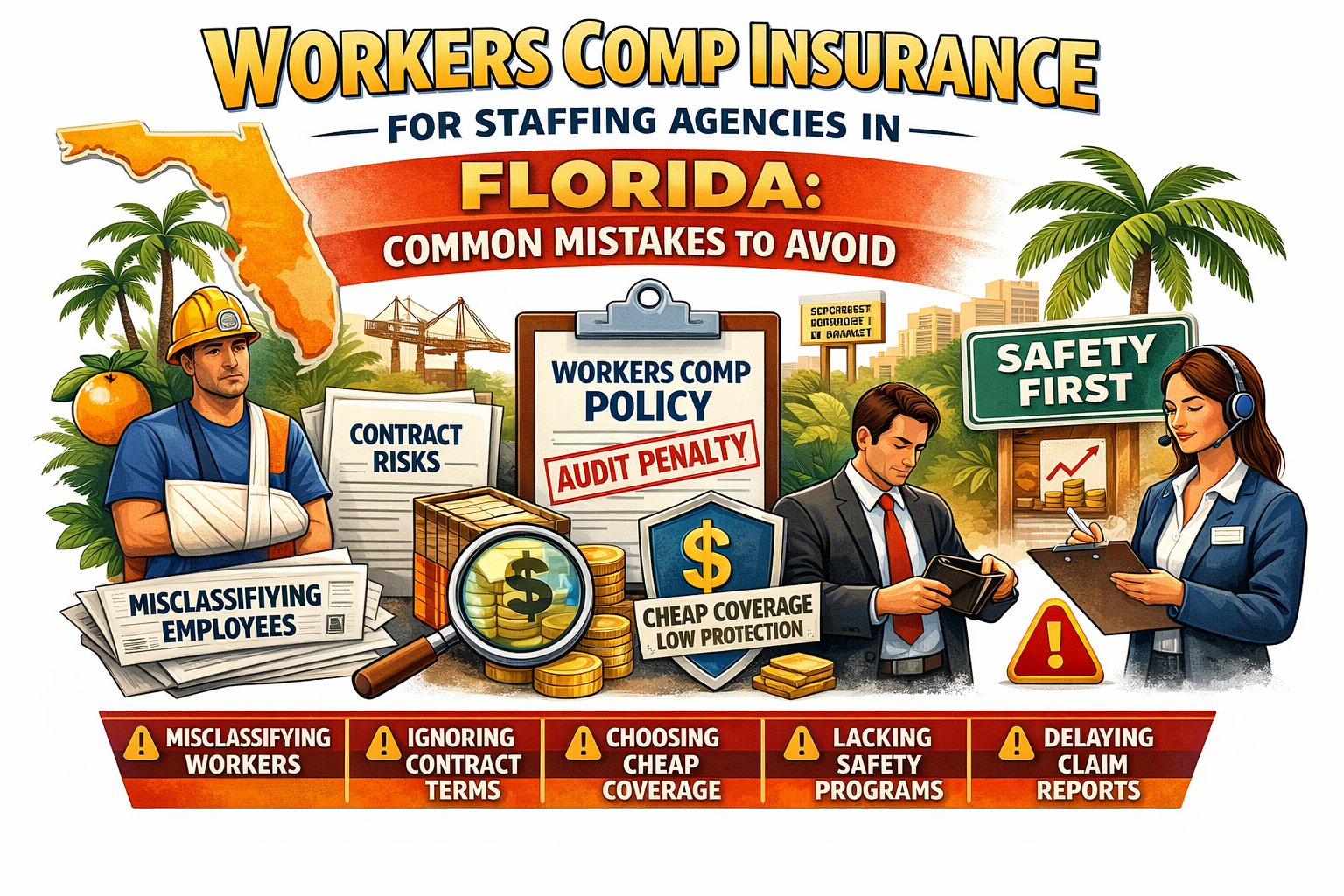
Staffing agencies operate in a high-risk environment across Florida. They place workers in diverse industries with unique hazards. One mistake in coverage can trigger costly claims and penalties. Workers Compensation Insurance protects both agencies and employees. However, many agencies make preventable errors. These mistakes increase premiums and create legal exposure. You must understand common pitfalls to protect your business. This guide explains major mistakes and how to avoid them. Understanding Workers Comp Insurance for Staffing Agencies in Florida Workers compensation insurance covers workplace injuries and illnesses. Florida law requires most employers to carry coverage. Staffing agencies face greater scrutiny due to shared-employment models. Agencies often act as the employer of record. Client companies supervise daily tasks. This structure creates unique compliance challenges. You must structure policies correctly to avoid gaps. Failure to comply can result in severe penalties. Florida hosts construction, hospitality, healthcare, and logistics industries. Staffing firms supply labor to these high-risk sectors. Injury rates increase in physically demanding roles. Temporary workers may lack job-specific safety training. This increases claim frequency and severity. Insurance carriers evaluate these factors closely. Common Mistake #1: Misclassifying Employees Misclassification remains the most common error. Agencies sometimes assign incorrect workers compensation class codes. Incorrect codes reduce premiums temporarily. However, audits often reveal discrepancies. Carriers then apply back charges and penalties. Florida regulators may also impose fines. You must assign accurate class codes for each worker. Different placements require different classifications. Construction labor differs from clerical staffing. Always review job descriptions carefully. Conduct a detailed job duty review. Consult your insurance advisor before policy renewal—request classification guidance from your carrier. Perform internal audits quarterly. Correct errors before official carrier audits occur. Common Mistake #2: Ignoring Client Contract Language Staffing contracts often include indemnification clauses. Some contracts shift liability unfairly to agencies. Others require higher coverage limits. Failure to review these clauses creates financial exposure. Agencies must align insurance policies with contracts. Otherwise, claims may exceed policy limits. This leaves agencies responsible for uncovered losses. Work with legal counsel before signing agreements. Confirm insurance requirements match your policy limits. Request certificates of insurance from client companies. Ensure shared responsibility remains clearly defined. Common Mistake #3: Choosing Coverage Based Only on Price Many agencies select the cheapest policy available. Low premiums often indicate limited protection. Some carriers lack staffing industry experience. Others impose restrictive endorsements. You must evaluate value over price. Strong claims management reduces long-term costs. Experienced carriers understand staffing risks. Review the carrier’s staffing experience. Assess claims response time. Examine return-to-work support programs. Check financial strength ratings. Prioritize long-term partnership over short-term savings. Common Mistake #4: Failing to Implement Safety Programs Insurance alone does not reduce claim frequency. Proactive safety management lowers incidents significantly. Many staffing agencies neglect training responsibilities. You must collaborate with client companies. Establish clear safety expectations before placements begin. Provide workers with safety orientation materials. Document all training efforts. Conduct job hazard analyses for each placement. Require clients to report incidents immediately. Implement return-to-work programs quickly. Track injury trends monthly. Address recurring risks immediately. Common Mistake #5: Poor Claims Reporting Practices Delayed reporting increases claim costs dramatically. Florida law requires prompt injury reporting. Late reports complicate investigations. They also increase legal disputes. You must create clear reporting procedures. Employees should report injuries immediately. Supervisors must document details quickly. Designate a claims coordinator within your agency. Train staff on reporting timelines. Communicate regularly with adjusters. Monitor open claims actively. Encourage early medical intervention. Common Mistake #6: Overlooking Experience Modification Factor Your experience modification factor directly impacts premiums. Frequent claims increase this rating. Higher ratings result in higher costs. Many agencies ignore this metric until renewal time. You should monitor it continuously. Analyze trends and root causes. Implement strong return-to-work programs. Investigate every incident thoroughly. Dispute inaccurate claims promptly. Focus on prevention strategies. Review loss runs annually with your broker. Common Mistake #7: Not Partnering with a Staffing Insurance Specialist Staffing insurance differs from standard business coverage. General agents may lack industry knowledge. This gap leads to policy exclusions or compliance issues. You should partner with a specialist provider. Experienced advisors understand co-employment risks. They help structure policies correctly. Specialists understand Florida regulatory requirements. They help reduce audit surprises. They provide risk management guidance. They negotiate better terms with carriers. They support long-term cost control strategies. Compliance Requirements in Florida Florida enforces strict workers compensation rules. Construction agencies must carry coverage for every employee. Non-construction firms require coverage with four employees. Penalties for noncompliance include stop-work orders. Fines can double unpaid premiums. You must maintain active coverage at all times. Lapses expose your agency to severe consequences. Keep updated certificates of insurance. Maintain payroll records accurately. Retain injury reports and training documentation. Store client contracts securely. Prepare for random state audits. Most staffing agencies maintain their own policy. Some contracts require clients to carry additional coverage. Always review agreements before signing. Confirm all insurance obligations remain clear. How Coastalworkcomp Supports Florida Staffing Agencies Coastalworkcomp focuses on staffing agency risk management. They understand Florida’s regulatory environment. Their advisors tailor policies for staffing operations. They emphasize proactive safety strategies. Their approach reduces claims frequency over time. They assist agencies during audits and renewals. They prioritize long-term premium stability. They analyze workforce classifications carefully. They review contracts for liability gaps. They implement loss prevention programs. They monitor experience modification factors. They guide agencies through complex claims. Building a Long-Term Cost Control Strategy Successful agencies treat workers compensation strategically. They integrate insurance into overall operations planning. They train staff consistently. They monitor claims data monthly. They invest in safety improvements proactively. You must shift from reactive to preventive thinking. Prevention always costs less than litigation. Consistency drives sustainable premium reductions. Review your current policy details. Audit employee classifications internally. Analyze your last three years of claims. Strengthen training documentation immediately. Consult a staffing insurance specialist. Conclusion Workers Comp Insurance for Staffing Agencies in Florida requires strategic management. Mistakes increase premiums and legal exposure. Staffing Agencies must prioritize compliance and prevention. Accurate classification and contract review remain
Staffing agencies operate in a high-risk environment. They place workers in unpredictable job settings every day. Texas presents unique legal and insurance challenges. That reality explains why Staffing Agencies in Texas Need Specialized Workers Comp Insurance. Generic insurance policies rarely protect staffing firms fully. Standard coverage often ignores the industry’s layered risk structure. Texas laws also differ from many other states. Agencies must understand these differences to protect their business. Coastalworkcomp helps staffing agencies navigate these complex risks. Specialized coverage strengthens protection and improves financial stability. Understanding the Texas Workers’ Compensation Landscape Texas follows a unique workers’ compensation system. Unlike many states, Texas does not mandate coverage for private employers. However, opting out creates serious legal exposure. Staffing agencies face even higher liability concerns. They supply workers to third-party job sites daily. Each placement introduces a new risk environment. Texas Is a Non-Subscriber State Texas allows employers to become non-subscribers. Non-subscribers lose key legal protections during injury lawsuits. Injured workers may sue for negligence damages. Staffing firms cannot afford that exposure. One lawsuit could destroy years of growth. High-Risk Industries in Texas Texas supports oil, construction, logistics, and manufacturing sectors. Staffing agencies often serve these industries. Each industry presents physical injury risks. Heavy machinery, transportation hazards, and manual labor increase claim frequency. Standard policies rarely address these risk concentrations. Unique Risks Facing Staffing Agencies Staffing agencies manage workers but lack direct job site control. That gap increases uncertainty. Agencies face dual responsibility. They hire employees but assign them elsewhere. Clients supervise daily tasks. This structure creates complex liability situations. Dual Employment Issues Courts often treat staffing firms and clients as co-employers. Both parties may share liability after injuries. Disputes arise over who controls workplace safety. Specialized policies address these shared-risk scenarios clearly. High Employee Turnover Staffing agencies experience frequent employee turnover. New workers require constant onboarding and training. Inexperience increases accident risk. A specialized policy accounts for fluctuating payroll and classification changes. Multi-Industry Classifications One staffing agency may place workers in construction and clerical roles. Each job classification carries different risk rates. Misclassification leads to costly audits.Specialized insurance ensures accurate classification management. Why Standard Workers Comp Policies Fall Short Traditional policies target stable businesses with fixed operations. Staffing agencies operate differently. Generic carriers may miscalculate exposure levels. Incorrect pricing results in premium spikes or cancellation. Inadequate Risk Assessment Standard underwriters may misunderstand staffing models. They often overlook third-party job site hazards. That oversight creates coverage gaps. Audit Nightmares Staffing agencies face detailed annual payroll audits. Inaccurate projections cause large unexpected bills. Cash flow suffers quickly. Specialized providers structure payroll reporting more accurately. Limited Claims Management Support Claims management determines long-term insurance costs. Standard carriers may lack staffing-specific expertise. Delayed response increases claim severity. Specialized insurers implement aggressive return-to-work programs. Financial Protection Through Specialized Coverage Specialized workers comp insurance stabilizes long-term costs. It protects staffing agencies from unpredictable claims. Experience Modification Control Experience modification rates influence premium costs. Frequent injuries increase that rate significantly. Specialized providers help agencies implement safety programs. Improved safety lowers claims and reduces modification factors. Cash Flow Stability Staffing payroll fluctuates weekly. Specialized policies offer pay-as-you-go billing models. Agencies avoid large upfront deposits. That flexibility improves cash flow management. Risk Transfer Strategies Specialized coverage often integrates contractual risk transfer guidance. Clear contracts protect agencies from unfair liability exposure. This structure strengthens long-term profitability. Legal Protection and Compliance in Texas Texas law imposes strict reporting requirements. Failure to comply leads to penalties and reputational harm. Staffing agencies must file proper documentation regularly. They must also notify clients of coverage status. Certificate Management Clients often demand proof of Workers’ Comp coverage. Without valid certificates, contracts may terminate immediately. Specialized providers streamline certificate issuance. Defense Against Lawsuits Injury lawsuits threaten staffing agencies severely. Legal defense costs escalate quickly. Specialized policies include employer liability coverage. That protection shields agencies from negligence claims. Industry-Specific Safety Programs Matter Insurance alone cannot prevent claims. Safety programs reduce injuries proactively. Specialized carriers offer training resources for staffing agencies. Job Site Evaluations Pre-placement job site assessments reduce hazard exposure. Specialized insurers guide agencies through evaluation procedures. Employee Safety Training Temporary workers need clear safety instructions. Training reduces injury rates immediately. Specialized partners provide safety materials tailored for staffing roles. How Coastalworkcomp Supports Texas Staffing Agencies Coastalworkcomp understands staffing industry complexity. They focus exclusively on workers compensation solutions. Their team analyzes payroll classifications carefully. They identify risk concentration before claims occur. Customized Policy Structures Coastalworkcomp designs policies specifically for staffing agencies. They consider turnover, placement industries, and payroll changes. Dedicated Claims Advocacy Claims advocacy reduces long-term financial damage. Coastalworkcomp assists agencies throughout the claims process. They coordinate communication between clients and injured workers. Cost Control Strategies Coastalworkcomp implements proactive cost containment programs. They monitor experience modifiers closely. They recommend safety adjustments quickly. This approach lowers long-term premiums consistently. The Competitive Advantage of Specialized Coverage Insurance impacts more than compliance. It influences business growth and client trust. Clients prefer staffing partners with stable coverage. They avoid agencies with uncertain insurance history. Improved Client Confidence Specialized coverage signals professionalism. It demonstrates risk management discipline. Clients feel secure when agencies manage liability effectively. Stronger Contract Negotiations Agencies with proper coverage negotiate better contract terms. They secure larger accounts confidently. Specialized insurance supports scalable expansion. Long-Term Growth Requires Strategic Protection Texas continues to grow economically. Staffing demand increases across multiple industries. Agencies must prepare for higher placement volume. Growth increases exposure automatically. Specialized workers comp insurance scales with expansion. It adapts to payroll increases and industry shifts. Staffing agencies cannot rely on generic policies. The risks are too complex. That reality explains why Staffing Agencies in Texas Need Specialized Workers Comp Insurance. Proper coverage protects revenue, reputation, and legal stability. Coastalworkcomp delivers solutions tailored to this demanding market. Their expertise reduces uncertainty and improves long-term success. Conclusion Staffing agencies in Texas face complex operational risks daily. They manage employees across multiple industries and job sites. Each placement introduces new exposure and liability concerns. Texas law adds another layer of complexity.
Staffing agencies face higher workplace injury risks than many industries. They place employees in construction, warehousing, healthcare, and manufacturing roles. These industries often carry significant workplace hazards. Worker Comp For Staffing Agencies must protect workers and control insurance costs. They also must meet strict state compliance requirements. That is why choosing the right coverage matters. Coastalworkcomp provides specialized workers compensation solutions for staffing agencies nationwide. They focus on risk management, compliance, and premium control. This guide explains the best staffing agencies workers compensation insurance USA options available. Why Staffing Agencies Need Specialized Workers Compensation Insurance Staffing agencies operate under a unique employment model. They recruit, hire, and place workers at client locations. However, they remain the legal employer. This structure creates complex liability exposure. Injuries may occur at client worksites. Responsibility still falls on the staffing agency. Standard workers compensation policies may not address these complexities. Specialized policies provide proper classification and payroll management. They also address multi-state compliance issues. Higher Risk Classifications Many staffing agencies place workers in high-risk industries. Construction and light industrial jobs increase claim frequency. Healthcare staffing may include lifting or exposure hazards. Insurers assign risk classifications based on job duties. Incorrect classification increases premiums or causes audits. Specialized programs prevent costly errors. Each state sets different workers compensation regulations. Premium rates and coverage rules vary widely. Some states operate monopolistic funds. Agencies operating nationally must maintain compliance everywhere. A knowledgeable insurance partner simplifies this process. Best Staffing Agencies Workers Compensation Insurance USA Options Staffing agencies can choose from several coverage structures. Each option offers advantages based on agency size and risk tolerance. Guaranteed Cost Policies Guaranteed cost policies provide fixed premium payments. The insurer assumes the majority of risk. Agencies pay predictable monthly or annual premiums. This option works well for small agencies. It also benefits agencies with limited capital reserves. Pay-As-You-Go Programs Pay-as-you-go programs calculate premiums based on real payroll data. Agencies avoid large upfront deposits. Premiums adjust with payroll changes. This structure improves cash flow management. It also reduces audit surprises at year end. Large Deductible Programs Large deductible plans reduce overall premium costs. Agencies assume partial claim responsibility. Insurers cover catastrophic losses. This option suits financially stable agencies. It rewards strong safety performance. Self-Insured and Captive Programs Large staffing firms sometimes choose captive insurance models. They pool risk with similar companies. This structure offers greater control over claims management. Captives may lower long-term costs. However, they require strong financial stability. How Coastalworkcomp Supports Staffing Agencies Nationwide Coastalworkcomp focuses exclusively on high-risk industries. They understand staffing agency exposures in every state. Their expertise helps agencies secure competitive pricing. They analyze payroll classifications carefully. They prevent misclassification penalties and audits. They also assist with experience modification factor management. Experience Modification Factor Control The experience modification factor impacts premiums significantly. It reflects past claim performance. Lower mods reduce insurance costs. Coastalworkcomp helps agencies implement safety programs. They also review claims for accuracy. These steps protect long-term pricing stability. Claims Management Support Fast claims response reduces overall costs. Early reporting limits medical and indemnity expenses. Return-to-work programs reduce lost time claims. Coastalworkcomp works closely with claims administrators. They promote proactive injury management strategies. Key Factors When Choosing the Best Option Staffing Agencies must evaluate several critical factors. Choosing the wrong policy increases financial risk. Industry Placement Mix Agencies placing construction workers face higher premiums. Clerical placements carry lower rates. Understanding job mix helps determine correct coverage structure. Claims History A poor claims history increases premiums significantly. Agencies should review five-year loss runs. They must identify recurring injury trends. Financial Strength Large deductible or captive programs require strong reserves. Smaller agencies may prefer guaranteed cost structures. Cash flow stability plays a major role. State-Specific Regulations Some states operate exclusive state funds. Agencies must purchase coverage through state programs. Other states allow private carrier competition. Understanding these differences protects compliance. Cost Control Strategies for Staffing Agencies Insurance costs directly affect agency profitability. Proactive strategies reduce long-term expenses. Implement Safety Training Programs Training reduces injury frequency. Agencies should provide orientation for every placement. Client worksites must meet safety standards. Use Return-to-Work Programs Modified duty shortens claim duration. Injured employees return sooner. Lost wage costs decrease significantly. Maintain Accurate Payroll Reporting Accurate payroll prevents audit penalties. Agencies should separate classifications clearly. Documentation protects against overcharges. Review Claims Regularly Open claims increase reserves. High reserves inflate experience modification factors. Agencies should monitor claim progress monthly. Benefits of Working with Coastalworkcomp Coastalworkcomp understands the staffing industry deeply. They deliver customized insurance strategies nationwide. Their programs focus on long-term cost stability. They negotiate competitive carrier partnerships. They also support agencies during audits. Their team assists with compliance documentation. Most importantly, they help agencies grow confidently. Proper coverage removes uncertainty and financial risk. Many agencies choose coverage based solely on price. This decision often creates hidden liabilities. Some agencies ignore classification accuracy. Others delay reporting workplace injuries. These mistakes increase premiums dramatically. Future Trends in Workers Compensation for Staffing Agencies The staffing industry continues to expand nationwide. Demand for flexible labor increases annually. Insurers now use advanced data analytics. Predictive modeling identifies claim risk patterns. Technology improves underwriting accuracy. Agencies that invest in safety technology gain pricing advantages. Digital payroll integration simplifies premium calculations. Coastalworkcomp stays updated with industry trends. They adapt programs to evolving regulations. Failing to review policy endorsements creates compliance gaps. Agencies must read every endorsement carefully. Conclusion Staffing agencies face unique liability challenges daily. Workers compensation insurance protects employees and business stability. Selecting the best staffing agencies workers compensation insurance USA option requires expertise. Policy structure, risk exposure, and financial strength all matter. Coastalworkcomp offers specialized nationwide solutions. They focus on compliance, cost control, and claims management. With the right partner, agencies reduce risk and protect profitability. Proper insurance strategy becomes a competitive advantage. Invest wisely in protection today. Secure long-term success for your staffing agency across the United States. Frequently Asked Questions What is staffing agencies workers compensation insurance? Staffing agencies workers compensation insurance provides coverage for workplace
Staffing agencies in California face unique workers compensation challenges. High turnover and varied job roles increase risk exposure. Claims frequency often rises due to temporary placements. Premium costs can quickly impact profitability. Workers Comp Insurance for Staffing Agencies in California requires strategic cost control. Coastalworkcomp provides tailored solutions for staffing firms. They focus on reducing risk and stabilizing premiums. They help agencies maintain compliance and control expenses. This guide explains cost control strategies for staffing agencies. It also highlights how Coastalworkcomp supports sustainable growth. Understanding Workers Comp Insurance for Staffing Agencies in California California enforces strict workers compensation regulations. Staffing agencies must carry coverage for placed employees. The agency remains the employer of record in most cases. This responsibility increases liability exposure. Workers Comp Insurance for Staffing Agencies in California covers medical expenses and lost wages. It also protects agencies from lawsuits related to workplace injuries. However, premiums depend on several critical factors. Insurance carriers evaluate payroll and job classifications. They analyze claims history and experience modification rates. High-risk industries result in higher classification codes. Frequent claims increase future premium calculations. Agencies that place workers in construction face higher rates. Light industrial and warehouse staffing also carry elevated risks. Clerical placements typically receive lower premium rates. Why Staffing Agencies Face Higher Workers Comp Costs Staffing firms often operate in high-risk industries. Temporary workers may lack proper safety training. Frequent onboarding creates compliance challenges. Communication gaps increase workplace accident risks. Clients sometimes fail to enforce safety standards. This failure increases injury claims against the agency. As a result, loss ratios rise significantly. Workers Comp Insurance for Staffing Agencies in California demands proactive risk management. Without cost control, premiums can escalate rapidly. Cost Control Strategies by Coastalworkcomp Coastalworkcomp implements proven cost control frameworks. They focus on prevention, compliance, and claims management. Their strategies reduce long-term premium exposure. Accurate Job Classification Audits Misclassification often inflates premium costs. Staffing agencies sometimes use incorrect class codes. This error increases unnecessary expenses. Coastalworkcomp performs detailed classification audits. They verify accurate payroll allocation by job role. Correct coding ensures fair premium calculations. Experience Modification Rate Management The experience modification rate directly impacts premiums. A higher mod increases overall insurance costs. Lowering the mod reduces annual expenses. Coastalworkcomp reviews historical loss data. They identify patterns and prevent recurring incidents. They implement corrective safety programs. Strong Return-to-Work Programs Long claim durations increase claim severity. Extended disability raises indemnity costs. Coastalworkcomp develops structured return-to-work programs. They coordinate with medical providers and employers. They place injured workers in modified duty roles. Safety Training and Risk Prevention Prevention remains the most powerful cost control strategy. Training reduces workplace injuries significantly. Coastalworkcomp helps agencies implement safety protocols. They provide industry-specific safety guidelines. They support OSHA compliance initiatives. Claims Management and Early Reporting Delayed reporting increases claim costs. Small injuries can become expensive claims. Coastalworkcomp encourages immediate incident reporting. They coordinate directly with adjusters. They monitor medical treatment progress. The Role of Payroll Accuracy in Cost Control Accurate payroll reporting prevents audit surprises. Underreporting causes penalties during policy audits. Overreporting increases unnecessary premium payments. Staffing Agencies must collaborate with client companies. Client worksites influence injury risks. Coastalworkcomp reviews payroll documentation regularly. They ensure correct allocation by classification. They prepare agencies for annual insurance audits. Transparent payroll management protects cash flow stability. Coastalworkcomp advises agencies on client risk evaluation. They recommend safety audits at client locations. They encourage written safety agreements. Clear communication reduces liability disputes. Shared accountability strengthens injury prevention efforts. Technology and Data-Driven Risk Management Data analytics improve risk control strategies. Claims trends reveal operational weaknesses. Coastalworkcomp uses claims data to identify risk clusters. They analyze injury frequency by job category. They recommend targeted prevention initiatives. Technology supports informed decision-making. Informed decisions reduce avoidable claim costs. California enforces strict workers compensation regulations. Noncompliance results in heavy fines and penalties. Staffing agencies face additional scrutiny from regulators. Coastalworkcomp ensures policy compliance with state requirements. They monitor legislative updates affecting staffing agencies. They provide guidance on documentation standards. Compliance reduces legal exposure and financial penalties. Why Choose Coastalworkcomp Coastalworkcomp specializes in staffing agency insurance solutions. They understand California regulatory complexities. They offer tailored risk management strategies. Their team focuses on prevention and compliance. They provide personalized service and strategic guidance. They prioritize measurable cost reduction outcomes. Workers Comp Insurance for Staffing Agencies in California requires expertise. Coastalworkcomp delivers structured and effective cost control solutions. Cost control strategies protect profit margins. Lower premiums increase operational stability. Improved safety enhances agency’s reputation. Workers Comp Insurance for Staffing Agencies in California becomes manageable with proactive planning. Coastalworkcomp supports long-term sustainability. Reduced claims improve insurer relationships. Strong loss history enables better policy negotiations. Competitive rates enhance business growth opportunities. Conclusion Staffing agencies face unique workers compensation challenges. High-risk placements increase claim frequency. Premium costs can rise without strategic planning. Workers Comp Insurance for Staffing Agencies in California demands proactive management. Cost control strategies reduce financial strain. Accurate classification and payroll management lower expenses. Strong safety programs minimize injury risks. Coastalworkcomp helps agencies control premiums and stabilize growth. Their proven approach protects profitability and compliance. Smart cost control today prevents higher premiums tomorrow. Frequently Asked Questions Is workers comp insurance mandatory for staffing agencies in New York? Yes, New York law requires most staffing agencies to carry workers compensation insurance. Coverage must start when the first employee begins work. How do staffing agencies determine workers comp insurance costs? Insurers calculate costs using payroll size, job classifications, and claims history. Higher-risk placements usually result in higher premiums. What happens if a staffing agency misclassifies workers? Misclassification can increase premiums and trigger audits. It may also cause claim denials or penalties. Can staffing agencies reduce workers comp insurance premiums? Yes, agencies reduce costs through safety programs and claims management. Accurate payroll reporting also lowers premium adjustments. Does workers comp insurance cover temporary employees? Yes, workers comp insurance covers temporary employees placed by staffing agencies. Coverage applies regardless of assignment duration. Yes, New York law requires most staffing agencies to carry workers
Staffing agencies in New York face complex insurance decisions. Workers compensation Insurance plays a critical role in daily operations. Choosing the wrong coverage can increase costs and legal exposure. Choosing the right policy protects workers and business stability. This guide explains how staffing agencies make smart insurance decisions. Coastalworkcomp helps agencies navigate this challenging process confidently. Understanding Workers Comp Insurance for Staffing Agencies Workers compensation insurance covers job-related injuries and illnesses. New York law requires most staffing agencies to carry coverage. The policy protects both employees and employers financially. Medical costs and wage replacement receive coverage after workplace injuries. Staffing agencies manage higher risks due to diverse job placements. Staffing agencies place workers across multiple industries. Each placement carries different injury risks. Construction roles increase physical injury exposure. Office placements still present ergonomic injury risks. Insurance must reflect this varied risk profile accurately. Quick claim reporting speeds medical treatment. Early intervention reduces claim severity. Delays increase overall claim costs. Staffing agencies prioritize efficient reporting systems. New York Workers Comp Insurance Requirements New York enforces strict workers compensation laws. Agencies must comply with state regulations consistently. Failure to comply leads to fines and business disruptions. Coverage must begin on the first employee workday. New York imposes heavy penalties for missing coverage. Fines can reach thousands of dollars per violation. Agencies may face stop-work orders. Legal action can follow repeated violations. How Staffing Agencies Evaluate Their Workforce Risks Risk assessment starts with workforce analysis. Agencies review employee job duties carefully. They identify high-risk and low-risk assignments. Accurate classification ensures proper premium calculation. Incorrect job classification increases premium costs. Misclassification may trigger audits and penalties. Accurate descriptions protect agencies during claims. Insurers rely heavily on classification data. Experienced carriers understand staffing industry challenges. They handle claims more efficiently. They offer better loss control guidance. Agencies benefit from smoother claims management. Choosing the Right Coverage Limits Staffing agencies must select appropriate coverage limits. Low limits expose agencies to financial risks. Higher limits provide stronger protection. Coastalworkcomp helps agencies balance cost and coverage. Medical coverage handles treatment expenses. Wage coverage replaces lost employee income. Adequate limits ensure uninterrupted recovery support. Insufficient limits increase employer liability. Not all insurance carriers serve staffing agencies effectively. Agencies compare carrier experience carefully. Industry-specific expertise matters significantly. Financial stability of carriers remains essential. Evaluating Premium Costs and Pricing Structures Premium costs vary by risk exposure. Staffing Agencies analyze pricing models carefully. Payroll size impacts overall premium calculations. Experience modification rates affect final pricing. The experience modification rate reflects past claims history. Lower rates reduce premium costs. Higher rates increase insurance expenses. Safety programs help improve modification scores. Strong claims management reduces downtime. Efficient claims handling lowers long-term costs. Agencies evaluate insurer response times. Dedicated claims support improves outcomes. Safety Programs and Risk Management Support Insurance providers often offer safety programs. Staffing agencies value proactive risk management tools. Training reduces workplace injury frequency. Prevention lowers long-term insurance costs. Training improves worker awareness. Educated workers avoid common hazards. Safety programs strengthen agency reputations. Insurers reward strong safety records financially. Staffing agencies require policy flexibility. Workforce size changes frequently. Assignments shift across industries regularly. Policies must adapt quickly to changes. Scalable policies support business growth. Agencies avoid constant policy rewrites. Flexible billing aligns with payroll fluctuations. This flexibility improves cash flow management. Why Staffing Agencies Partner with Coastalworkcomp Coastalworkcomp specializes in staffing agency insurance. They understand New York regulations thoroughly. Their advisors tailor coverage strategies precisely. Agencies receive personalized risk assessments. Coastalworkcomp avoids one-size-fits-all policies. They match coverage to placement risks. Agencies receive cost-effective solutions. Support continues throughout the policy term. Controlling insurance costs remains a priority. Agencies implement safety programs proactively. Claims management reduces unnecessary expenses. Regular audits ensure accurate payroll reporting. Annual reviews identify coverage gaps. Agencies adjust limits as operations change. Reviews prevent overpayment on premiums. Coastalworkcomp conducts detailed annual evaluations. Future Trends in Workers Comp Insurance Workers compensation continues evolving. Technology improves claims processing efficiency. Data analytics enhances risk prediction. Staffing agencies must stay informed. Wearable technology monitors worker safety. Digital reporting accelerates claim submissions. Predictive analytics identify high-risk placements. Insurers reward data-driven agencies. Many agencies underestimate insurance complexity. Some choose coverage based solely on price. Others ignore classification accuracy. These mistakes increase long-term costs. Generic policies fail to address staffing risks. Claims disputes become more frequent. Agencies face unexpected coverage gaps. Specialized policies prevent these issues. Conclusion Choosing the right workers comp insurance requires strategy. Staffing agencies in New York face complex challenges. Proper coverage protects workers and business stability. Expert guidance simplifies decision-making significantly. Coastalworkcomp supports agencies at every step. Frequently Asked Questions Is workers compensation mandatory for staffing agencies in San Diego California? Yes, California law requires workers compensation for staffing agencies. Coverage must begin on the employee’s first working day. Noncompliance leads to heavy fines and business suspension. Who pays for Workers Compensation Coverage for Staffing Agencies in San Diego California? Staffing agencies pay for workers compensation insurance. Client companies do not provide coverage for temporary workers. The agency remains the employer of record. Does workers compensation cover temporary and contract workers? Yes, workers compensation covers temporary and leased employees. Coverage applies regardless of assignment duration. Independent contractors require separate legal evaluation. How much does workers compensation cost for staffing agencies in San Diego? Costs depend on payroll, job classifications, and claims history. High-risk job roles increase premium rates. Safety programs can significantly reduce costs. What happens if a temporary employee gets injured at a client site? The staffing agency files the workers compensation claim. Medical treatment begins immediately after injury reporting. The client site must cooperate during investigations. Yes, California law requires workers compensation for staffing agencies. Coverage must begin on the employee’s first working day. Noncompliance leads to heavy fines and business suspension. Staffing agencies pay for workers compensation insurance. Client companies do not provide coverage for temporary workers. The agency remains the employer of record. Yes, workers compensation covers temporary and leased employees. Coverage applies regardless of assignment duration. Independent contractors
Staffing agencies face unique workforce risks every day. Temporary employees work across multiple job sites. Each location brings different hazards and compliance challenges. Workers Compensation Coverage for Staffing Agencies in San Diego California protects both agencies and workers. Coastalworkcomp specializes in tailored staffing insurance solutions. Their expertise helps agencies stay compliant and profitable. Understanding Workers Compensation Coverage for Staffing Agencies Workers compensation insurance covers work-related injuries and illnesses. California law requires coverage for nearly all employees. Staffing agencies must ensure temporary and leased workers. Coverage pays medical bills, lost wages, and rehabilitation costs. It also provides death benefits to dependents. Employers receive liability protection against employee lawsuits. Staffing agencies face higher exposure due to job variety. Proper coverage reduces financial and legal risks. Temporary workers often perform physical or hazardous tasks. Many assignments involve warehouses, construction, or manufacturing sites. Frequent job changes increase injury potential. Agencies remain the employer of record. They handle payroll, taxes, and workers compensation insurance. Claims affect agency premiums, not client companies. Accurate classification and reporting remain critical for cost control. California Workers Compensation Laws for Staffing Agencies California enforces strict workers compensation regulations. Staffing agencies must carry coverage before placing workers. Failure results in severe penalties and shutdowns. The state uses a no-fault workers compensation system. Employees receive benefits regardless of fault. Employers gain protection from civil lawsuits. San Diego staffing firms must follow statewide labor regulations. Coverage must begin on the employee’s first working day. Policies must include temporary and seasonal workers. Agencies must post workers compensation notices at worksites. Insurers must report coverage to the state database. Audits verify payroll accuracy and job classifications. Misclassification leads to higher penalties and premiums. Coastalworkcomp helps agencies maintain full compliance. What Workers Compensation Coverage Includes Workers compensation policies include several core benefits. Each benefit supports injured employees during recovery. Coverage includes medical treatment, wage replacement, and disability benefits. It also covers vocational rehabilitation services. Death benefits assist surviving family members. Staffing agencies gain employer liability protection. Medical benefits cover doctor visits and hospital care. They include medications, surgeries, and physical therapy. There are no deductibles for employees. Temporary disability benefits replace partially lost wages. Permanent disability benefits compensate for long-term impairments. Payments follow California’s benefit schedules. Quick reporting speeds employee recovery and claim resolution. Why Coastalworkcomp Is Ideal for San Diego Staffing Agencies Coastalworkcomp understands California staffing risks deeply. They design customized workers compensation solutions. Their focus stays on cost control and compliance. They work with top-rated insurance carriers. Staffing Agencies receive competitive premiums and flexible programs. Expert guidance simplifies complex insurance decisions. Coastalworkcomp supports staffing agencies of all sizes. Every staffing agency operates differently. Job roles, payroll, and risk exposure vary widely. Generic policies often cause coverage gaps. Coastalworkcomp analyzes workforce classifications carefully. They match coverage to actual job duties. This approach prevents audit surprises and premium spikes. Their service delivers long-term insurance stability. Cost Factors for Workers Compensation Coverage in San Diego Workers compensation costs depend on multiple variables. Staffing agencies must understand these pricing factors. Coastalworkcomp assists agencies with proven cost-saving techniques. Key factors include payroll size and job classifications. Claims history heavily impacts premium rates. Experience modification ratings influence final costs. San Diego market rates follow California statewide benchmarks. Agencies can reduce costs with proactive strategies. Safety programs lower injury frequency significantly. Employee training improves workplace awareness. Accurate payroll reporting avoids costly audits. Prompt injury reporting reduces claim severity. Return-to-work programs control wage replacement costs. Common Workers Compensation Claims for Staffing Agencies Certain injuries appear frequently in staffing environments. Understanding risks helps reduce claim frequency. Coastalworkcomp supports risk assessments and safety planning. Common claims include slips, falls, and lifting injuries. Repetitive motion injuries affect warehouse workers. Cuts and equipment injuries occur in manufacturing roles. Prevention strategies protect workers and agency profitability. Effective risk management starts with job site evaluations. Agencies should assess client workplace safety. Unsafe sites increase claim frequency. Clear job descriptions reduce misclassification risks. Personal protective equipment prevents many injuries. Safety partnerships benefit agencies and clients. Claims Management for Staffing Agencies Claims handling affects long-term insurance costs. Poor management increases claim duration and expenses. Efficient processes protect both workers and agencies. Agencies should report injuries immediately. Early medical care improves recovery outcomes. Communication prevents misunderstandings and disputes. Professional claims support ensures smooth resolution. Coastalworkcomp assists during every claim stage. They coordinate with insurers and medical providers. Agencies receive expert claim guidance. Their team monitors claim progress closely. They help resolve disputes quickly. This approach reduces claim costs and downtime. Strong claims management strengthens agency reputations. Importance of Correct Employee Classification Employee classification directly affects insurance premiums. Incorrect codes lead to higher audit costs. Staffing agencies must classify workers accurately. California uses standardized workers compensation codes. Each code reflects job risk levels. Higher-risk roles cost more to insure. Expert classification saves agencies thousands annually. Coastalworkcomp reviews job duties thoroughly. They match roles with the correct classification codes. This process minimizes premium errors. They assist during insurance audits. Agencies avoid unexpected back payments. Accurate classification ensures predictable insurance costs. This service adds long-term financial protection. Choosing the Right Workers Compensation Partner Not all insurance providers understand staffing risks. Specialized expertise makes a major difference. Agencies need industry-focused guidance. Coastalworkcomp delivers tailored staffing insurance solutions. They prioritize compliance, savings, and support. Their approach aligns with agency growth goals. A trusted partner strengthens operational confidence. Local market knowledge sets Coastalworkcomp apart. They understand San Diego labor trends. Their service adapts to regional business needs. Agencies receive responsive support and expert advice. Long-term relationships drive consistent results. Trust builds through proven performance. Conclusion Workers Compensation Coverage for Staffing Agencies in San Diego California remains legally required. It also protects financial stability and employee well-being. The right coverage reduces risk and boosts confidence. Expert guidance simplifies complex insurance requirements. Coastalworkcomp delivers dependable staffing insurance solutions. Choose protection that supports growth and compliance. Frequently Asked Questions Is workers compensation mandatory for staffing agencies in San Diego California? Yes, California law requires workers compensation for staffing agencies.

There are many variations of passages of Lorem Ipsum available, but the majority have suffered alteration in some form, by injected humour, or randomised.