
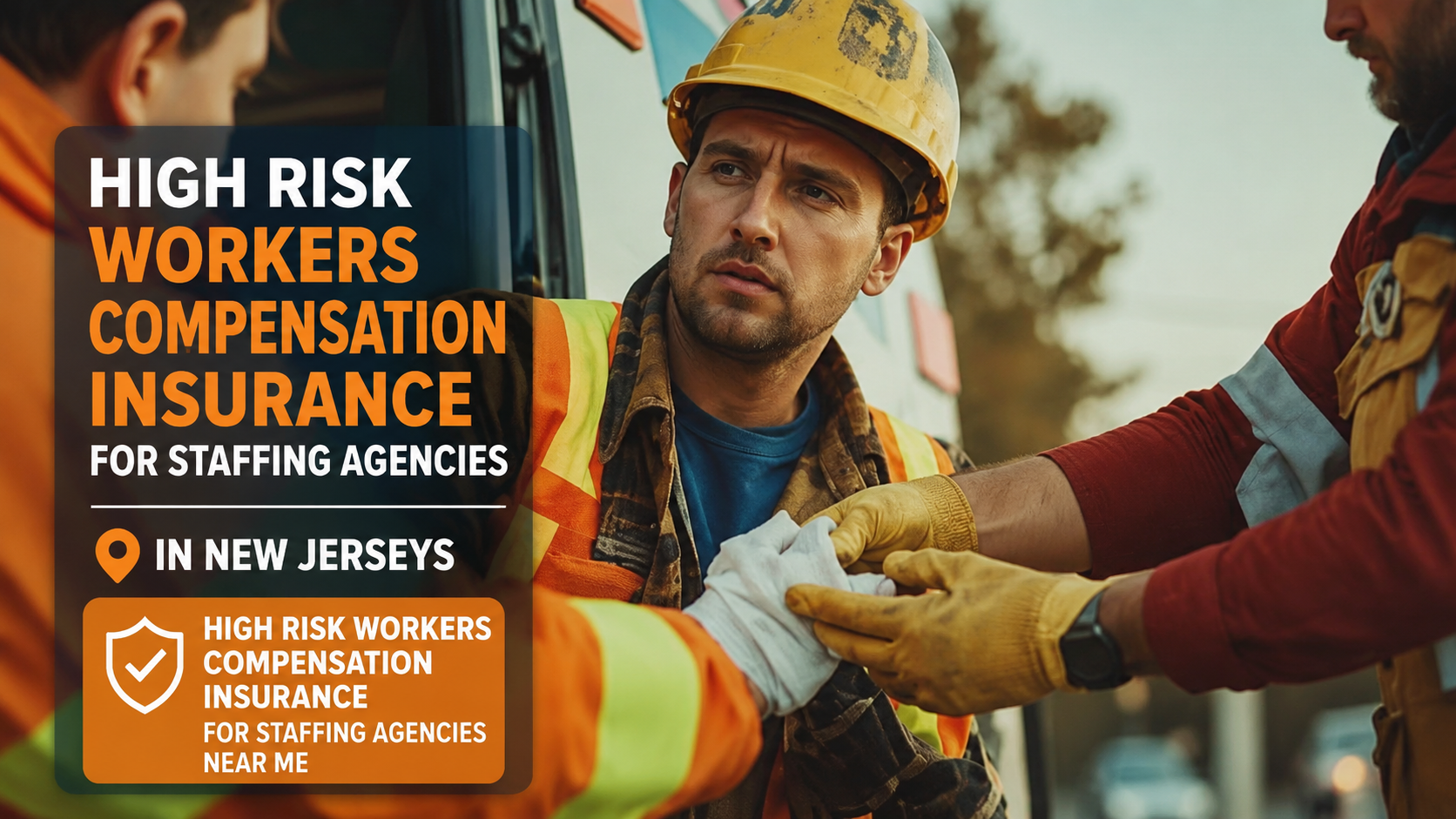
If you run a staffing agency in Texas, you already know the drill: your clients expect reliable workers, but your biggest liability isn’t a bad hire—it’s a workplace injury. When you place employees in high-risk roles like construction, warehousing, manufacturing, or oilfield services, a single accident can trigger thousands in medical bills, lost wages, and legal fees. That’s where High-Risk Workers Comp For NJ staffing Agencies becomes not just a safety net but a business lifeline.
And if you’ve been searching for “high-risk workers’ compensation insurance for staffing agencies near me,” you’re likely discovering that standard carriers want nothing to do with temp firms placing workers in danger zones. That’s exactly why Coastal Work Comp exists—to help Texas staffing agencies secure coverage that matches their real-world exposure.
Why Staffing Agencies Are Classified as High Risk
Texas staffing agencies face a unique insurance challenge. Unlike a single company that employs its own steady workforce, you send temporary employees into dozens of different environments—each with its own hazards. One day, your temp is filing paperwork in an air-conditioned office. The next day, that same worker is operating a pallet jack in a freezer warehouse or climbing scaffolding on a roofing crew.
Insurance carriers see this as an unpredictable risk. And unpredictability drives up premiums.
But some staffing niches are considered even higher risk than others. Agencies that supply:
-
Construction laborers (framing, roofing, demolition)
-
Warehouse pickers and forklift operators
-
Oilfield roustabouts and frac sand haulers
-
Industrial machine operators
-
Janitorial staff working with chemicals
-
Event setup crews lifting heavy staging equipment
…all fall into the “high risk” category. Without specialized high-risk workers’ compensation insurance for staffing agencies, you could face policy cancellations, audits that spike your premiums retroactively, or worse—being uninsured when an injury occurs.
Texas Doesn’t Require Coverage—But Your Clients Do
Here’s something many new staffing agency owners misunderstand: Texas is a “non-subscriber” state, meaning private employers are not legally required to carry workers’ compensation. You can technically operate without it.
But in the staffing world, operating without workers’ comp is nearly impossible. Most reputable client companies will require proof of coverage before they accept a single temp worker. Why? Because without it, the client could be held liable if your temp gets hurt on their premises.
So while the state won’t fine you for lacking coverage, the market will freeze you out. And if an injury does occur without insurance, you could face a direct lawsuit from the injured worker—with no coverage to defend you or pay a judgment.
What Makes High Risk Workers’ Comp Different for Temp Agencies
Standard workers’ comp policies are built for stable, predictable workforces. Staffing agencies break that model in three critical ways:
1. Frequent classification code changes
Your workers might change roles weekly. One week, they’re a clerical worker (class code 8810). Next week, they’re a roofer (class code 5551). Each code has a different rate, and misclassifying a worker can lead to huge audit bills.
2. Higher experience mods
Staffing agencies often have higher-than-average claims frequency simply due to the number of workers placed. More workers = more chances for injury. That drives up your Experience Modification Rate (EMR), making coverage more expensive.
3. Payroll fluctuations
Some weeks, you have 10 temps on payroll. Next month, 50. Traditional carriers dislike this volatility. High-risk specialists like Coastal Work Comp understand staffing payroll swings and offer flexible reporting.
How to Find “High Risk Workers Compensation Insurance for Staffing Agencies Near Me”
When Texas staffing agency owners search for “high risk workers compensation insurance for staffing agencies near me,” they’re not just looking for proximity—they’re looking for a carrier or broker who understands local industries. A roofing site in Houston has different risks than a cold storage warehouse in Dallas or a chemical plant in Beaumont.
Here’s what to look for in a local or regional specialist:
-
Experience with Texas staffing regulations – Texas’s non-subscriber status creates unique indemnity options.
-
Access to multiple high-risk carriers – No single carrier wants to insure all your classes. A good partner shops your package.
-
Pay-as-you-go reporting – This ties premiums to actual payroll, so you’re not overpaying in slow weeks or underpaying in busy weeks.
-
On-site safety consulting – Many high-risk carriers offer loss control services specifically for staffing clients.
Coastal Work Comp works with Texas staffing agencies from El Paso to Beaumont, offering all of the above. We don’t just sell policies—we help you implement safety protocols that reduce claims and lower your long-term costs.
Lowering Your Workers’ Comp Costs as a High Risk Staffing Agency
Yes, high risk means higher base rates. But you’re not powerless. The most successful Texas staffing agencies actively manage their comp costs through these strategies:
1. Pre-hire screening
Do not send untested workers into high-risk environments. Physical capability assessments and drug screening reduce injury rates by 30-50%.
2. Immediate incident response
Create a protocol for every minor injury. A small cut treated quickly is a first aid report, not a claims file. Once a claim is opened, your EMR suffers.
3. Return-to-work programs
Texas law allows light-duty assignments. Getting an injured worker back—even for 4 hours of administrative work—dramatically reduces claim costs.
4. Audit your class codes quarterly
Never wait for the carrier’s annual audit. Review every temp’s duties and confirm they match the class code. An owner who does this can save 10-20% on premiums.
5. Work with a specialist
Generalist agents don’t know staffing nuances. Specialists like Coastal Work Comp can identify which carriers offer the best rates for specific classes—like 5403 (construction) vs. 8810 (clerical).
Real Example: How a Dallas Staffing Agency Cut Costs by 18%
A mid-sized Dallas staffing agency placing 120 temps—mostly in light industrial and warehouse roles—came to Coastal Work Comp after their previous carrier non-renewed them due to three claims in one year. Two were minor (strains), but one was a fracture from a pallet jack accident.
We moved them to a high-risk admitted carrier with a higher deductible (from $1,000 to $5,000) paired with an internal safety training program for all new temps. Within 12 months, claims dropped by 60%, and their renewal premium dropped 18% despite the same payroll. The agency now has a clear path to standard market pricing within two years.
The Bottom Line for Texas Staffing Agencies
You cannot run a successful temp agency in Texas—especially one serving construction, manufacturing, logistics, or energy sectors—without robust high-risk workers’ compensation insurance. Searching “high risk workers’ compensation insurance for staffing agencies near me” is smart, but don’t settle for a generic agent. You need a partner who understands temporary labor, classification codes, Texas law, and how to manage volatility.
Coastal Work Comp specializes in exactly this. We help staffing agencies across Texas secure affordable, compliant, and reliable coverage—even if you’ve been rejected elsewhere. Get a quote today, and let’s build a program that protects your business and your temps.
Conclusion
High-risk workers’ compensation insurance for staffing agencies in Texas isn’t a luxury—it’s the foundation of a trustworthy, insurable, and scalable business. Without it, you lose clients, expose your assets, and put temps at risk. With it—especially a policy tailored to staffing volatility—you gain credibility, control costs, and compete for larger contracts.
Whether you’re in Houston, Austin, San Antonio, Fort Worth, or anywhere in between, Coastal Work Comp can help you find coverage that fits your specific mix of high-risk classes. Don’t wait for an accident to reveal the gaps in your insurance program.