

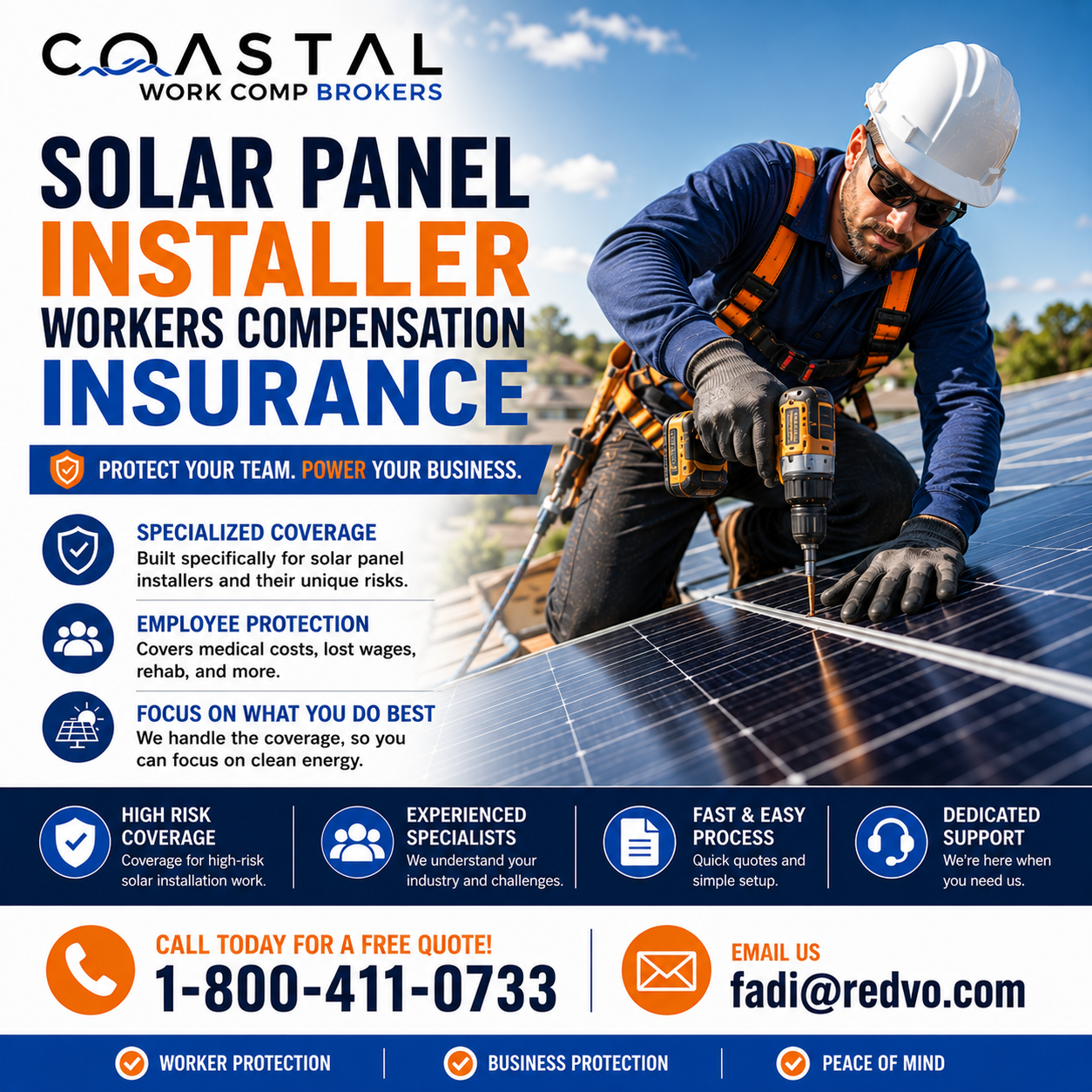
The solar energy industry is shining brighter than ever. As homeowners and businesses race to adopt renewable energy, the demand for solar panel installers has skyrocketed. However, with great opportunity comes significant risk. Working on rooftops, handling heavy glass panels, and navigating complex electrical systems puts your employees in harm’s way every single day. For business owners, this reality underscores a non-negotiable necessity: Solar Panel Installer Workers’ Compensation Insurance.
If you are running a solar installation company without this coverage, you are gambling with your business’s future. Here is why this specific type of insurance is critical for your niche, what it covers, and how to ensure you are fully protected.
The Unique Risks of Solar Installation
While “construction” is a broad category, solar installation occupies a unique, high-risk niche. Unlike general contractors, solar installers spend the majority of their time on steep, slippery, and often cluttered rooftops. These unique working conditions lead to specific types of injuries:
-
Falls: The most significant threat. Falling from heights can result in broken bones, spinal cord injuries, or even fatalities.
-
Electrical Shocks: Even with proper shut-offs, dealing with live wiring and photovoltaic systems carries a high risk of electrocution or severe burns.
-
Musculoskeletal Injuries: Lifting 40-60 pound solar panels onto roofs repeatedly can cause severe back, neck, and shoulder strains.
-
Heat Stroke/Exhaustion: Working on dark asphalt roofs during peak summer months exposes workers to extreme temperatures, leading to heat-related illnesses.
-
Eye Injuries: UV glare and debris from drilling can cause significant eye damage.
In most states, Workers’ Compensation is not optional. If you have employees, you are legally required to carry this coverage. Failing to do so can result in hefty fines, stop-work orders, and even criminal liability. But beyond compliance, this insurance is a financial lifeline.
What Does Workers’ Comp Cover for Solar Installers?
Workers’ Compensation Insurance acts as a safety net. It protects both the employee and the employer. Here is what a standard policy typically handles:
-
Medical Expenses: The policy covers all emergency care, hospital visits, physical therapy, surgeries, and medication costs related to a workplace injury.
-
Lost Wages: If an employee is injured and cannot work, the insurance provides a portion of their lost income (usually about two-thirds of their average weekly wage) to help them pay bills while they recover.
-
Disability Benefits: If an injury results in permanent damage, the policy provides compensation based on the severity of the disability (temporary, permanent, partial, or total).
-
Employer Liability Protection: This is crucial. If an employee sues your company for negligence in an attempt to get more compensation, the “Employers Liability” section of the policy helps cover your legal defense costs and settlement fees.
The Cost Factor: Why Solar Rates are Specific
You might be tempted to purchase a generic “construction” policy to save money. Don’t. Insurance carriers use specific classification codes to determine your premium. For solar installation, this code reflects the high risk of working on roofs. If you are misclassified, your claim could be denied.
The cost of your premium is calculated using your payroll. The higher your payroll, the higher the premium. However, you can manage costs by implementing a robust safety program. Insurance carriers reward companies that actively reduce risk. If you require fall protection harnesses, provide safety training, and enforce a strict drug-free workplace, you are likely to secure better rates.
Why “A” Rated Carriers Matter
When seeking coverage, you want an “A” rated carrier. This rating, provided by agencies like A.M. Best, indicates that the insurance company has the financial strength to pay out claims. In the high-stakes world of solar installation, where a single injury claim could cost hundreds of thousands of dollars, you need to ensure your carrier has the capital to back you up. You don’t want to discover your policy is with a “cut-rate” carrier that goes bankrupt when you need them the most.


