

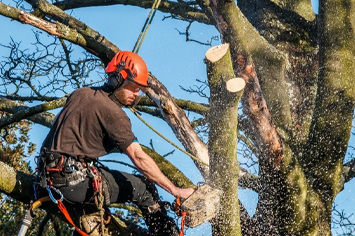
Landscaping and lawn care crews work outside all day with mowers, trimmers, blowers, chainsaws and trailers. Injuries are common, and most states require workers’ compensation as soon as you have employees. Seasonal hiring and changing crew sizes also make it easy to overpay or get hit with a large audit bill.
Common injuries in landscaping
- Cuts and amputations from mowers, trimmers and saws
- Back strains from lifting mulch, stone and sod
- Eye injuries from flying debris
- Heat illness during summer work
- Slips, falls and ladder injuries
- Vehicle and trailer accidents between job sites
- Chemical exposure from fertilizers and pesticides
Class codes for landscaping companies
Workers’ comp premium is a rate per $100 of payroll for each class code. In states that use NCCI codes, landscape gardening and lawn care crews are commonly classified under 0042 (Landscape Gardening & Drivers). Tree trimming and removal is usually a separate, higher-rated class (0106), and hardscaping or retaining wall work can fall under construction codes. California and some other states use their own classification systems.
Getting the code right matters. If tree work or masonry is mixed into your landscaping payroll without proper records, the auditor may move payroll into a higher-rated code. Keep separate time records for each type of work. For tree work, see our page on tree service workers’ comp.
Seasonal payroll and audits
Many landscapers double their crews in spring and cut back in winter. With a traditional policy based on an estimated annual payroll, a busy season can lead to a large balance due at the year-end audit. A pay-as-you-go plan bills premium on actual payroll each pay period, which fits seasonal businesses and helps avoid big audit bills.
What affects your premium
- Class codes and the state rate for each
- Total payroll and how it is split between codes
- Your experience mod and claim history
- Whether owners are included or excluded
- Use of uninsured subcontractors
How to lower workers’ comp costs for a landscaping company
- Train on equipment and document it, especially for mowers, saws and trailers.
- Require PPE: eye and hearing protection, gloves and proper boots.
- Plan for heat: water, shade, rest breaks and earlier start times in summer.
- Track payroll by class so each dollar is rated correctly.
- Collect certificates from every subcontractor (see COI guide).
- Use a return-to-work program so injured workers return sooner.
Frequently asked questions
Do I need workers’ comp for seasonal or part-time workers?
Generally yes. Most state laws cover part-time and seasonal employees the same as full-time workers.
Are day laborers covered?
If you direct their work and pay them, they are usually treated as employees for workers’ comp, even if paid in cash.
Can I get coverage if other carriers declined me?
Yes. We work with carriers and PEO programs that write landscaping and other high-risk industries.
How do I get a quote?
Call 1-800-411-0733 with your payroll by job type and recent loss runs.


