

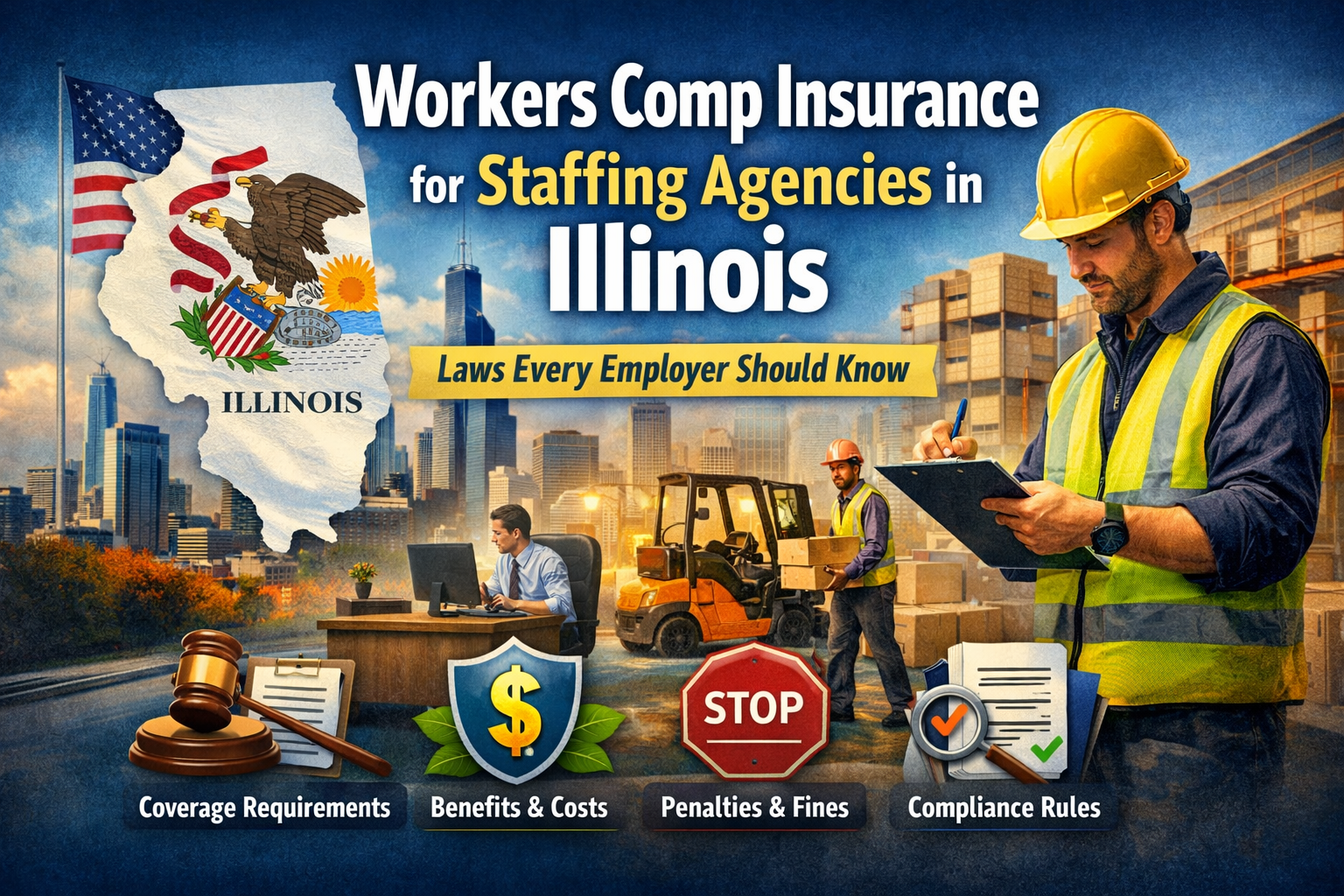
Workers Comp Insurance for Staffing Agencies in Illinois protects employers and temporary workers from financial loss. Illinois law requires most staffing agencies to carry valid workers compensation coverage. Employers must understand these rules to avoid fines and lawsuits. This guide explains the key laws every staffing agency should know. We also highlight compliance strategies supported by Coastalworkcomp. Staffing agencies operate in high-risk industries. They place workers in warehouses, construction sites, offices, and factories. Each placement creates potential liability exposure. Proper insurance coverage protects both the agency and its clients. Understanding Illinois Workers Compensation Requirements Illinois enforces strict workers compensation laws. The Illinois Workers’ Compensation Commission regulates and oversees compliance statewide. Most Illinois employers must carry workers compensation insurance. This rule applies even if a staffing agency employs one worker. Illinois follows a no-fault workers compensation system. Employees receive benefits regardless of fault. Employers avoid costly civil lawsuits in exchange. Staffing agencies must provide coverage for all temporary employees. This requirement includes full-time, part-time, and seasonal staff. Misclassification of an independent contractor can trigger serious penalties. Any staffing agency operating in Illinois must maintain valid coverage. Out-of-state agencies must also comply if they place workers in Illinois. Failing to secure coverage can result in criminal charges. Corporate officers may face personal liability for noncompliance. Penalties include daily fines and possible business closure. Key Benefits Under the Illinois Workers Compensation Law Illinois workers compensation laws provide several benefit categories. These benefits protect injured employees and stabilize income. Medical Benefits Employers must pay all reasonable medical expenses. This coverage includes hospital care, surgery, medication, and rehabilitation. There is no deductible for injured employees. Temporary Total Disability Benefits Temporary Total Disability benefits replace lost wages during recovery. Payments equal two-thirds of the employee’s average weekly wage. Permanent Disability Benefits Permanent Partial Disability applies when injuries cause lasting impairment. Permanent Total Disability benefits cover workers who are unable to return to employment. Death Benefits Death benefits support surviving dependents of deceased employees. Employers must also cover burial expenses within statutory limits. Special Rules for Staffing Agencies in Illinois Staffing agencies face unique legal obligations. Illinois law treats temporary workers as employees of the staffing agency. However, client companies also share certain responsibilities. Dual Employment Doctrine Illinois recognizes the dual employment doctrine. Both the staffing agency and client company may hold liability. Agreements should clearly define workers compensation responsibilities. Agencies must confirm their policy covers assigned job classifications. Incorrect classification can increase premiums or deny claims. Client Contract Agreements Staffing agencies should use detailed client contracts. Contracts must clarify insurance coverage and indemnification terms. This step reduces disputes after workplace injuries occur. Agencies should require clients to maintain safe working conditions. Safety audits lower injury risks and insurance costs. How Premiums Are Calculated Workers compensation premiums depend on several factors. Insurance carriers evaluate payroll, job classifications, and claims history. Payroll Size Higher payroll increases overall premium costs. Staffing agencies often manage large payroll volumes. Job Risk Classification Each job classification carries a risk code. Construction placements cost more than clerical assignments. Accurate classification prevents audit disputes. Experience Modification Rate The experience modification rate reflects claim history. Frequent claims increase future premiums. Strong safety programs help reduce this rating. Best Practices for Compliance Staffing agencies must take proactive compliance measures. Strong management practices reduce legal exposure. Conduct Regular Safety Training Offer safety training before worker placement. Educate employees about job-specific hazards. Document all training sessions for compliance records. Verify Client Workplace Safety Inspect client worksites before assignments begin. Ensure OSHA standards are followed consistently. Encourage prompt hazard reporting. Maintain Accurate Employee Records Keep detailed payroll and classification records. Accurate documentation ensures smooth insurance audits. Retain injury reports and medical documentation securely. Claims Management Strategies Effective claims handling reduces costs and legal risks. Immediate reporting improves claim outcomes. Prompt Injury Reporting Require employees to report injuries immediately. Illinois law sets strict notice requirements. Timely filing avoids disputes and delays. Work With Experienced Providers Partner with knowledgeable workers compensation advisors. Coastalworkcomp helps staffing agencies navigate Illinois laws. Professional guidance strengthens compliance and cost control. Return-to-Work Programs Return-to-work programs lower claim costs. They also help employees recover faster. Offer modified duties during recovery periods. Light-duty assignments reduce disability payments. Maintain communication with injured workers. A structured return-to-work plan reduces experience modification rates. It also improves employee morale and retention. Illinois enforces strict coverage and reporting requirements. Agencies must act proactively to maintain protection. Strong safety programs reduce injury frequency and premium costs. Partnering with experts like Coastalworkcomp improves compliance confidence. Professional guidance simplifies complex regulatory obligations. Why Coastalworkcomp Supports Illinois Staffing Agencies Coastalworkcomp understands staffing industry risks. They provide customized workers compensation solutions. Their team monitors Illinois legal updates regularly. They help agencies reduce premiums through risk management. They also assist with audit preparation and claims coordination. Professional support strengthens long-term business stability. Compliance protects agency’s reputation and profitability. Temporary workers placed through staffing agencies rarely qualify as independent contractors. Agencies usually control hiring, payroll, and assignment placement. This control establishes an employment relationship legally. Common Mistakes Staffing Agencies Should Avoid Many agencies underestimate compliance complexity. Avoid these common errors to reduce risk. Misclassifying Workers Improper classification increases audit penalties. Always review classification codes carefully. Ignoring Safety Responsibilities Do not assume clients manage all safety obligations. Agencies share responsibility under Illinois law. Delaying Claim Reporting Late reporting increases investigation complications. Encourage immediate injury documentation. Future Trends in Illinois Workers Compensation Illinois continues to refine regulatory standards. Technology improves claims management efficiency. Digital reporting systems streamline compliance processes. Staffing agencies must monitor legislative updates. Proactive planning prevents unexpected compliance gaps. Rising medical costs may impact future premiums. Agencies should budget strategically for insurance expenses. Staffing agencies must classify workers correctly. Illinois law uses strict criteria for independent contractor status. Misclassification often results in heavy fines and audits. Illinois agencies must review classification decisions regularly. Consult legal advisors before labeling workers as contractors. Prevention costs less than litigation defense. Conclusion Workers Comp Insurance for Staffing Agencies in Illinois remains legally mandatory.

There are many variations of passages of Lorem Ipsum available, but the majority have suffered alteration in some form, by injected humour, or randomised.