

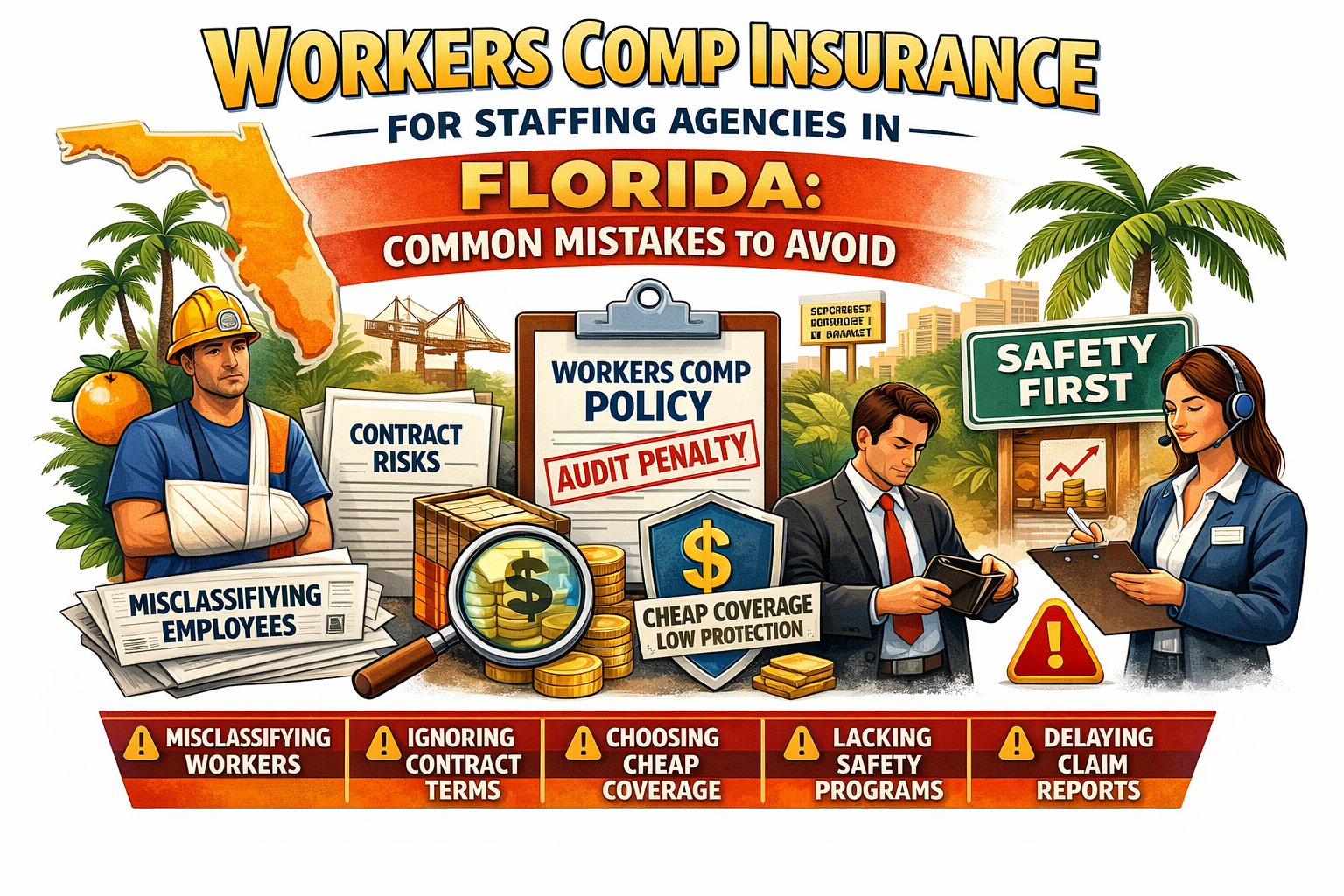
Staffing agencies operate in a high-risk environment across Florida. They place workers in diverse industries with unique hazards. One mistake in coverage can trigger costly claims and penalties. Workers Compensation Insurance protects both agencies and employees. However, many agencies make preventable errors. These mistakes increase premiums and create legal exposure. You must understand common pitfalls to protect your business. This guide explains major mistakes and how to avoid them. Understanding Workers Comp Insurance for Staffing Agencies in Florida Workers compensation insurance covers workplace injuries and illnesses. Florida law requires most employers to carry coverage. Staffing agencies face greater scrutiny due to shared-employment models. Agencies often act as the employer of record. Client companies supervise daily tasks. This structure creates unique compliance challenges. You must structure policies correctly to avoid gaps. Failure to comply can result in severe penalties. Florida hosts construction, hospitality, healthcare, and logistics industries. Staffing firms supply labor to these high-risk sectors. Injury rates increase in physically demanding roles. Temporary workers may lack job-specific safety training. This increases claim frequency and severity. Insurance carriers evaluate these factors closely. Common Mistake #1: Misclassifying Employees Misclassification remains the most common error. Agencies sometimes assign incorrect workers compensation class codes. Incorrect codes reduce premiums temporarily. However, audits often reveal discrepancies. Carriers then apply back charges and penalties. Florida regulators may also impose fines. You must assign accurate class codes for each worker. Different placements require different classifications. Construction labor differs from clerical staffing. Always review job descriptions carefully. Conduct a detailed job duty review. Consult your insurance advisor before policy renewal—request classification guidance from your carrier. Perform internal audits quarterly. Correct errors before official carrier audits occur. Common Mistake #2: Ignoring Client Contract Language Staffing contracts often include indemnification clauses. Some contracts shift liability unfairly to agencies. Others require higher coverage limits. Failure to review these clauses creates financial exposure. Agencies must align insurance policies with contracts. Otherwise, claims may exceed policy limits. This leaves agencies responsible for uncovered losses. Work with legal counsel before signing agreements. Confirm insurance requirements match your policy limits. Request certificates of insurance from client companies. Ensure shared responsibility remains clearly defined. Common Mistake #3: Choosing Coverage Based Only on Price Many agencies select the cheapest policy available. Low premiums often indicate limited protection. Some carriers lack staffing industry experience. Others impose restrictive endorsements. You must evaluate value over price. Strong claims management reduces long-term costs. Experienced carriers understand staffing risks. Review the carrier’s staffing experience. Assess claims response time. Examine return-to-work support programs. Check financial strength ratings. Prioritize long-term partnership over short-term savings. Common Mistake #4: Failing to Implement Safety Programs Insurance alone does not reduce claim frequency. Proactive safety management lowers incidents significantly. Many staffing agencies neglect training responsibilities. You must collaborate with client companies. Establish clear safety expectations before placements begin. Provide workers with safety orientation materials. Document all training efforts. Conduct job hazard analyses for each placement. Require clients to report incidents immediately. Implement return-to-work programs quickly. Track injury trends monthly. Address recurring risks immediately. Common Mistake #5: Poor Claims Reporting Practices Delayed reporting increases claim costs dramatically. Florida law requires prompt injury reporting. Late reports complicate investigations. They also increase legal disputes. You must create clear reporting procedures. Employees should report injuries immediately. Supervisors must document details quickly. Designate a claims coordinator within your agency. Train staff on reporting timelines. Communicate regularly with adjusters. Monitor open claims actively. Encourage early medical intervention. Common Mistake #6: Overlooking Experience Modification Factor Your experience modification factor directly impacts premiums. Frequent claims increase this rating. Higher ratings result in higher costs. Many agencies ignore this metric until renewal time. You should monitor it continuously. Analyze trends and root causes. Implement strong return-to-work programs. Investigate every incident thoroughly. Dispute inaccurate claims promptly. Focus on prevention strategies. Review loss runs annually with your broker. Common Mistake #7: Not Partnering with a Staffing Insurance Specialist Staffing insurance differs from standard business coverage. General agents may lack industry knowledge. This gap leads to policy exclusions or compliance issues. You should partner with a specialist provider. Experienced advisors understand co-employment risks. They help structure policies correctly. Specialists understand Florida regulatory requirements. They help reduce audit surprises. They provide risk management guidance. They negotiate better terms with carriers. They support long-term cost control strategies. Compliance Requirements in Florida Florida enforces strict workers compensation rules. Construction agencies must carry coverage for every employee. Non-construction firms require coverage with four employees. Penalties for noncompliance include stop-work orders. Fines can double unpaid premiums. You must maintain active coverage at all times. Lapses expose your agency to severe consequences. Keep updated certificates of insurance. Maintain payroll records accurately. Retain injury reports and training documentation. Store client contracts securely. Prepare for random state audits. Most staffing agencies maintain their own policy. Some contracts require clients to carry additional coverage. Always review agreements before signing. Confirm all insurance obligations remain clear. How Coastalworkcomp Supports Florida Staffing Agencies Coastalworkcomp focuses on staffing agency risk management. They understand Florida’s regulatory environment. Their advisors tailor policies for staffing operations. They emphasize proactive safety strategies. Their approach reduces claims frequency over time. They assist agencies during audits and renewals. They prioritize long-term premium stability. They analyze workforce classifications carefully. They review contracts for liability gaps. They implement loss prevention programs. They monitor experience modification factors. They guide agencies through complex claims. Building a Long-Term Cost Control Strategy Successful agencies treat workers compensation strategically. They integrate insurance into overall operations planning. They train staff consistently. They monitor claims data monthly. They invest in safety improvements proactively. You must shift from reactive to preventive thinking. Prevention always costs less than litigation. Consistency drives sustainable premium reductions. Review your current policy details. Audit employee classifications internally. Analyze your last three years of claims. Strengthen training documentation immediately. Consult a staffing insurance specialist. Conclusion Workers Comp Insurance for Staffing Agencies in Florida requires strategic management. Mistakes increase premiums and legal exposure. Staffing Agencies must prioritize compliance and prevention. Accurate classification and contract review remain

There are many variations of passages of Lorem Ipsum available, but the majority have suffered alteration in some form, by injected humour, or randomised.