
The staffing industry is the backbone of the American workforce, connecting millions of people with opportunities across manufacturing, logistics, healthcare, and administration. However, this unique position—employing workers who perform tasks at third-party locations—comes with a distinct set of risks. For many staffing agency owners, the cost of workers’ compensation insurance is one of the largest operational expenses, and it often feels like it’s rising despite their best efforts.
The good news? Workers’ compensation costs are not a fixed burden. They are a variable expense that savvy agencies can control. By understanding how premiums are calculated and implementing targeted risk management strategies, you can significantly lower your total cost of risk. At Coastalworkcomp, we specialise in helping staffing agencies navigate these complex waters. Here is your guide to lowering workers’ compensation insurance costs while building a safer, more profitable business.
Why Staffing Agencies Face Unique Workers’ Comp Challenges
Before diving into solutions, it’s important to understand why staffing agencies often pay higher rates than other businesses. You are essentially insuring a workforce that moves between different employers, each with its own safety culture and hazards.
High-Risk Classifications: Many staffing agencies place workers in “high-hazard” industries like construction, warehousing, and manufacturing. These class codes inherently carry higher premium rates.
Lack of Control: You may not have direct, daily control over the worksite environment where your employees are placed. A client’s lax safety standards can become your agency’s costly claim.
The “New Hire” Factor: Statistics show that temporary workers are often more vulnerable to accidents during their first days on a job due to unfamiliarity with the site and procedures.
The Experience Modification Rate (EMR): Your agency’s EMR is a crucial factor in pricing. It is a number comparing your claims history to others in your industry. An EMR above 1.0 means you are paying a premium penalty; an EMR below 1.0 earns you significant discounts.
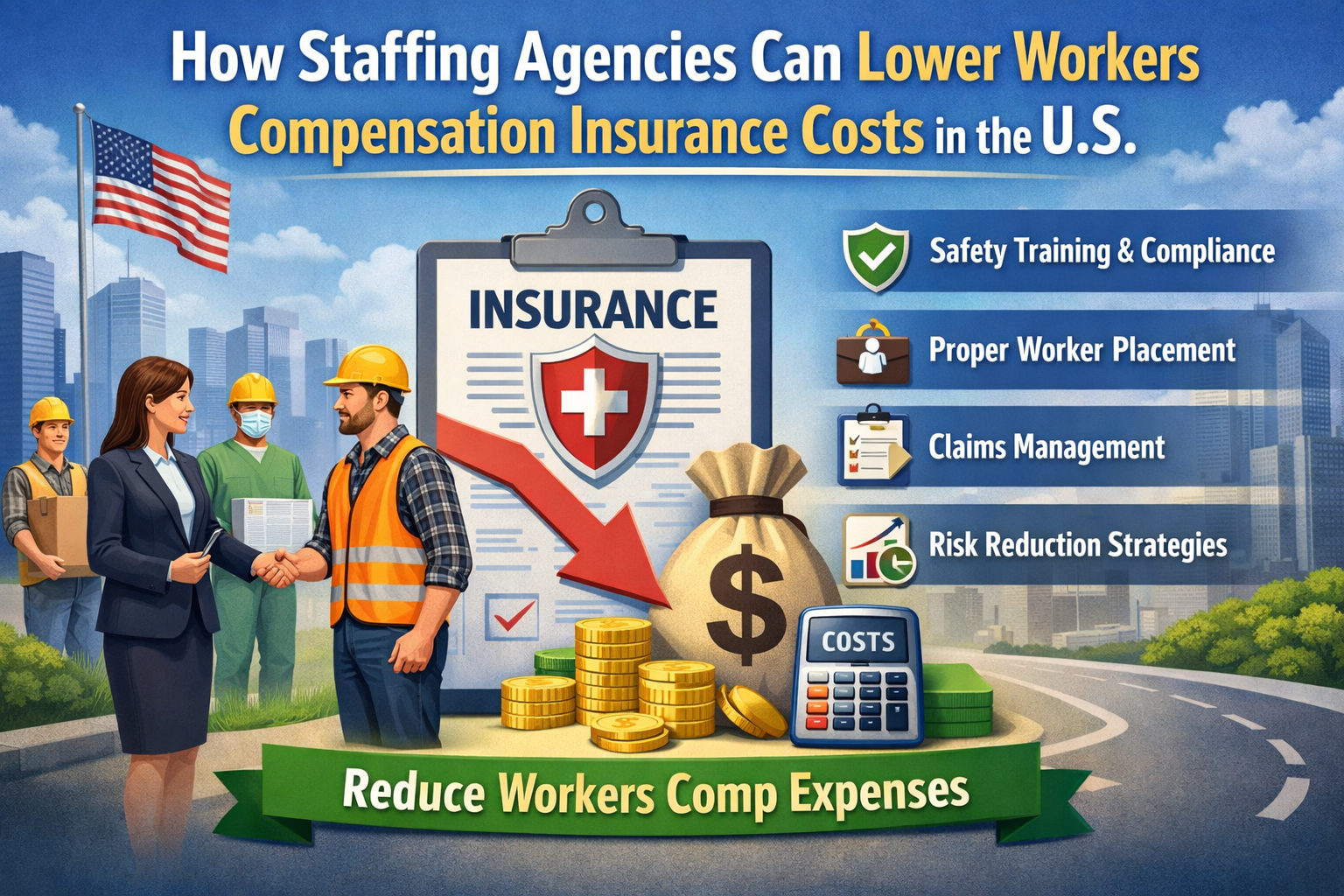
5 Proven Strategies to Lower Your Workers’ Compensation Costs
Controlling costs requires a proactive, multi-faceted approach. Here are the most effective tactics to implement today.
1. Master the Art of Accurate Classification and Payroll Reporting
One of the quickest ways to overpay for workers’ comp is through inaccurate classification. If a clerical worker is accidentally coded under a warehouse class, you are paying a much higher rate than necessary.
Audit Your Class Codes: Work with an expert like Coastalworkcomp to perform a thorough audit of your job classifications. Ensure every employee is assigned to the correct National Council on Compensation Insurance (NCCI) code that matches their actual job duties, not just their job title.
Separate Payroll Accurately: Maintain meticulous payroll records. If you have owners or officers who can be excluded or paid differently, ensure this is documented. Clean records prevent audit surprises at the end of the policy year, where misreporting can lead to massive additional premium bills.
2. Implement a Robust Safety and Training Culture
Prevention is always cheaper than any claim. Because your employees work at client sites, your safety program must extend beyond your own office walls.
Pre-Assignment Training: Before a worker sets foot on a client site, provide a general safety orientation. This should cover your agency’s expectations and its rights regarding workplace safety.
Client Site Evaluations: Partner with your clients to evaluate their worksites. A proactive walk-through can identify hazards before they cause injuries. This collaboration also shows clients that you are a value-add partner committed to safety, not just a labour supplier.
Reinforce the Message: Use toolbox talks and regular check-ins to keep safety top-of-mind. A well-trained worker is a safer worker.
3. Leverage Technology and Data Analytics
In the modern era, guessing isn’t good enough. Data-driven decisions lead to better outcomes.
Track Leading Indicators: Don’t just wait for claims to happen (a lagging indicator). Track near-misses, safety training completion rates, and client site inspection results. This data helps you predict and prevent future injuries.
Pay-as-You-Go Auditing: Cash flow is king in staffing. Traditional workers’ comp audits happen once a year and can result in a surprise bill. By using a pay-as-you-go system, your premium is based on real-time payroll, which smooths out cash flow and eliminates the year-end audit shock.
4. Optimise Claims Management
When an injury does occur, how you respond in the first 48 hours determines the ultimate cost of the claim.
Encourage Immediate Reporting: Delayed reporting is the enemy of cost control. Establish a clear, simple protocol for employees to report injuries immediately, no matter how minor they seem. Early reporting allows for early intervention.
Return-to-Work (RTW) Programs: A modified duty or light-duty program can get an injured employee back to work sooner, even in a different capacity. This reduces the “lost wages” portion of the claim, which significantly lowers its total cost and helps improve your EMR.
5. Screen and Select Talent Strategically
Your best defence against claims is a reliable, capable workforce. Integrating risk management into your hiring process is essential.
Pre-Employment Screenings: Conduct thorough background checks and, where appropriate for the job, physical capabilities testing. This ensures the worker can safely perform the tasks required.
Verify Experience: A simple check of a candidate’s work history and safety record can reveal red flags from previous jobs, helping you avoid hiring a claim waiting to happen.
The Coastalworkcomp Difference: A Partner in Cost Containment
Implementing these strategies is possible, but doing it alone is difficult. That’s where Coastalworkcomp comes in. As specialists in workers’ compensation for high-risk and staffing industries, we don’t just sell policies; we provide the tools and expertise to lower your overall cost of risk.
Tailored Coverage, Not Off-the-Shelf: We know that a staffing agency placing nurses has different needs than one placing roofers. We build customised policies that match your specific risk profile, ensuring you aren’t paying for coverage you don’t need.
Access to Competitive Markets: With relationships across “A” rated national carriers, we shop the market to find you the most competitive rates. Our buying power and expertise often result in savings of 30-40% for our clients.
Claims Advocacy: When a claim occurs, you have a team on your side. We assist with injury reporting, coordinate care, and help implement return-to-work programs to mitigate costs and get your employee back on the job faster.
Compliance and Risk Management: From multi-state compliance issues to complex audits, we provide the guidance you need to stay compliant and avoid costly fines.
Conclusion
Lowering your workers’ compensation costs isn’t about finding a magic bullet; it’s about building a sustainable system of safety, accuracy, and responsiveness. By taking control of your classifications, investing in safety training, and partnering with a specialist who understands the staffing world, you can transform your workers’ comp program from a financial drain into a competitive advantage.
Ready to take the next step toward lower premiums and a safer workforce? Contact Coastalworkcomp today to discuss how we can build a solution tailored to your agency’s unique needs.
Frequently Asked Questions
What is an EMR, and how does it affect my rates?
EMR stands for Experience Modification Rate. It is a numeric value assigned to your business by the rating bureau (like NCCI) based on your past claims history compared to other businesses of a similar size in your state.
What happens if one of my employees gets hurt at a client's site?
This is the most common scenario in the staffing world. If your employee is injured while working under the direction of your client, your workers’ compensation policy is the primary coverage.
Can I lower my premium if my client provides safety training?
Yes, absolutely. While your policy remains primary, a collaborative approach to safety is a major cost-saver. When you partner with clients who have strong safety records and robust training programs, your agency benefits because there are fewer claims.
What is a "pay-as-you-go" workers' comp program, and do I need it?
Traditional workers’ comp policies require you to estimate your annual payroll upfront and pay a premium based on that estimate. At the end of the year, an audit is done, and you either owe more money (if payroll was higher) or get a refund (if it was lower). A pay-as-you-go program syncs your workers’ comp payments directly with your actual payroll runs.
Do I need a different policy if I operate in multiple states?
Yes. Workers’ compensation is regulated at the state level. If you have employees working in multiple states, your policy must comply with the laws of each of those states. A standard policy might not automatically cover you everywhere.