

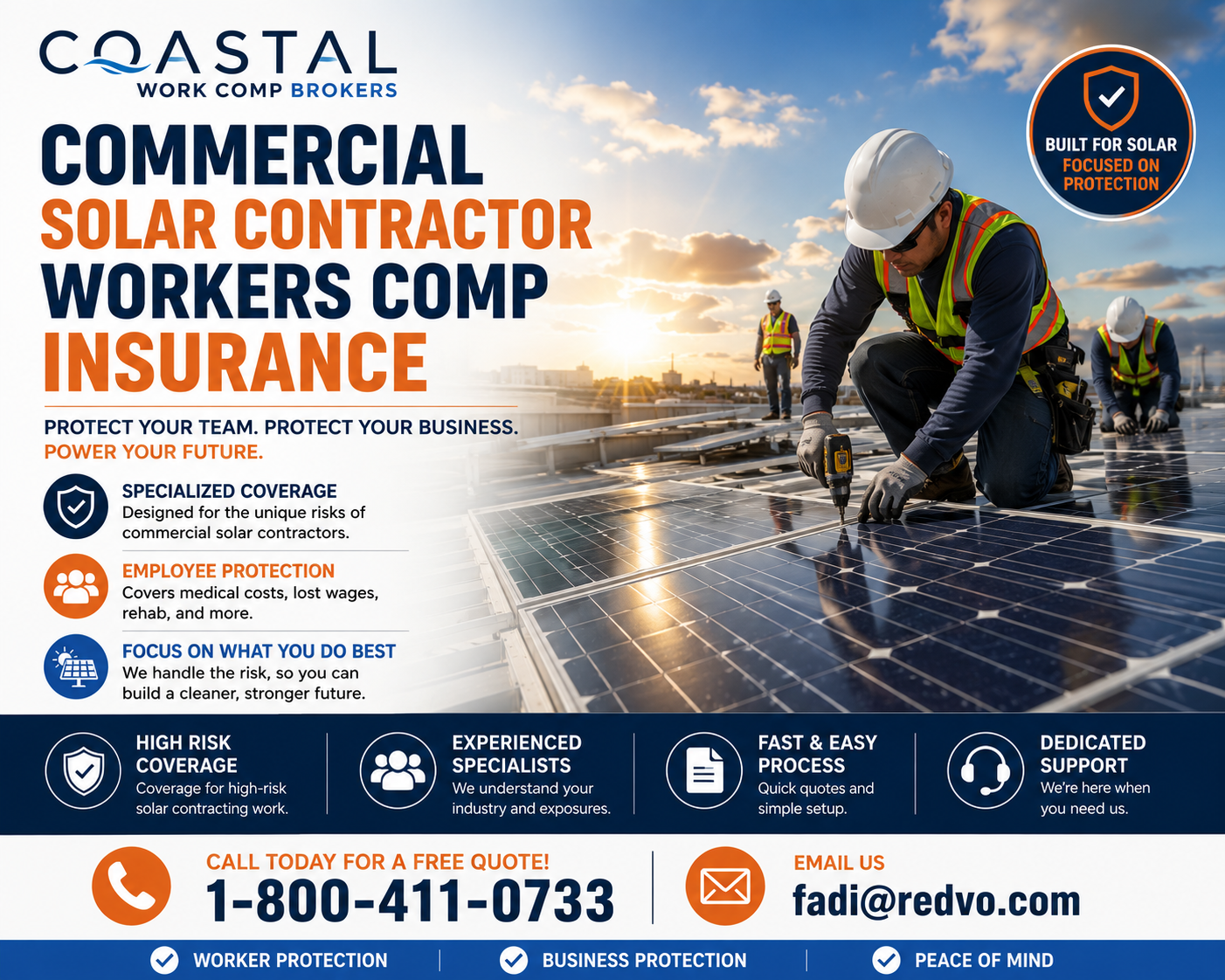
The solar energy industry is booming. As commercial solar contractors rush to install panels on warehouses, office buildings, and industrial complexes, the risks associated with the job are often overlooked. While you focus on renewable energy and grid independence, one critical aspect of your business infrastructure requires immediate attention: Commercial Solar Contractor Workers Comp Insurance | Coastal Work Comp.
For commercial solar contractors, Workers Comp isn’t just a legal formality; it is the financial shield that protects your company from catastrophic loss. At Coastal Work Comp, we understand the unique hazards of rooftop solar installation. Here is why securing the right policy is essential for your long-term success.
The Unique Risks of Commercial Solar Installation
Commercial solar projects differ significantly from residential jobs. They involve larger teams, heavier equipment, and complex logistics. This environment creates specific risks that standard workers’ comp policies might not fully cover.
1. Height and Fall Hazards
The most significant danger in commercial solar is working at height. Whether it is a single-story warehouse or a high-rise office building, falls are the leading cause of severe injury in this sector. Ladder accidents, scaffolding collapses, and edge falls represent high-cost claims that require robust coverage.
2. Electrical Shock and Arc Flash
Working with high-voltage DC systems puts electricians and installers at risk of electrocution. An arc flash can cause severe burns and blindness. Workers’ compensation must cover the extensive medical rehabilitation and long-term disability associated with these injuries.
3. Material Handling and Overexertion
Commercial solar panels are heavy and large. Transporting these panels to rooftops and maneuvering them into place leads to back injuries, muscle strains, and repetitive motion injuries. These “soft tissue” claims are often the most expensive in the long run due to physical therapy needs.
4. Heat Stress and Weather Exposure
Long hours under direct sunlight on reflective roofs expose workers to heat exhaustion and heatstroke. A comprehensive policy ensures that if a worker collapses on the job, their medical bills are covered without delay.
Why Your Policy Must Be Tailored to Solar
Using a generic workers’ comp policy is a dangerous gamble. General contractors often have low-risk classifications, but commercial solar contractors are classified under specific codes that account for high-risk roofing and electrical work.
Coastal Work Comp specializes in pairing solar contractors with policies that reflect their actual risk exposure. If you are misclassified, you risk audits, premium penalties, and denied claims. Tailored coverage ensures:
Accurate Premiums: You pay for the risk you actually pose, not a generic rate.
Comprehensive Liability: Coverage that extends to subcontractors and temporary workers.
Compliance Assurance: Meeting state and federal requirements for public projects.
The Cost of Not Having Proper Coverage
The financial implications of an uninsured injury are devastating. Without proper Workers’ Comp, you are liable for medical expenses, lost wages, and legal fees. Furthermore, losing a key employee to injury can halt a project, leading to contract penalties and damaged client relationships.
In the commercial sector, many general contractors (GCs) will not allow a subcontractor on site without a valid Certificate of Insurance. Failure to provide this documentation can cost you the bid. By partnering with Coastal Work Comp, you ensure that your insurance is always in good standing, allowing you to secure more contracts.
How to Lower Your Workers Comp Premiums
While it is crucial to have coverage, it is equally important to manage your costs. Commercial solar contractors can lower their premiums through proactive safety management.
Implement Safety Training: Regular OSHA 10 or 30-hour training reduces incident rates.
Invest in Fall Protection: Guardrails, harnesses, and scaffolding reduce injury severity.
Subcontractor Verification: Ensure your subs have their own coverage to avoid paying premiums for their exposure.
Experience Modifier (E-Mod): Focus on keeping your claims low to improve your E-Mod score, which directly affects your future premiums.
Conclusion
The commercial solar industry represents the future of energy, but it comes with inherent dangers that cannot be ignored. Protecting your workforce is not only a legal obligation but a business imperative. A specialized Workers Comp Insurance policy from Coastal Work Comp provides the peace of mind you need to focus on installation, growth, and innovation.
Don’t wait for an accident to expose the gaps in your coverage. Secure a policy that understands the specific needs of a commercial solar contractor. When you protect your team, you protect your business.


